Get Full Government Meeting Transcripts, Videos, & Alerts Forever!
Get email alerts on the Housing topic
No spam. Unsubscribe anytime.
Portland Housing Authority details redevelopment plans, voucher pressure and asks council to streamline green building rules
Summary
Portland Housing Authority leaders updated the Portland City Council at a workshop on the authority's redevelopment pipeline, voucher caseload and the financial and environmental constraints shaping projects.
Portland Housing Authority leaders updated the Portland City Council at a workshop on the authority's redevelopment pipeline, voucher caseload and the financial and environmental constraints shaping projects.
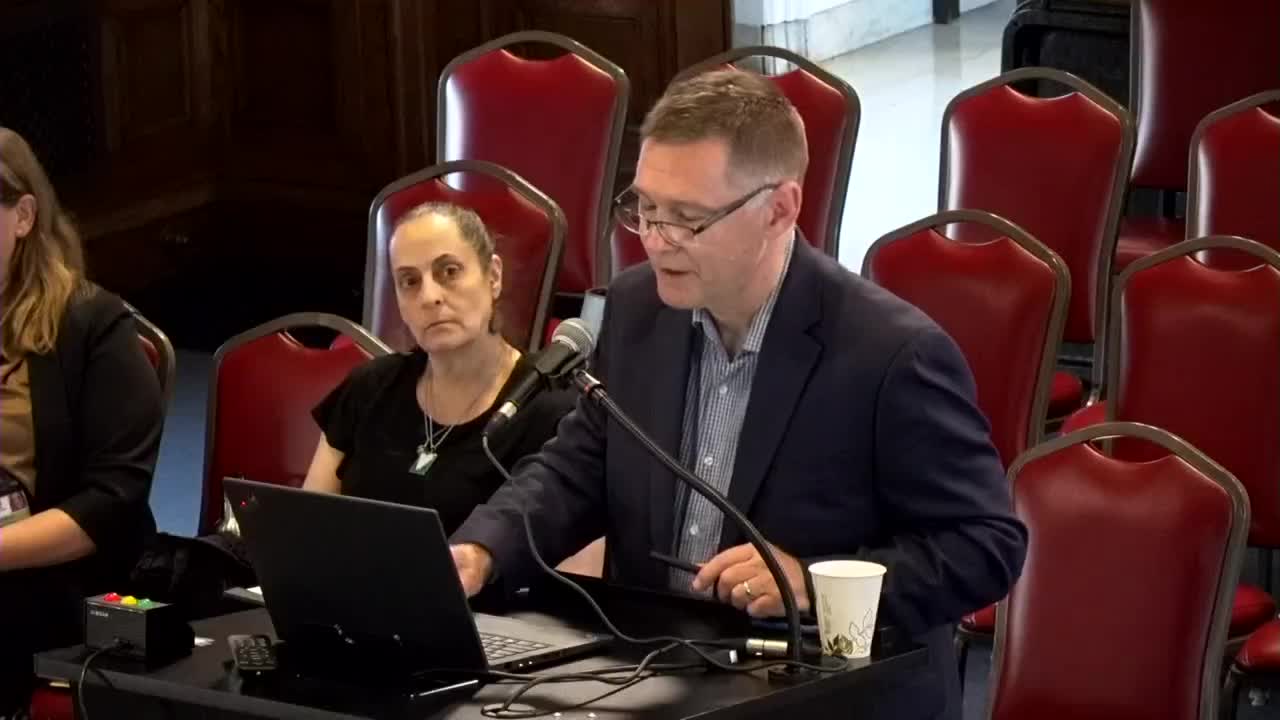
The presentation, led by Executive Director Brian Frost, Deputy Director Leah Bruns and Real Estate Development Director Jay Waterman, reviewed the authority's stock and pipeline, described why the agency is converting many public-housing properties to low-income housing tax credit (LIHTC)/project-based voucher ownership, and asked the city to consider clarifying or amending the city's green building ordinance to reduce complexity and costs.
The authority said it owns or manages roughly 1,367 homes serving more than 3,500 residents across public housing and LIHTC properties and administers 2,072 Housing Choice Vouchers (HCV). "PHA administers 2,072 vouchers through our HCV program," Deputy Director Leah Bruns said. Bruns said 74% of voucher holders live inside Portland and that, over the past year, 92 of 112 admissions to voucher programs were previously unhoused.
Why it matters: agency leaders said rising construction and remediation costs, capped HUD administrative fees and a large backlog of capital needs make staying in the traditional public-housing model financially untenable. Frost said the authority receives roughly $32 million in voucher funding annually but faces hundreds of millions in capital backlog that cannot be maintained at current HUD funding levels.
Key points from the presentation
- Conversion strategy and scale: Frost said the authority has converted and substantially rehabilitated multiple properties under LIHTC and project-based voucher models and plans further conversions. He told the council the agency still owns "a little over 500 public housing units" and has 12 projects in the pipeline, including 319 new units and 569 renovation units; about 250 units were under construction at the time of the presentation.
- Waiting lists and access: Bruns said wait times vary by program and preference; she said vouchers in Portland can have waits of "about eight years" for many applicants, while specific targeted vouchers (for foster youth, VASH or other specialty vouchers) can house people in days. Bruns also described multiple waiting lists—public housing, project-based vouchers and tenant-based vouchers—and said the authority is working toward simpler referral pathways from homeless services providers.
- Costs and capital stack: Waterman said total development costs have risen sharply since the 2010s, citing an example where construction cost per square foot rose from roughly $156 to about $324 and total development cost per unit reached approximately $490,000 on recent projects. He said the city has been a long-term funding partner (HOME and housing trust fund awards), but fees and city charges can constitute a significant portion of requested subsidies: "About a third to a half of the funding that we're asking for does end up going back to the city in terms of fees," Waterman said.
- Brownfields and environmental remediation: Waterman emphasized that several PHA sites are built on historic fill or former dumps and require expensive ground improvement or remediation. He said the comb-block (Cumberland/Oxford/Mayo/Boyd Streets) project includes more than $4 million in brownfields cleanup, and the authority has secured approximately $3.3 million in EPA funds for that work.
- Green building ordinance and permitting: Waterman and Frost asked the council to consider amending the city's green building ordinance to better align requirements with state housing energy standards and to reduce paperwork and unpredictability for affordable projects. "The green building ordinance is unnecessarily complex," Waterman said. He added the authority meets or exceeds Maine Housing energy requirements on many projects (including several meeting passive-house standards) and suggested the city pursue clearer, coordinated rules to avoid delaying or raising costs on affordable housing.
Agency pipeline and examples
- Comb Block (Kennedy Park): Frost said a phased redevelopment will replace about 40 existing public-housing units with roughly 174 units over multiple phases and that the broader redevelopment of Kennedy Park could add several hundred units over the coming decade.
- Riverton Park: Renovation and new construction work had recently started; the project includes a mix of renovated and new homes and an identified request to the city for $1.5 million in support.
- Harbor Terrace, Sagamore Village, Franklin Towers and Front Street projects were presented as recent or upcoming examples of renovation and new-construction activity.
Resident services and access
Tianna Hall, director of resident services, leads a department that now includes resident services coordinators funded through the authority's development corporation and community partnerships. Frost and Bruns described programs for financial coaching, escrowed savings under a family self-sufficiency program (they cited an escrow example of $37,000 for one household), adult education and translation services across many languages at some sites.
Council reaction and next steps
Councilors asked about wait times, the feasibility of higher density on existing authority land, fee burdens, bonding and oversight. Several councilors asked the authority to submit a concise memo with suggested technical amendments to the green building ordinance; Waterman agreed to provide a bulleted memo to the council and committee staff. Frost and Waterman also asked the city to coordinate environmental review and timing with Maine Housing and HUD to avoid demolition or construction delays.
The council and the authority discussed the limits of the city's oversight authority and the need for clearer communication on complaint procedures and tenant recourse; representatives said the authority maintains multiple complaint channels (property managers, a centralized complaints address, HUD complaint paths) and provides in-person office hours and translation support.
Ending
Authority leaders said they welcome participation in the city's social housing task force and suggested closer, periodic coordination on emergency planning, redevelopment priorities and fee structures. The authority asked the council for clearer, coordinated policy on green-building requirements and for continued funding and tax-increment financing support where it helps projects win LIHTC points and close financial gaps.