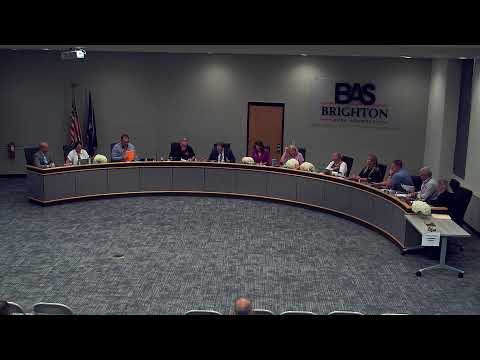
Board approves reading resolution after debate over 'science of reading' language
Loading...
Summary
The board voted 6–1 to adopt a reading resolution that limits district spending on a specific reading program while leaving teachers discretion to use techniques in practice; members questioned the phrasing "science of reading."
The Brighton Area Schools Board of Education voted 6–1 to approve a reading resolution that directs the district not to purchase additional materials for a particular reading program and signals a move toward materials aligned with the “science of reading,” with one board member dissenting over language and practical implications.
Nut graf: The motion passed after board discussion about whether the resolution would limit teachers’ access to classroom tools, whether district money had been spent on release time tied to the program, and whether the phrase “science of reading” should be capitalized or clarified. Board members who supported the resolution said it stops district spending on a program the board deems unnecessary; opponents said teachers sometimes use parts of the program as one tool among many.
The motion, made by Mister Stahl and supported by Miss Tierney, was the product of earlier committee conversation. One board member objected that the resolution, as originally worded, appeared to take tools away from teachers and that the district had not been using the named curriculum as its core program. That member also requested changing the phrasing “science of reading” to lowercase to avoid referencing a specific, formal program name.
Administrators responded that the resolution does not prohibit teachers from using particular techniques; rather, it restricts further district expenditures for the curriculum. An administrator also said the district had spent funds on teacher release time in connection with that program — citing 73 days of release time districtwide last year — which opponents described as an unnecessary expense if the curriculum is not being used.
After discussion, the motion to adopt the resolution with the capitalization change passed 6–1. The dissenting vote was recorded; the meeting transcript does not identify that member by name in the debate excerpt. Board members said the district will continue its current pilot of ELA curricula this school year and that the resolution would not interfere with that pilot. One administrator cautioned that upcoming dyslexia law requirements will push districts toward adopting programs consistent with the science of reading in future years.
Board members asked administration to monitor curriculum pilots and return feedback to the board as part of next year’s ELA selection process.
Ending: The resolution was adopted by a 6–1 vote; administrators said they would incorporate feedback from the current pilot before making broader curriculum decisions next year.