Get Full Government Meeting Transcripts, Videos, & Alerts Forever!
Get email alerts on the Public Comments Lighting Code Enforcement topic
No spam. Unsubscribe anytime.
Residents raise light-pollution, dust and code-enforcement concerns at Grass Valley planning meeting
Summary
Public commenters at the July 15 Planning Commission meeting urged action on high-intensity LED lighting, dust and code-compliance issues related to recent projects and called on City Council for policy changes.
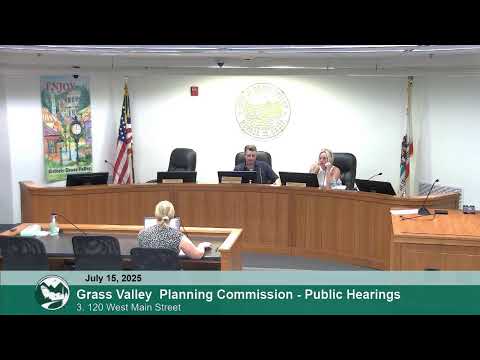
Several residents used the July 15 Planning Commission meeting to press the city on lighting standards, construction dust and local code enforcement.
One commenter who identified himself as an amateur astronomer and energy-policy expert urged the city to address high-intensity, unshielded LED lighting that he said harms night skies, public health and visibility. He referenced guidance from the American Medical Association on outdoor lighting and asked staff and the commission to consider dark-sky–friendly standards and retrofits for existing lighting. "These kinds of high intensity lights, which have open exposed LED elements, are brilliantly intense and blinding," the commenter said, and added they cause glare that reduces visibility.
Planning staff responded that the city’s current lighting standards already require shielding and energy-efficient fixtures and that the chief issue is older, existing lighting. Staff noted that retroactive requirements to replace existing fixtures could be controversial and would likely need City Council policy action to implement.
Other public commenters, including Matthew Colter via a recorded message, raised code-enforcement and dust concerns tied to local projects. Colter criticized the perceived lack of follow-up on conditions of approval for recent developments, described dust from the Loma Rica project and alleged illegal concrete dumping at a private residence. He urged stronger code compliance and said some residents no longer feel the town is being protected from problems tied to development.
Several speakers asked whether lighting standards and enforcement actions should be raised at City Council; staff and the commission said the council is the appropriate body to set citywide policy. The commission accepted these public comments and recorded them into the meeting minutes; no new policy actions or votes were taken on these topics at the July 15 meeting.