Get Full Government Meeting Transcripts, Videos, & Alerts Forever!
Get email alerts on the Gaza Humanitarian topic
No spam. Unsubscribe anytime.
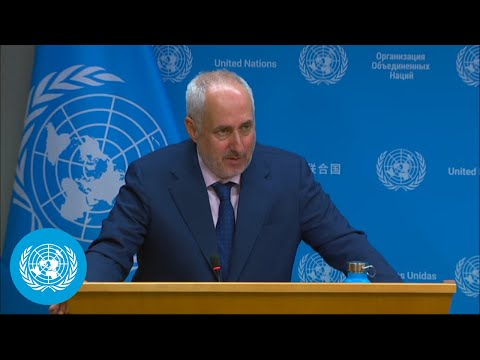
UN warns Gaza aid and fuel shortages are halting hospital and water services; calls for immediate ceasefire and hostages' release
Summary
U.N. spokespeople said small fuel deliveries reached Gaza but hundreds of thousands of liters are still needed daily; U.N. agencies reported critical water, health and protection shortages and urged a ceasefire and unrestricted humanitarian access.
United Nations officials warned that severe fuel shortages and constrained access continue to threaten hospitals, water and sanitation facilities in Gaza and urged an immediate ceasefire to allow humanitarian operations to scale up.
The U.N. spokesperson said "small quantities of fuel entered Gaza yesterday via the Kerem Shalom Crossing" but added that "hundreds of thousands of liters of fuel are critically needed every single day." The statement said supply shortfalls are threatening operations at hospitals, water desalination plants and sewage treatment facilities.
U.N. humanitarian partners reported that humanitarian access remains severely limited amid ongoing hostilities and that people are risking their lives to reach limited and militarized distribution points. The World Health Organization and other partners have reported traumatic injuries at distribution sites; the spokesperson cited an incident in which a 21-year-old man was paralyzed after being shot while trying to collect a bag of flour.
The U.N. also highlighted protection concerns for the most vulnerable groups: more than 80 percent of people with disabilities in Gaza have reportedly lost mobility aids such as wheelchairs and hearing devices, the spokesperson said, citing a partner survey. The U.N. Population Fund (UNFPA) warned of rising domestic violence and of safe spaces for women and girls operating at reduced capacity; the briefing said pregnant women are delivering without electricity or skilled care in some locations.
Humanitarian workers said a rehabilitated well in northern Gaza will provide hundreds of cubic meters of water per day but is insufficient to meet overall needs. The U.N. urged parties to allow large-scale, sustained humanitarian deliveries and again called for the release of hostages.
Separately, the Security Council was scheduled for an open briefing on the humanitarian situation; U.N. emergency relief coordinator Tom Fletcher and UNICEF executive director Catherine Russell were to brief members, the spokesperson said.