
House Financial Services Subcommittee hears competing views on CFIUS, FIRRMA and outbound investment rules
Get AI-powered insights, summaries, and transcripts
Subscribe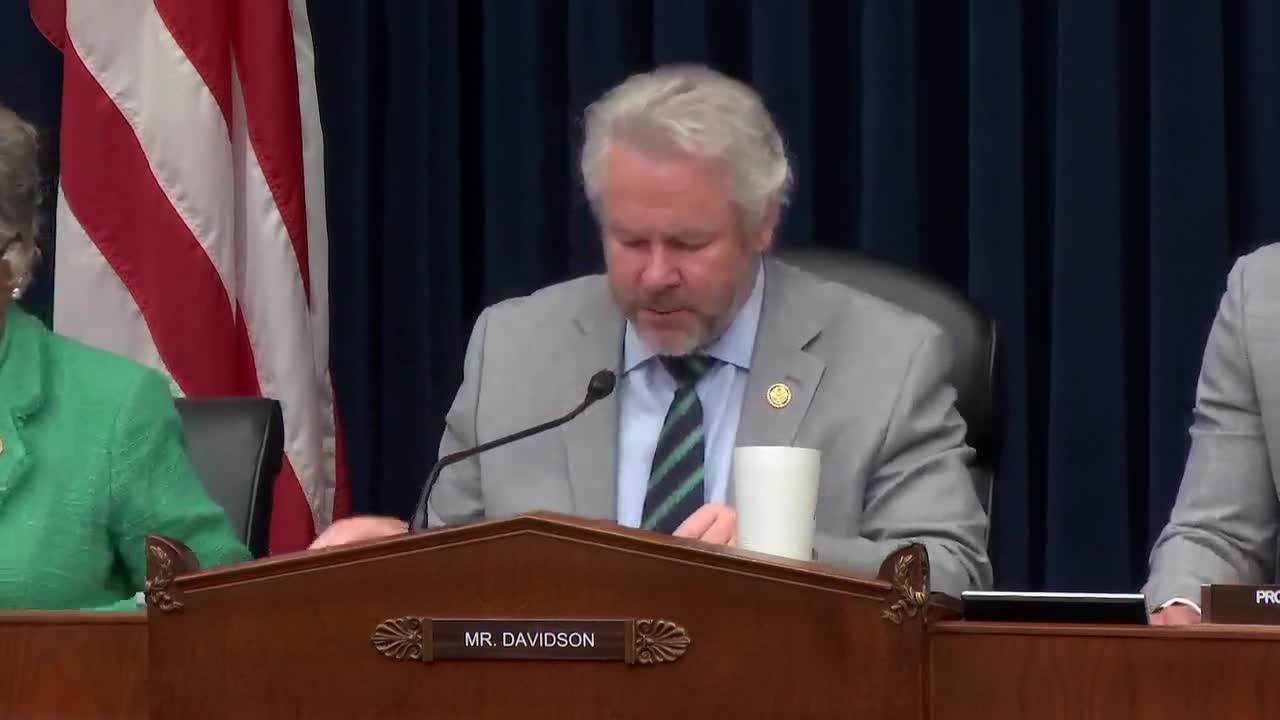
Summary
Witnesses and members debated how to balance national security and foreign direct investment at a House Financial Services subcommittee hearing focused on the Committee on Foreign Investment in the United States, FIRRMA, and the administration's outbound investment screening program.
The House Financial Services Committee Subcommittee on National Security, International Finance and Monetary Policy held a hearing titled "U.S. policy on investment security," where members and witnesses debated how the Committee on Foreign Investment in the United States (CFIUS), the 2018 Foreign Investment Risk Review Modernization Act (FIRRMA) and a newly formed outbound investment screening regime should be structured to protect national security without deterring beneficial foreign investment.
The hearing opened with Chairman Davidson saying the session would examine CFIUS and its role in protecting national security, and Ranking Member Joyce Beatty warned against weakening bipartisan tools such as the Corporate Transparency Act. The panel included Jonathan Sanford, president and CEO of the Global Business Alliance; Brian Reishaus, senior adviser at Freshfields; Ben Joseph, partner at Cravath, Swaine & Moore; and Dr. Sarah Bauerly Danzmann, associate professor of international studies at Indiana University.
Why it matters: Witnesses described a policy trade-off between preserving an open U.S. investment climate and preventing foreign access to sensitive technology, infrastructure or data. Several members pressed for clearer rules and faster reviews so benign investment is not chilled, while others warned against politicizing national-security reviews.
Panelists' main arguments
Jonathan Sanford, president and CEO of the Global Business Alliance, argued that foreign direct investment remains a major economic engine for the United States and that CFIUS should remain focused on identifiable national security threats rather than broader industrial policy. Sanford said international companies employ roughly 8,000,000 U.S. workers and that global investment into the United States totals about $5,000,000,000,000; he added that eight countries account for 75% of investment into the U.S. economy and that manufacturing is the largest sector for foreign investment.
Brian Reishaus, a former senior career official for CFIUS and senior adviser at Freshfields, emphasized legal principles he said are essential to preserving both security and openness: statutory timelines for predictability, evidence-based decision-making, proportionality in mitigation, confidentiality to elicit full disclosure from parties, and congressional oversight for accountability. Reishaus warned that some recent regulatory steps have increased ambiguity for the private sector and that, because Chinese investment in the U.S. has fallen markedly since FIRRMA, broad new jurisdictional expansions could disproportionately affect benign investment.
Ben Joseph, partner at Cravath, Swaine & Moore, described CFIUS as part of the U.S. open investment framework and cautioned that the committee's process can impose timing and economic frictions that must be kept to those necessary to protect national security. Joseph urged lawmakers to ask whether proposed legislative changes would increase necessary efficiency without undermining security.
Dr. Sarah Bauerly Danzmann urged five principles for outbound and inbound policy: clarity for investors, consistent application, narrow focus on true national security concerns, multilateral coordination, and ongoing evaluation of effects on innovation. She recommended regular cost-benefit analysis of restrictive measures and public reporting on how the outbound program is being applied.
Topics of congressional concern
- Outbound investment screening: Members asked witnesses whether the administration's outbound investment program (described in testimony as established at Treasury to screen certain U.S. investments, especially involving China) provides sufficient clarity. Reishaus and Dr. Bauerly Danzmann urged clearer definitions of covered transactions and public reporting on notifications, enforcement actions and whether prohibitions are being violated.
- Known-investor / fast-track proposals: Jonathan Sanford and other witnesses supported a fast-track or "known investor" pathway for trusted, frequent filers to reduce low-risk administrative burdens while reserving full review for higher-risk transactions. Sanford recommended retaining intelligence community assessments and context-specific review of the U.S. business being acquired.
- Politicization and presidential intervention: Several members and witnesses discussed high-profile instances in which presidential actions or public commentary preceded or overrode CFIUS recommendations. Dr. Bauerly Danzmann said national security should not be used as "a bargaining chip in any trade negotiation," and several lawmakers urged that CFIUS operate without political interference.
- Subject-matter expertise and resources: Members from agriculture, energy and technology-focused districts pressed for agency expertise (for example, permanent USDA involvement for ag-related reviews) and noted recruiting and retention challenges for technical experts across agencies. Witnesses said FIRRMA and subsequent appropriations helped recruit expertise but warned that staffing and morale issues at national labs and agencies could impair reviews.
Quantitative and factual clarifications included in testimony
- Witness testimony cited that global companies employ about 8,000,000 U.S. workers and that foreign direct investment into the United States totals roughly $5 trillion (Jonathan Sanford).
- Witnesses said Chinese direct investment in the United States has fallen to under 1% of total FDI and that Chinese investment in the U.S. declined roughly 15% since FIRRMA-era changes (testimony attributed to Sanford and Reishaus).
- Reishaus and others noted that CFIUS has recommended presidential action to block or unwind transactions approximately 10 times to date (Reishaus).
No formal committee actions recorded
The hearing produced no motions or votes. Members asked questions and committed to send written questions to witnesses; the chairman requested written responses by Aug. 21. Witness testimony and members' exchanges were entered for the record, and the hearing was adjourned without formal committee action.
Speakers quoted in this article are identified in the transcript of the hearing and are limited to those persons' direct remarks or paraphrases attributed to them during the session.