Get Full Government Meeting Transcripts, Videos, & Alerts Forever!
Get email alerts on the State Budget topic
No spam. Unsubscribe anytime.
State senators brief New Rochelle on 2025–26 budget, promise $1M in school aid and EMS planning
Summary
New York State senators Shelley Mayer and Natalia Fernandez presented highlights of the 2025–26 state budget to the New Rochelle City Council on July 15, citing $1 million in direct senate funds to the New Rochelle City School District plus statewide changes affecting EMS, school meals, tax credits and local projects.
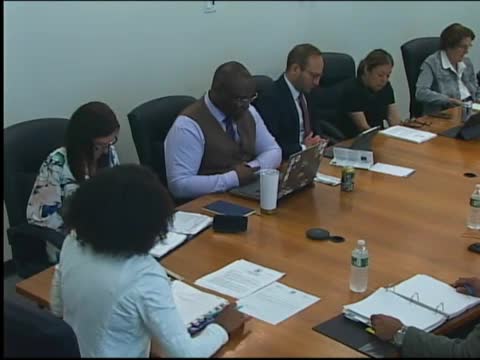
New Rochelle — New York State senators Shelley Mayer and Natalia Fernandez on July 15 outlined parts of the 2025–26 state budget they said will affect New Rochelle, including $1,000,000 in senate-allocated funds for the New Rochelle City School District and new statewide planning requirements for emergency medical services.
Mayer told the City Council she and colleagues added an “additional $1,000,000 of senate money to the New Rochelle City School District,” and described other budget actions intended to help students and families, including a statewide “bell to bell” school cell‑phone ban and universal school meals. “We tried to divide it and also not to talk for too long,” Senator Natalia Fernandez said at the start of the presentation.
The senators said the budget includes a new regional cost index for Westchester that will benefit many districts but does not, by itself, trigger additional foundation aid for New Rochelle. Mayer said the senate funds were added after discussions with the local superintendent and school leadership.
Why it matters: The measures singled out by the senators affect basic services and recurring costs for residents and municipal partners. The school money and changes to EMS funding and planning could change how local government and providers deliver and pay for emergency medical services, meals and student supports.
Key budget provisions described
- School funding: Mayer said the Senate added $1,000,000 to the New Rochelle City School District. She explained that a change creating a Westchester-specific regional cost index helped many Westchester districts become eligible for additional foundation aid but that New Rochelle was not eligible under that formula change, prompting the separate senate allocation.
- School rules and meals: The conference adopted a “bell to bell” ban on in-school student cell‑phone use with limited exceptions for medical needs, parental contact through the school office and caregiving responsibilities. The budget also expands universal school meals so districts should not have to charge for breakfast or lunch; the state will make up the difference between federal and state support for participating districts.
- EMS planning and tax treatment: The budget requires countywide EMS planning that must include all municipalities and intends to treat EMS participants as essential workers, Mayer said. The senators also said EMS expenses will be excluded from the state tax cap, a change they described as a municipal benefit; neither bill had, as of the July 15 meeting, been signed by the governor.
- Taxes and business relief: The budget expands the child tax credit (for example, $1,000 for children under 4) and changes the Metropolitan Transportation Authority payroll tax: small businesses with annual payrolls under $1,750,000 face lower rates and local governments outside New York City are exempted from the tax, the senators said.
- Development and local projects: The senators said they supported language to protect veteran space and the armory in a waterfront development proposal affecting New Rochelle, and they described a variety of discretionary allocations they and colleagues had made for the city: Mayer cited $100,000 to the New Rochelle Housing Authority, $20,000 to the New Rochelle Public Library for a school‑break program, contributions to the Boys & Girls Club and funding for the Mascaro (Mascara) building improvements and the Lincoln Park Conservatory mobile truck for neighborhood food distribution.
- Public health and human services: Fernandez highlighted legislation added to improve transparency and reporting for opioid settlement funds administered by OASIS (Office of Alcoholism and Substance Use Services) and said the budget provides for county distribution and mandatory reporting so local spending can be tracked. She described efforts to encourage clubhouses or similar recovery support services and said the budget codified an Office of Gun Violence focused on prevention, buyback programs and youth programming, including a $10 million youth sports fund.
- Mental‑health involuntary commitment changes: Fernandez said the budget expanded who may refer someone for involuntary evaluation (adding domestic partners) but preserves additional protections, including a requirement that two physicians sign off on certain involuntary admissions; she said discharge planning remains a concern.
Council reaction and questions
Council members pressed the senators on several local concerns. Council member David Peters asked whether recently passed speed‑limit legislation could be applied to the Lincoln Avenue school attendance corridor where a physical school is not present; Mayer said she would ask staff to review the law’s language and report back. Council members raised questions about projected state cuts to education and health care and asked how the city should plan if federal funding falls short. Multiple members urged continued support for climate and green‑infrastructure funding, food‑access programs and workforce development tied to local capital projects.
What the senators asked the city to do
Mayer and Fernandez encouraged local officials to identify specific state road and infrastructure projects (including streetlights and targeted CHIPS requests) so the senators could press for individual projects in the fall budget process. They also invited follow‑up discussions about school‑zone enforcement pilots, quality‑of‑life initiatives and clubhouse concepts for behavioral‑health outreach.
Ending
The senators’ presentation ran into a prolonged Q&A with council members and city staff. Council members who spoke thanked Mayer and Fernandez for discretionary funding they said had already produced visible local projects and asked the senators to continue advocacy as state budget implementation proceeds.