Get Full Government Meeting Transcripts, Videos, & Alerts Forever!
Get email alerts on the Wildlife Management topic
No spam. Unsubscribe anytime.
Cochise County supervisors direct revisions to Mexican wolf resolution, seek sheriff reports and training
Summary
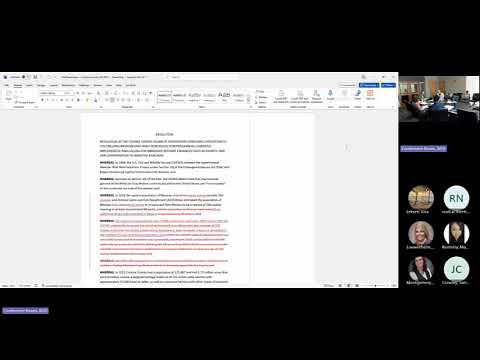
Cochise County supervisors on July 15 directed staff to revise a draft resolution addressing Mexican wolf management, instructing the county attorney’s office to clarify legal language, pursue an MOU with wildlife agencies, require sheriff incident reports, and explore funding training for ranch-patrol personnel.
Cochise County supervisors on July 15 directed staff to revise a draft resolution addressing Mexican wolf management, instructing the county attorney's office to clarify legal language, pursue a memorandum of understanding with wildlife agencies, require the sheriff to compile reports of livestock incidents, and explore funding training for local ranch-patrol personnel.
The board discussed the draft resolution in a work session for the Cochise County Board of Supervisors. Supervisor Crosby pressed for sheriff involvement and for incident reports that could serve as a record if the county later pursued litigation or reimbursement. “We got to have the power of the sheriff’s office to do investigations,” Crosby said, adding that reports would create evidence the county could use “if we decide to file a federal lawsuit.”
Dylan Hendel, civil-division attorney in the Cochise County Attorney’s Office, said his office generally preserves the sponsor’s intent but had proposed one substantive legal change: “The only substantive legal change that I propose is on page 3 and it is on paragraph number 8,” Hendel said, describing language to harmonize local action with federal enforcement by adding an entry condition tied to a memorandum of understanding with the U.S. Fish and Wildlife Service and the Arizona Game and Fish Department.
Why it matters: board members said an organized record of livestock losses and formalized local procedures would provide data for any future legal action and would better document financial losses ranchers say they have suffered. Crosby and other supervisors described ranchers’ frustration with current wildlife-agency response times and with state or federal standards that sometimes leave local producers without full reimbursement.
Key points from the discussion
- Sheriff reporting and evidence: Supervisors pressed to restore language that would require sheriff-side reporting and records of livestock incidents. Crosby said the county needs photographic and investigatory reports that can be kept “as a record of the incident.” Hendel recommended careful wording to avoid extending local authority into federal enforcement roles; he suggested using a memorandum of understanding (MOU) to preserve federal primacy while securing local access to evidence.
- Memorandum of understanding (MOU): Hendel said an existing MOU among eastern Arizona counties, the Arizona Game and Fish Department and the U.S. Fish and Wildlife Service could be a vehicle to clarify response steps and timeframes if a wolf is found; the draft resolution would express interest in entering that MOU pending consent from other members.
- Training and local staffing: Supervisors discussed committing county resources to send ranch-patrol personnel or sheriff deputies to wildlife-investigation training. Crosby suggested the county could fund training that would improve local ability to document animal-kill incidents; one board member noted ECHO has offered $25,000 to the ranch patrol to help with certification and asked that the draft reflect interest in placing a Fish and Game or Fish and Wildlife staff person in Wilcox.
- Requests to federal policy: Supervisors asked that language be added to express county support for federal actions they favor — including language backing a congressional bill to delist the Mexican wolf introduced by Rep. Paul Gosar — but also cautioned against phrasing that could be read as seeking a funding cut. The draft will be adjusted to reflect support for delisting rather than for defunding.
- Scientific and procedural clarifications: Board members asked for an explicit prey-analysis requirement before any additional wolves are released into Cochise County and discussed asking state and federal agencies for expedited removal and response timelines (Hendel noted an example MOU could include a 48-hour response window), though the draft’s final wording will be reviewed for legal risk.
Discussion vs. formal action
No formal vote was taken at the work session. The board directed staff to: (1) incorporate the legal edits Hendel recommended to preserve sponsors’ intent while avoiding legal overreach; (2) restore a requirement that the sheriff compile reports of livestock/wildlife incidents and deliver findings to the board and county attorney’s office for recordkeeping; (3) include a provision expressing county interest in entering an existing MOU with the U.S. Fish and Wildlife Service and Arizona Game and Fish; (4) add language about funding training and exploring a local Fish & Game/Fish & Wildlife presence in Wilcox; and (5) add or refine language on support for delisting (as opposed to defunding) and a prey analysis prior to any new releases.
Next steps
Staff were directed to produce a revised draft and to place the resolution on a dedicated work session agenda Thursday for further review; the board also directed that the revised resolution be placed on the board’s next regular meeting agenda for formal consideration. Supervisors said the Thursday session will allow the three supervisors to review final edits before the item is posted for a vote.
Ending
Supervisors framed the changes as efforts to secure local documentation and faster responses from state and federal wildlife agencies while preserving the county attorney’s legal review. No formal action or vote was taken at the July 15 work session; staff will return a revised draft for review at the board’s scheduled follow-up work session and then on the board meeting agenda for a future vote.