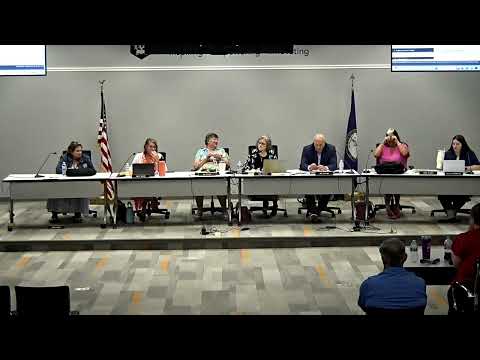
School board approves RISE pilot, a behavioral intervention program for elementary students
Summary
The board unanimously approved a pilot behavioral intervention program called RISE (Resilience, Intervention, Support and Empowerment) to be launched at Pocahontas Elementary, with a small caseload model and a multi-disciplinary team to support students and teachers.
The Powhatan County School Board voted unanimously to pilot an elementary-level behavior intervention program called RISE — Resilience, Intervention, Support and Empowerment — at Pocahontas Elementary School.
The program, presented by district staff, is intended as a short-term, targeted support for students whose behavior significantly disrupts learning. RISE will use a small-case approach and a multidisciplinary team that includes a certified teacher or instructional assistant and a behavior specialist certified as a board-certified behavior analyst. The staff described the goal as returning students to general education classrooms with durable behavior and academic progress.
Why it matters: Board members described the program as early intervention intended to reduce in-school and out-of-school suspensions, prevent escalation into more restrictive placements and provide coaching to classroom teachers on evidence-based strategies.
Program design and capacity
"We call it the RISE program—resilience, intervention, support and empowerment," said Mrs. Matheny, a district staff member who presented the plan. She said the program will provide individualized, data-informed supports; the behavior specialist will also coach teachers and offer professional development so strategies scale across classrooms.
Staff described the intended caseload as generally small—"no more than 5 to 8 students" actively managed at a time in order to keep the work intensive enough to be effective. Students may receive in-class supports or short, focused pull-out sessions depending on need. District staff emphasized the pilot's aim to be short-term and flexible rather than a long-term placement.
Cost and board response
Board members asked detailed questions about caseload, overlap with special education and how the pilot's effectiveness will be measured. Staff said the pilot is funded from existing allocations and that the district will return with data after the first year to assess impact and consider expansion.
The board voted 5–0 to approve the pilot and the initial funding plan.
Ending
Staff said they will bring back implementation details and metrics during the fall, including measures of suspensions, teacher coaching activity and academic progress for students who participate in RISE.
AI generated
The text on this page is AI generated. Summaries, highlights, analysis, and video transcripts are all produced from the original source material.
AI can make mistakes, so if you spot one, and we will fix it for everyone.
Note: the source content is unaltered by us. Any content source we link to, be it a video, an audio recording, or a document, is presented exactly as its publisher released it. That publisher is usually a government body, sometimes an individual official or another organisation.