Get Full Government Meeting Transcripts, Videos, & Alerts Forever!
Get email alerts on the Horse Barn Operations Enforcement topic
No spam. Unsubscribe anytime.
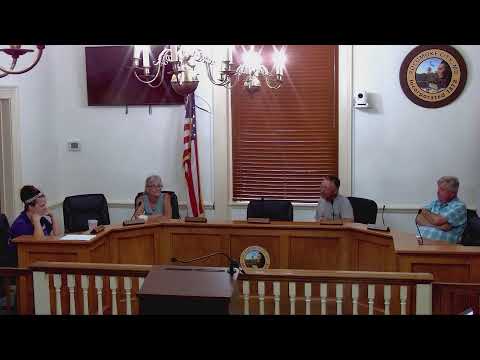
Fair Committee debates barn rules, track dust fines and water-truck liability
Summary
Committee members and city staff discussed proposed lease amendments to require tenants to control track dust, possible fines for noncompliance, the process to amend leases and who is liable if city equipment is used on fairgrounds.
POCOMOKE CITY — Fair Committee members pressed for clearer barn rules, enforcement mechanisms for track dust and a plan to reduce recurring maintenance costs at the horse barn and track.
Committee members described recurring dust problems at the harness track and pushed to include specific duties and penalties in lease agreements with barn tenants. "If you go out there to the track, that you have to water that track prior to you going out on the track. If not, then there's gonna be a fine," Sarah, a Fair Committee member, said. Several speakers said the fine language and any lease amendments would need review by the city attorney and final approval from the Pocomoke City Council.
The group described the recommended track maintenance practice known as "putting it to bed": wet the surface in at least two passes and then drag the track to fill footprints. Committee members said more frequent track watering and dragging is needed than the current practice. "If you properly put it to bed ... they should wet it, make at least 2 laps with the water, and then you drag it," a committee speaker said.
Committee members discussed enforcement challenges, including how to identify which tenant caused a violation and whether to install cameras. Sarah said she did not feel cameras were necessary but noted that enforcement without evidence could be a "he said, she said" problem. The committee asked staff to consider lease amendments that would allow fines to be assessed to tenants and to include administrative fees if the city is required to pay a state fine and recover costs.
The meeting also addressed equipment and liability. Committee members asked who owns and maintains the city water truck used to wet the track; staff said the truck is city property. "The city does," a speaker said when asked who owns the water truck. Members raised concerns about liability if someone is injured while operating a city vehicle on city property and urged secure storage of keys. Staff agreed to address keys and secure access.
Several committee members called for clearer tenant obligations and a timetable for improvements to the barn to attract more renters and reduce taxpayer burden. Committee members noted there are 21 stalls in the barn and that only two or three were rented for much of the past year. They recommended producing a prioritized list of improvements and seeking bids or donations for materials and labor.
Why it matters: Track dust can prompt state or federal environmental complaints and create public-health and nuisance issues. Ambiguous lease language and unsecured city equipment raise potential liability and enforcement problems that could affect insurance coverage and the committee’s ability to operate events.
Details and next steps: Committee members were advised to draft proposed lease-rule changes and fines for review by the city attorney; staff will check whether fines and lease amendments can be enacted administratively or require council approval. Staff will also confirm which structures are insured by the city and which are insured by Fair Committee Inc., and will identify options for securing keys to city equipment.