Get Full Government Meeting Transcripts, Videos, & Alerts Forever!
Get email alerts on the Transportation Finance topic
No spam. Unsubscribe anytime.
Pima County supervisors press RTA leader on $1 billion shortfall, ask whether county could bridge sales‑tax gap
Summary
Supervisors and the Regional Transportation Authority (RTA) outlined a roughly $550 million–$1 billion shortfall to finish projects voters approved in the 2006 RTA plan, discussed options for a new ballot measure and whether the county could temporarily continue the half‑cent sales tax to bridge funding until voters act.
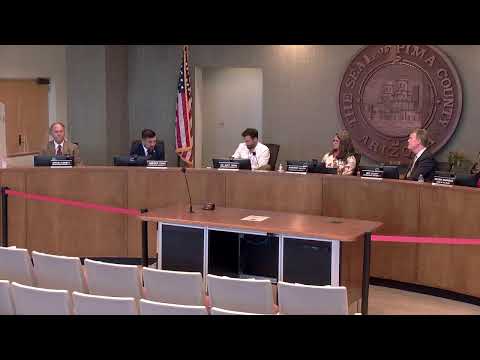
County supervisors heard a two‑hour briefing July 31 on the financing gap in the Regional Transportation Authority program and the options staff and regional partners are weighing to avoid breaking continuity of transportation funding.
The RTA’s interim executive director, Mike Ortega, and Pima County staff told the board that revenues collected since the 2006 voter‑approved plan have fallen far short of original projections. Ortega summarized the scale of the problem in plain terms: revenue projections before the program began were roughly $2.7 billion while actual receipts were about $1.7 billion, and the region has used hundreds of millions in one‑time regional funds to try to make up the shortfall.
Why it matters: county and municipal officials said they fear leaving a gap when the current RTA collection ends June 30, 2026. Without a new funding measure or an interim bridge, transit and other regional programs could face disruption; staff estimated the region needs “another billion dollars” to finish the roads and other elements voters expected when RTA I passed.
What supervisors heard and asked - Supervisor Matt Hines, who led the briefing, said the technical analysis shows a multiyear pattern: “over the 19 years of the 20 that we've had from of the 20 year program, there has not been a single year … that the revenue projections were consistent with what was received.” He characterized the shortfall as a structural problem caused by lower population and long economic cycles, and by pandemic and inflationary impacts on construction costs. - Ortega walked board members through a spreadsheet he distributed that shows program delivery status, remaining named road projects, and scenarios to bring the program to voters. He described three scenarios: (A) pursue a March 2026 ballot measure, (B) move a measure to November 2026, or (C) postpone and design a new RTA proposal for a later vote after additional project completion. Ortega said November gives more time for public outreach and planning. - County Administrator Jan Lesher and other members of the Technical Management Committee (TMC) told supervisors the TMC had recommended not pursuing a March 2026 election because the committee concluded the region lacks sufficient final data and public readiness to maximize the chance of voter approval.
Options the board discussed - Bridge funding by the county: Hines outlined an option in which the County Board, by unanimity, could continue the existing half‑cent sales tax rate for a limited period and direct receipts to the RTA so projects continue while a new plan is developed and put to voters. He stressed the board would not raise taxes, only hold the tax at current levels pending a future vote. - Timing: staff said if the board were to call an election, a last‑practical date for calling a March 2026 election would require final ballot language and plan approval by early September; that tight schedule makes March difficult. November 2026 or a later multi‑year schedule would provide more time for outreach and to complete or scope projects. - Transit funding complications: Ortega said federal and other short‑term funds could complete certain roadway elements, but funds for ongoing transit operations cannot be replaced by those one‑time sources and need dedicated revenue if the current RTA revenue stream lapses.
Concerns and next steps - Several supervisors voiced concern about taking extraordinary unilateral action; Supervisor Steve Christie asked that any bridge proposal include clear guardrails so funds would be used only to complete the RTA commitments and not be repurposed without voter approval. - Lesher said county staff will continue to participate in TMC and RTA work, and that the county expects to consider the options again after the TMC and RTA board take next steps at their July 31 meetings. - Ortega said the RTA will return with refined scenarios and recommended next steps for the RTA board, and he emphasized outreach: “The best plan will be supported by all the electives across the region, not just a unanimous vote,” he said, adding that improved communications and periodic re‑checks of revenue and cost assumptions are needed.
Context and limits: the RTA program was created by a voter‑approved regional sales tax in 2006 that included dozens of named projects. County staff and RTA leaders told supervisors that most projects have at least started and 19 of 35 named road projects remain to be completed. The numbers discussed at the meeting reflect staff estimates and the regional planning documents presented to the board; no final county board action to extend or continue the sales tax was taken at the meeting.
Where this goes: the TMC and RTA board scheduled follow‑up meetings to refine scenarios and outreach plans; the county indicated it would consider possible bridge options if regional partners identify a clear plan and legal framework.