Get Full Government Meeting Transcripts, Videos, & Alerts Forever!
Get email alerts on the Sunshine Law Settlement topic
No spam. Unsubscribe anytime.
Cole County settles decade-old Sunshine-law case; commissioners spar over chamber meeting attendance
Summary
The Cole County Commission recorded a roughly $209,000 payout to resolve a decade-old lawsuit over open-meeting violations and debated whether attendance at a chamber transportation meeting would run afoul of the Sunshine Law.
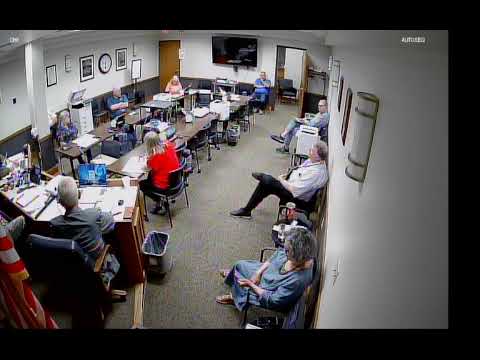
The Cole County Commission on Tuesday confirmed the county will pay about $209,000 to resolve Mallon v. Prosecuting Attorney, a lawsuit dating to 2015, and spent more than an hour debating whether attendance by multiple commissioners at a chamber transportation meeting could violate the state Sunshine Law.
Commissioners said the circuit judge’s determination ended a case that had begun in 2015; the judge in the matter was identified in the meeting as Circuit Judge Daniel Green. A commissioner said the county will be out “about $209,000 for violating sunshine” and that either party could still appeal the judge’s decision.
The discussion then turned to a chamber-organized Jefferson City area Transportation Committee meeting scheduled for the next day, which several commissioners said was described to them as an informational event outlining the status of two city/county capital-improvement sales taxes and projected projects. Some commissioners said the event was by invitation only and not a public meeting; others argued that a quorum of elected officials at a third-party event could create a Sunshine Law problem.
One commissioner moved that only the presiding commissioner attend the chamber meeting as the county’s representative. Other commissioners said the Chamber meeting had previously included invited officials (cited examples: a ribbon cutting at a private company) and argued the event was social or informational rather than a public governmental meeting. The exchange became heated, with commissioners debating whether community membership or invitation-only gatherings require public posting when government business is discussed.
The commission also discussed a separate instance in which a resignation letter (see separate item) had been posted on the governor’s website; a commissioner noted that, per statute, a resignation letter had been filed with the county clerk and that applications to fill the vacancy were open through July 24.
Why it matters: The Mallon ruling resolves a long-running legal dispute over open-meeting requirements, creates an immediate fiscal impact for the county, and prompted commissioners to revisit how they represent the county at outside, invitation-only events where several public officials may attend.
Background: The Mallon case was filed in 2015 and had been the subject of closed-session consideration during previous meetings. Commissioners said the recent closed session and vote followed the judge’s determination and that payment would proceed pursuant to that decision.
What remained unresolved after Tuesday’s discussion was a uniform approach to attendance at third-party events: commissioners repeatedly asked whether attendance would be posted or treated as official action if more than one commissioner were present, and whether invited but nonpublic gatherings should be treated the same as membership or social events.
No formal amendment to commission policy was adopted during the meeting on that procedural question; the motion reported at the meeting concerned limiting county representation at the chamber event to the presiding commissioner only.