Get Full Government Meeting Transcripts, Videos, & Alerts Forever!
Get email alerts on the Veterans Cemeteries topic
No spam. Unsubscribe anytime.
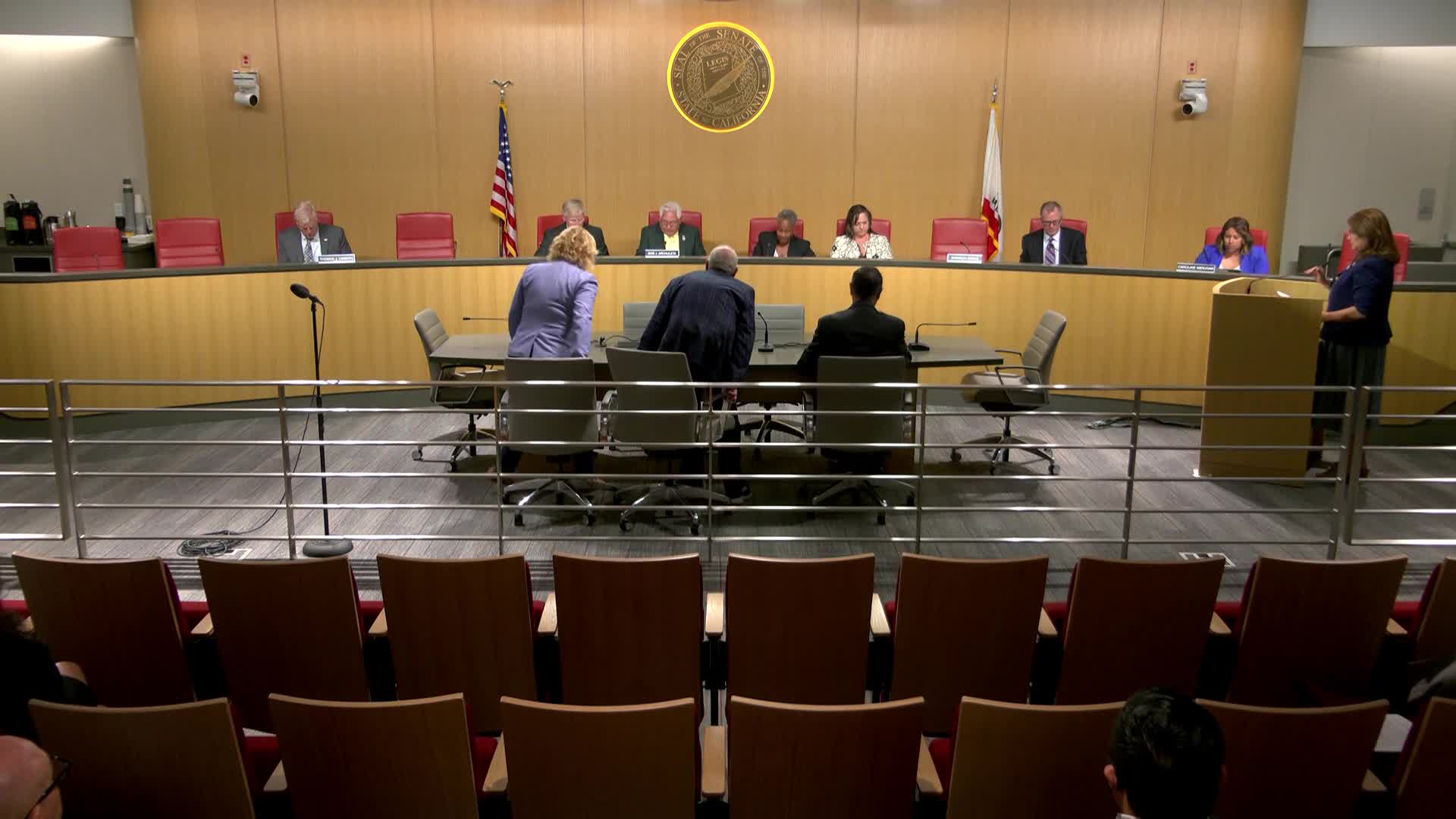
Senate committee advances measure to speed environmental review for Southern California veterans cemetery
Summary
The Senate Committee on Military and Veterans Affairs voted unanimously to send AB 571 to the Appropriations Committee. The bill would create a narrow CEQA exemption to accelerate planning and permitting for a veterans cemetery project in Orange County backed by state and local officials and roughly $55 million in committed funding.
The California State Senate Committee on Military and Veterans Affairs on Monday voted to pass AB 571 to the Committee on Appropriations, advancing a targeted exemption from the California Environmental Quality Act (CEQA) intended to speed development of a Southern California veterans cemetery in Orange County.
Assemblymember Sharon Quirk Silva, the bill’s sponsor, told the committee the project is “a decade in the making” and that AB 571 provides “a targeted CEQA exemption with an urgency clause for the Southern California Veterans Cemetery” to streamline planning and permitting. She said the measure would help deliver “a final resting place for Orange County’s and surrounding areas’ veterans, a place of honor, dignity and peace.”
The bill’s supporters said the exemption is narrowly drawn to prevent what they called abuse of CEQA that can delay or kill projects. Orange County Supervisor Don Wagner told the committee, “The CEQA exemption is, in fact, narrow,” and said almost every city in the county has passed resolutions supporting the cemetery. Katrina Foley, vice chair of the Orange County Board of Supervisors, urged members to give the bill a “yes” vote.
Multiple veterans organizations testified in support. Seth Reeb of Reeb Government Relations said he represented the American Legion (Department of California), AMVETS (Department of California), the Military Officers Association of America (California Council of Chapters) and the Vietnam Veterans of America (California State Council), and stated those groups were in strong support.
Committee members asked about the project timeline and funding. Quirk Silva said the state veterans agency (CalVet) has submitted the project to the federal government and the team is seeking a higher ranking on the federal priority list; she said the project’s backers hope to be “towards the top of the priority list” by October and that, contingent on federal steps and land transfer to CalVet, “my hope would be sometime in the next year” to begin construction. She also said there is roughly $55,000,000 in combined state and county funds available for early phases of construction, including $20,000,000 from the county.
After debate and public testimony, Senator Tom Umberg moved the bill. The committee recorded a final unanimous vote to pass AB 571 to Appropriations; the roll call in the committee record lists Senators Archuleta, Grove, McNerney, Minjivar and Umberg voting "aye." The committee clerk announced the measure is due in Appropriations.
The bill’s sponsors and supporters described the project as the product of more than a decade of local, state and federal coordination and said the exemption is limited to avoid broader changes to CEQA. Several speakers reiterated that while CEQA is necessary, targeted exemptions have been used previously to prevent litigation or procedural delays from stalling what supporters call long-promised public projects for veterans.
Votes at a glance: AB 571 — Motion to pass to Committee on Appropriations; mover: Senator Tom Umberg; no second recorded; committee vote: 5 ayes, 0 noes, 0 abstentions; outcome: passed to Appropriations.
Supporters said next steps include coordinating with CalVet and federal partners to secure priority status on the federal list and completing land transfer so that funds already committed can be spent on construction work. Opponents did not speak in the committee hearing record. The measure will move to the Appropriations Committee for further consideration.