Get Full Government Meeting Transcripts, Videos, & Alerts Forever!
Get email alerts on the Public Safety Fire Sprinklers topic
No spam. Unsubscribe anytime.
Commerce City council revisits residential sprinkler rule after developers and builders raise costs, implementation concerns
Summary
At a lengthy study session, council members, building industry representatives and fire officials debated the city's residential fire sprinkler requirement adopted with the 2021 code; staff presented options ranging from keeping the rule to repealing it and the council asked staff to return with clarified modification options.
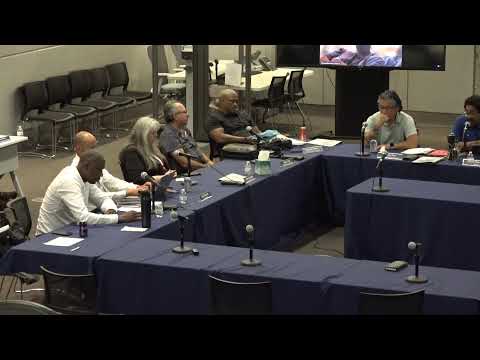
Commerce City councilors and staff spent more than an hour on Tuesday discussing the city's residential fire sprinkler requirement, focusing on implementation problems builders reported and the cost passed to homebuyers.
The sprinkler requirement, adopted as part of Commerce City's 2021 code adoption and effective six months after adoption in November 2023, applies to new attached-unit housing and many townhomes; the ordinance includes an 8-foot side-separation exemption that staff and some council members said has caused confusion. Staff presented options to keep the requirement, modify implementation, remove the 8-foot exemption or repeal the requirement entirely. After a straw poll produced no majority, council asked staff to return with a more specific package of changes for further consideration.
Council and staff said the city adopted the code-aligned sprinkler requirement to reduce interior fire spread and save lives. Mike Sutherland, deputy director of community development, summarized the safety case during the presentation: "With residential fire sprinklers, 96% of fires are contained within 1 room...89 percent of fires are suppressed by a single head and 78 percent, fewer injuries to firefighters are, are reported in house fires when they're equipped with spot fire sprinklers." He also said the requirement stems from long-standing model-code recommendations and renewed interest after the Marshall Fire.
But builders and developers told staff and council the sudden implementation and associated fees created large, unanticipated budget impacts for projects already under way. Jeff Bridal, director of community development, relayed the development community's chief concern: "Predictability of process, predictability of fees was really important, and it was a constant thing we heard over and over and over again." That unpredictability, staff said, can chill investment or force redesigns late in a project.
Staff and outside participants also offered technical and cost details. In outreach to builders and installers, staff said installation costs reported to them ranged roughly from $9,000 to $12,000; builders said the final charge to a buyer after markup commonly reached about $16,000 to $17,000. Sutherland summarized how builders framed the price: "They represent probably less than 3% of the cost of the home" in the staff focus group, while national data cited in the presentation put the figure closer to 1%.
Water and infrastructure questions surfaced: South Adams County Water and Sanitation staff told the council that a house with residential sprinklers typically requires a 1-inch tap versus a 3/4-inch tap for a home without a sprinkler system; the district said equivalent residential unit (ERU) accounting is not changed by that emergency-only water use. Council members also pressed the fire department on effectiveness: the fire marshal and other fire officials stressed that interior sprinklers mitigate interior fires and buy time for occupants and firefighters, but they do not prevent large conflagrations like the Marshall Fire.
Council members voiced a range of views. Several said safety is the top priority; others said affordability and equity concerns justify reexamining whether the city should require sprinklers for all qualifying single-family projects. Council member Ford noted the distributional concern: "If we don't change it, in 10 years it becomes them-and-us: gentrification that will require sprinklers for some parts of the city and not for others." Council member Douglas, who voted for the code change previously, argued the requirement applies only where separation distances are small and that safety must remain the priority.
Staff presented three broad approaches: keep the rule as written; modify the regulation or the implementation (examples included removing the 8-foot exemption, making sprinklers optional for buyers, or phasing carve-outs for subdivisions already in construction); or repeal the requirement. After council discussion, members split their informal preferences and no single option gained a majority. Staff said the next step will be to return with a clearer set of recommended modifications under the broad option 2 variants the body discussed.
The record from the study session shows the council did not take formal legislative action on the ordinance at the meeting. Instead, city staff were directed to return with more concrete, narrower options that address builders' implementation concerns (including treatment for in-process subdivisions) and to quantify cost and water-supply impacts.
Commerce City is not alone in grappling with these questions. Staff compiled a jurisdictional survey showing many Front Range municipalities have recently adopted sprinkler requirements, with a range of exemptions and policy approaches. Sutherland told council the city is an outlier in keeping an 8-foot setback exemption; he said other communities either require sprinklers without such a setback carve-out or offer the system as a buyer option.
Council members said they want more precise cost data, clearer implementation pathways for subdivisions already under construction and better analysis of alternatives such as exterior hardening and defensible-space measures that the forthcoming statewide wildland-urban-interface code will address. Several members asked staff to include possible grandfathering approaches used by neighboring cities if staff recommend changes.
Staff next steps: city staff will prepare a draft ordinance and a set of narrower options with precise fiscal, water-infrastructure and implementation implications for council review. The council did an informal straw poll on three broad alternatives but did not vote; any formal ordinance change would require the usual readings and formal council action.