Get Full Government Meeting Transcripts, Videos, & Alerts Forever!
Get email alerts on the Cannabis Regulation topic
No spam. Unsubscribe anytime.
Madison Heights city manager says cannabis licenses boosted property tax base and one-time donations to public safety
Summary
Marsh said the city’s licensing framework led to redevelopment and increased taxable value.
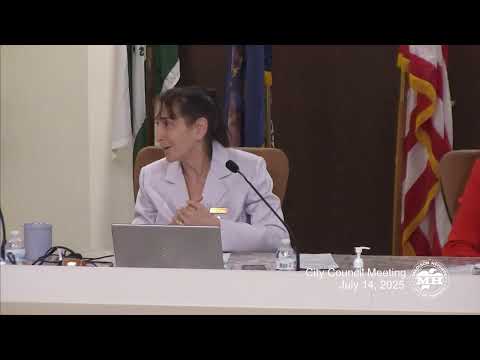
Madison Heights — City Manager Marsh told the City Council on July 14 that the city’s approach to licensing adult-use cannabis businesses has led to redevelopment of underused properties, increased taxable value and one-time community donations that have funded public-safety equipment and community programs.
Marsh said the city included investment in real and personal property, community support and responsible business practices as part of licensing evaluations. ‘‘This approach has led to substantial increases in these developed property values and in turn taxable revenues,’’ Marsh said, noting before-and-after property improvements tied to licenses.
The presentation said the city’s property-tax base increased by about $520,963 annually from properties redeveloped for cannabis businesses, with approximately $165,000 flowing to the city each year and the remainder distributed to other taxing jurisdictions. Marsh said state-distributed taxes tied to the businesses amount to about $175,000 and described roughly $508,000 in one-time donations from cannabis operators that largely funded public-safety items such as evidence cameras, radar signs, ballistics shields and a school resource officer.
Why it matters: Council members framed the report as both a revenue and public-safety issue. Council members praised the city’s licensing framework for prioritizing reuse of blighted or vacant buildings and for requiring community investments that, they said, helped avoid larger tax increases and funded specific one-time purchases.
Council discussion and public-safety data
Marsh said the city compared police calls for service from two local dispensaries (identified in the presentation as Puff and Liberty) with calls for comparable retail stores and bars and found the dispensaries generated fewer calls for service than many commercial entities. ‘‘The data shows that the cannabis businesses approved through our ordinance generate fewer calls for service than many of the commercial entities,’’ Marsh said.
Council members asked for additional detail on enforcement and impaired-driving stops. Councilman Soltis asked whether the police department had counts of traffic stops for suspected driving under the influence of drugs. Marsh said she did not have that categorization on hand but could ask the police how they code such incidents.
Council reaction and context
Councilman Muir summarized the financial effects from the presentation, saying his back-of-the-envelope calculation suggested ‘‘about a million or so in one-time type of donations to the city, between the straight up donations as well as the community foundation donations’’ and ‘‘about a half a million annually between the tax increase just to the city council as well as the state revenue sharing and the business license fees.’’ He said that without the licensing policy the city likely would have faced either staff reductions or a tax increase.
Mayor Vester said banning local sales would not stop local use because residents could buy recreational cannabis in neighboring cities and use it in Madison Heights. He also said available housing-value data did not show any clear local downward impact from dispensaries.
Marsh also summarized social-impact research and outreach with the Madison Heights Community Coalition, saying available studies do not link local dispensaries to increased use in the city and that broader national attitudinal shifts have driven greater acceptance of cannabis.
No formal action taken
The presentation was received and opened to council questions; no ordinance or regulatory change was voted on at the meeting. Council asked staff to follow up on a few data points, including whether police records can be parsed to show traffic stops specifically coded as suspected impairment from cannabis.
Ending
Council members praised the presentation for clarifying the fiscal and public-safety effects of the licensing approach and directed staff to pursue follow-up data on impaired-driving coding and home-value trends.