Get Full Government Meeting Transcripts, Videos, & Alerts Forever!
Get email alerts on the Affordable Housing topic
No spam. Unsubscribe anytime.
Landlord association representative urges focus on job creation to ease affordable-housing pressures
Summary
At public comment, landlord association representative Rick Paul urged the legislature to prioritize job creation and reduce regulatory burdens to address affordable-housing challenges, citing rising costs, higher taxes, and fair-market rent figures.
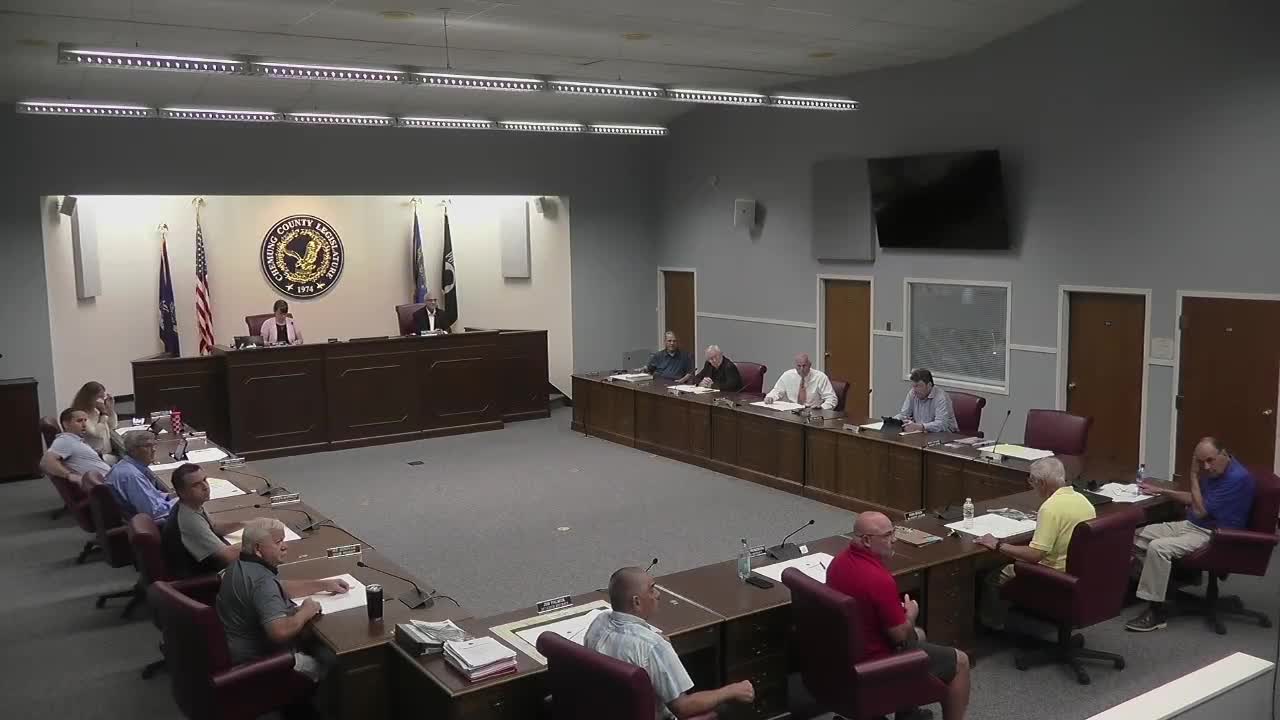
Rick Paul, who identified himself as a landlord association representative and Elmira taxpayer, addressed the Chemung County Legislature during the public-comment period on July 14 to urge a different approach to the county’s affordable-housing challenges.
“What is affordable housing really mean?” Paul asked, saying the phrase is used “without a clear, shared understanding.” He described rising operating costs for rental property owners — higher property taxes, increased insurance costs, spiking water and sewer rates, and higher material and labor costs since the COVID-19 pandemic — and warned those pressures are contributing to vacant, boarded and blighted properties.
Paul quoted U.S. Department of Housing and Urban Development (HUD) fair-market rent figures he said apply locally: “For 1-bedroom and efficiency there [are] between $800 and $950; a 1–2 bedroom $1,300 to $1,400; for a 3-bedroom, $1,500 to $1,600 a month, including all utilities,” he said. Paul added that landlords typically subtract about $250–$300 for utility costs when considering rents.
He said inspection, registration and other fees, along with higher sewer taxes and insurance, have “made it harder” for responsible landlords to operate. Paul gave specific cost examples: a hot-water-tank replacement that used to cost about $500 is now often $1,000 if DIY, and $2,000–$3,500 if hired out. He also said sewer taxes have “soared 43%.”
Paul urged a shift away from what he described as an overreliance on grant programs and toward sustainable local job creation, arguing that higher-paying local jobs would reduce long-term demand for subsidized housing. “If we focus less on chasing grants, more on creating real jobs, substantial job paying jobs, we might find the need for affordable housing would fade away,” he said.
Why it matters: Paul’s comments frame affordable housing as both a supply-side and economic-development issue and pressed the legislature to consider how county policies and economic development efforts affect the private rental market.
Ending: Paul closed by urging county leaders to recruit employers and investment to the region to support higher incomes and to reduce dependence on grants.