Get Full Government Meeting Transcripts, Videos, & Alerts Forever!
Get email alerts on the Municipal Finance topic
No spam. Unsubscribe anytime.
St. Augustine finance director outlines revenue manual, recommends keeping millage at 7.5 and CPI-based fee increases
Summary
Finance Director Melissa Burns presented a draft revenue manual recommending a 7.5 millage cap, CPI-linked rate increases for several utility and fee categories and a 2026 review of the fire assessment. Commissioners asked for reserve figures and details before approving changes.
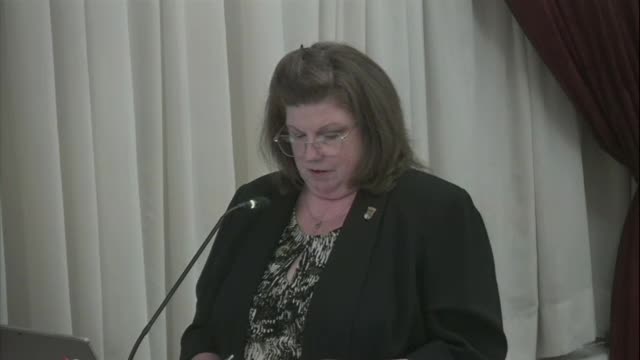
Melissa Burns, the city finance director, presented the City of St. Augustine's draft revenue manual and recommended keeping the proposed millage at 7.5 mills while pursuing modest, CPI-based increases for several fees and utility rates.
The manual breaks major revenue sources into general fund and proprietary (enterprise) funds and identifies recommended adjustments staff will bring forward during upcoming budget workshops. Burns said staff used the property appraiser's June 1 estimates and the July 1 actual taxable values to calculate revenue sensitivity to millage changes. "I'm here to present to you the revenue manual and gain your input and insight on the various recommendations outlined through this document," Burns said.
Why it matters: the revenue manual frames this year's budget choices and possible fee changes that affect utilities, parking, short-term rentals and other city revenues. The commission will consider the proposed millage and fee proposals in workshops Aug. 28 (and Aug. 29 if needed) and at a regular meeting where a resolution to set the proposed millage will be discussed.
Key recommendations and details
- Millage: Staff recommended that the proposed millage remain at 7.5 mills; Burns said commissioners can lower it but cannot raise it above that figure before formal adoption. Staff noted the rollback rate calculated at 7.3513 mills and said each tenth of a mill change equals roughly $353,000 in city revenue; in the manual's example a homesteaded property with $400,000 taxable value would see about a $35 change per tenth of a mill.
- CPI-linked increases: Burns recommended applying the annual consumer price index (CPI) increase (2.3% this year, as shown in the manual) to certain enterprise and fee categories where code or prior policy allows automatic annual adjustments. Categories flagged for a 2.3% adjustment include stormwater, solid waste (residential and commercial), rents and royalties, and short-term rental permit fees. Burns said the city code allows rates to increase every year by the CPI.
- Water and sewer: The manual shows water and sewer charges and notes the city code permits an annual CPI-based rate change. Burns also told commissioners staff is reducing the surcharge for customers outside the city limits over time and that the loss of that surcharge will factor into future revenue needs.
- Short-term rental permits: Staff recommended updating the permit fee schedule; the presentation lists a base rate and per-bedroom charges in the manual (transcript text: "base rate of $3.00 $3.03 with a bedroom per bedroom rate of $79.30"). Staff said the recommendation is built from program cost analysis and a CPI adjustment.
- Parking and enforcement: Staff said metered parking revenue and parking fines are conservatively forecasted. The manual recommends reviewing metered parking and parking violation fines; the current violator fine for some parking violations is $35 and staff flagged a recommended change that will be discussed further on the regular meeting agenda. During public discussion, raising some illegal-parking fines to $100 was mentioned as a possible deterrent but commissioners said they want clearer rules, signage and more detail before moving forward.
- Fire assessment: The manual shows the city's fire assessment currently covers about 50% of the related cost. Staff recommended budgeting for a formal fee study in 2026 to review the assessment and any adjustments for the FY 2026-27 budget.
- Other revenue sources: Burns reviewed franchise fees (examples cited: Florida Power & Light, TECO Peoples Gas, sightseeing vehicle/rail-related receipts mentioned in the financial documents), utility taxes, state-shared revenues (Office of Economic and Demographic Research estimates), communication services tax, a 0.5% local sales-tax share, building permits and rents/royalties from agreements with organizations such as Ripley's, Gallimore Center, St. Augustine Yacht Club, St. Johns County Cultural Council, Flagler College and various department leases.
Commissioner questions and next steps
Commissioners asked for more granular reserve information before agreeing to rate increases. Commissioner Cynthia Garris asked staff to provide the current reserve percentages in water and sewer funds so the commission can weigh whether a CPI increase is needed. Burns acknowledged the request. Burns also said this evening's regular meeting would include Resolution "20 20 five-twenty 5" to set the proposed millage and reiterated that budget workshops are scheduled for Aug. 28 at 9 a.m. and Aug. 29 if needed.
No formal vote was taken at the special meeting; staff will return with supporting reserve figures, the fire-assessment study plan for 2026 and specific proposals for parking fines and short-term rental fees during the upcoming workshops and regular meeting.