DeSoto staff outline 'one‑stop shop' permitting plan; in‑house approach aims to save about $150,000
Loading...
Summary
Development services director presented a staff‑led Lean Six Sigma one‑stop permitting model with an estimated initial budget of $25,000 and expected revenue gains; staff will pilot in Q4 2025 and return in Q1 2026 with a final adoption package.
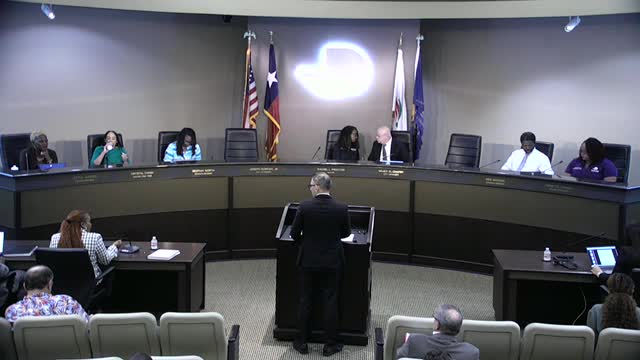
Development Services Director Ahmed Al Casey (presented as Matt Al Casey in transcript) told the City Council on July 14 that staff will lead a Lean Six Sigma‑informed initiative to create a "one‑stop shop" for building and development plan review. The proposal, part of the city business plan goal No. 5 for fiscal 2025, is intended to reduce permit review cycles and improve customer experience.
Under the one‑stop model, plan reviewers from multiple disciplines conduct a single, interdisciplinary session with applicants so reviewers review and approve permits collaboratively, rather than routing applications through siloed review steps. Al Casey described a five‑step approach — define, measure, analyze, design and verify — that includes stakeholder interviews, process mapping, pilot projects and a final report.
Staff said steps 1–4 (define through design) can be completed using existing staff resources. The presentation requests an initial budget of $25,000 (including $25,000 in step 5 testing and $25,000 graphic design/handouts noted in packet) and an annual recurring line of $10,000 for materials and minor ongoing costs; staff estimated a consultant would have cost roughly $150,000. Projected benefits include a 5–10% revenue improvement from faster development activity (estimated $48,000–$96,000 in additional revenue) and non‑quantified customer‑service gains.
Council members asked about Lean Six Sigma certification for staff; Al Casey said he is a PMP and the project will use staff and a coach provided through a partnership with the City of Lancaster. Council members asked to be invited to pilot sessions but were cautioned about quorum rules ("walking quorum"). Staff said pilot dry runs and a final draft will be returned to council for adoption in Q1 2026.
Al Casey said the initial implementation timeline places pilot activity in Q4 2025 and final adoption in the first quarter of fiscal 2026. Council members expressed support for the in‑house approach and asked staff to ensure measurable performance targets are included. Al Casey said the city will track leading indicators such as elimination of repeated "acceptance letters" at multiple review stages and performance metrics comparing current vs. new cycle times.