Get Full Government Meeting Transcripts, Videos, & Alerts Forever!
Get email alerts on the Infrastructure Highways topic
No spam. Unsubscribe anytime.
Highway superintendent reports no-bid RFPs, bridge-upgrade rules and solid-waste upgrades
Summary
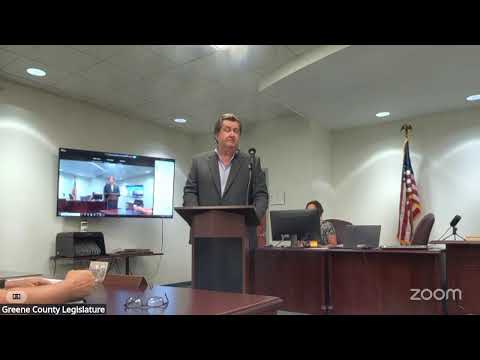
Scott Hamilton, Greene County highway superintendent, briefed the Public Works Committee on local transportation and solid-waste projects, reporting difficulty getting contractors this season, regulatory changes that increase project scope, and planned equipment and software purchases.
Scott Hamilton, Greene County highway superintendent, briefed the Public Works Committee on local transportation and solid-waste projects, reporting difficulty getting contractors this season, regulatory changes that increase project scope, and several planned equipment purchases.
Hamilton said one recent solicitation for a slope‑stabilization and sidewalk repair project (designated “23 B”) received no bids: “0 is correct. We called some of the contractors that requested the bid specifications, and it looks like…Most of those subcontractors are not available this year. They’ve all been scheduled.” Hamilton said the county will reissue the solicitation in November or December and aim to get on contractors’ schedules for 2026 work.
He told committee members that state Department of Environmental Conservation (DEC) regulations are requiring some 12–15 foot structures to be replaced as roughly 20‑foot bridges, increasing both cost and design complexity — an example is the carriage‑carrier culvert replacement project in Bratsville, which will now be built as a bridge under DEC rules.
On solid waste, Hamilton said a recent household‑hazardous‑waste collection day served about 168 vehicles, below typical turnout, and that the county will put out bids for a maintenance building and scale house at the Cascot Transfer Station. The county plans to buy a 2024 Ford Super Duty truck (replacement vehicle previously offered and sold by a dealer), purchase automated decal/code readers to remove manual data entry at transfer stations, and implement a hardware/software upgrade for the scale‑software program.
Hamilton also reported that a state funding restoration has increased chip‑seal/road‑preservation funding to the county by about $175,000 over last year. He said the county has about 17 lane miles planned (2‑inch overlay) and another roughly 35–40 miles of various surface treatments and overlays across the network this season; the additional state amount will allow modest extra work.
Hamilton asked for continued local coordination with Soil and Water and town partners on temporary bridge solutions and encouraged continued applications for New York Bridge funding through the state DOT.
No committee votes were taken on the programmatic updates; multiple procurement and budget items tied to the highway and solid‑waste divisions were later considered and approved on related agendas.