Get Full Government Meeting Transcripts, Videos, & Alerts Forever!
Get email alerts on the Special Education topic
No spam. Unsubscribe anytime.
Special education report: dyslexia identifications rise; district serves more than 400 students in separate‑settings programs
Summary
The Special Education department reported a rise in dyslexia identifications from about 918 to roughly 1,266 students after state rule changes and district evaluations; the department serves over 400 students in separate‑setting programs and outlined staffing and ARD workload.
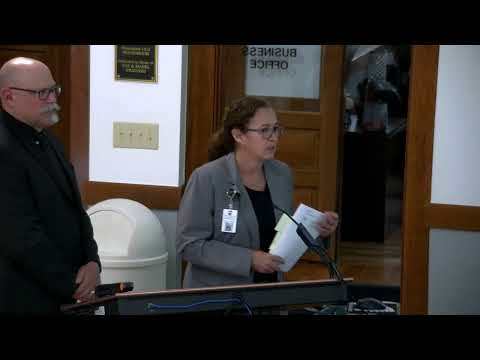
WAXAHACHIE — The district’s special education director updated trustees on caseload growth, program composition and goals for the coming year.
Dyslexia and caseload growth
Miss Edmonson reported that following House Bill 3928 and related district evaluations, students identified under dyslexia categories increased from about 918 to roughly 1,266. Of those, the director said 804 students have completed targeted instruction and now receive accommodations under Section 504 or special education as appropriate.
Program totals and service models
Edmonson summarized the district’s continuum of services: in‑class inclusion models, resource/modified instruction and separate‑setting specialized classrooms. She provided program headcounts: ECSE (early childhood special education) at Turner serves about 62 students; PBSE/positive behavior support programs serve about 65; Structured Learning Environment (SLE) serves about 103 students; life‑skills programs (students with significant intellectual disabilities) are the largest group. The district’s transitional 18‑plus program moved locations to Coleman and was renamed EXIT (Experiences in Transition); staff said the program focuses on post‑secondary and job skills.
Workload and process improvements
The department reported more than 1,500 ARD meetings at the 10 elementary campuses and hundreds more at junior‑high and high‑school levels; the director said ARD scheduling and teacher time represent significant administrative work. The department piloted Goalbook—a tool to align IEP writing and reduce ARD prep burden—with 40 teachers who used the program over 5,000 times during a five‑month pilot.
Goals
Edmonson identified priorities: refine the referral process, reduce unnecessary referrals through improved MTSS and continue recruiting and retaining special education staff.
Ending: The board received the update and asked no major policy changes; staff will continue to refine referral protocols and report back on Goalbook implementation and staffing retention.