
Hurricane Sandy flooded service levels at United Nations headquarters, officials say
Get AI-powered insights, summaries, and transcripts
Subscribe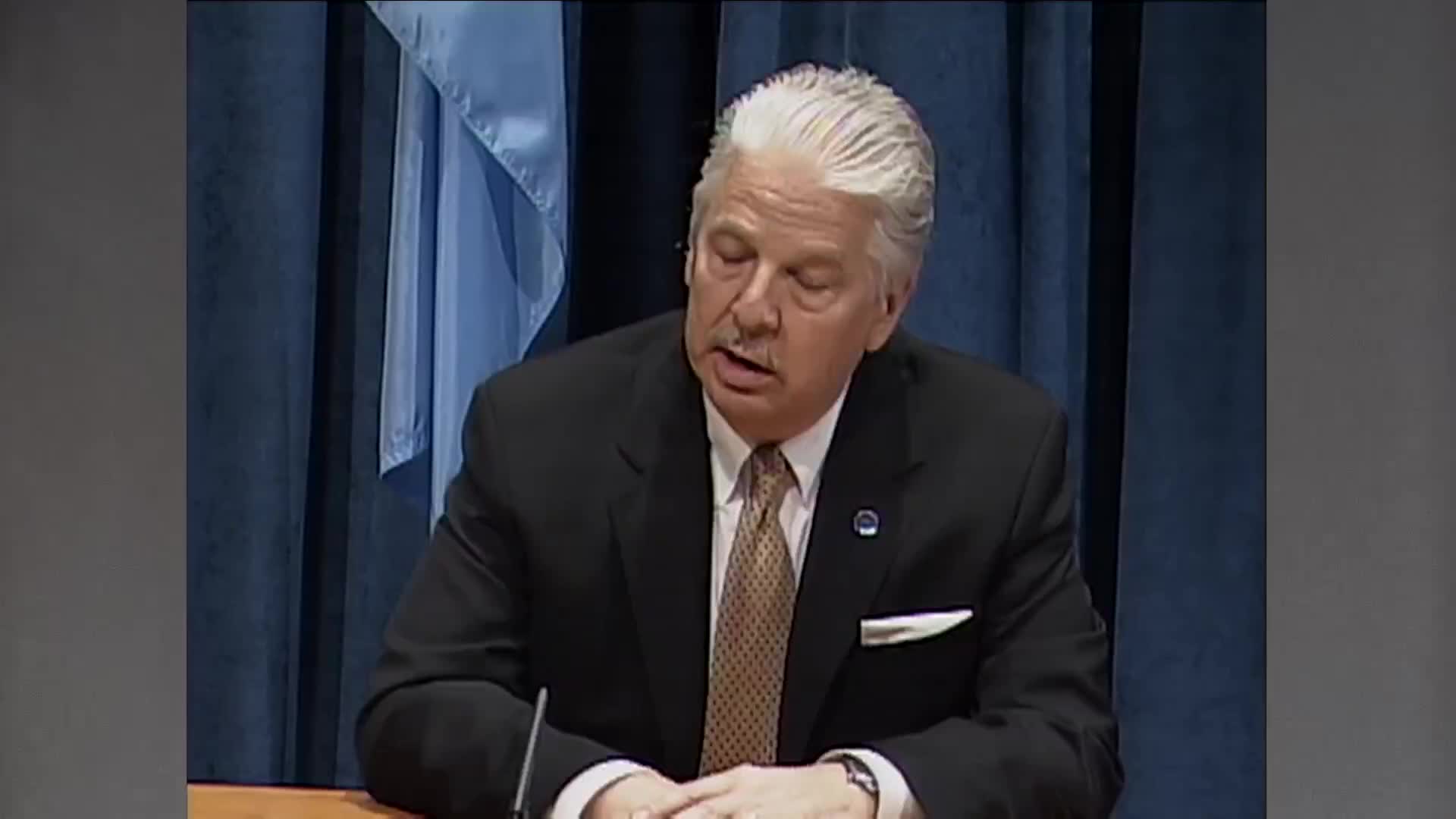
Summary
Speakers in the transcript said Hurricane Sandy's storm surge overtopped the FDR Drive and flooded service levels at United Nations headquarters, damaging a print shop and equipment while the library and main archival collections appeared undamaged.
Speaker 1 said Tuesday that Hurricane Sandy's storm surge flooded the service levels of United Nations headquarters, causing heavy damage to a print shop and other equipment while the library and archival collections appeared intact.
"Sunday evening, we were becoming more acutely aware that, we were going to face a very large and critical incident, with the arrival of Hurricane Sandy," Speaker 1 said, describing the timeline as the storm approached.
"Tuesday morning, it became evident that we had suffered pretty major damage in the United Nations," Speaker 1 said, summarizing an initial damage assessment.
According to the transcript, the surge "came over the FDR Drive, came into the Service Drive at the 3 B Level of the United Nations, rose above our loading dock levels of the 3 B, and then started plummeting down into the lower levels." That description, attributed to Speaker 1 in the transcript, places the service-level flooding on the side of the United Nations campus that faces the East River (the transcript used the form "Ace River," which has been corrected here to the widely recognized East River location for the United Nations headquarters).
Speaker 2 called the storm "unprecedented," saying, "The level and size of the storm is unprecedented. It goes back over a hundred years for us to find something equivalent." Speaker 2 also said the compound of the United Nations at the East River "has been at the forefront of the effects of the storm."
The transcript records specific damage to printing operations: Speaker 1 said the print shop "took very heavy damage. A lot of equipment and a lot of documents that were being printed are definitely damaged there." At the same time, Speaker 1 said, "the real archival things, the library, things like that, we at this point, we know of no damage to those." The transcript provides no dollar estimate of damage nor a timetable for repair.
Speaker 3 placed the event in the context of changing weather patterns, saying that "extreme weather due to climate change is the new normal," and adding that this "may be an uncomfortable truth, but it is one we ignore at our peril."
The transcript does not record any formal vote, mitigation plan, or timeline for recovery; it records initial descriptions of damage and concern about increasing extreme-weather events. No specific funding sources, repair contractors, or formal directives to staff were included in the provided text.