Get Full Government Meeting Transcripts, Videos, & Alerts Forever!
Get email alerts on the Regional Economy topic
No spam. Unsubscribe anytime.
Assembly hearing in San Marcos spotlights housing, permitting and workforce as top threats to regional growth
Summary
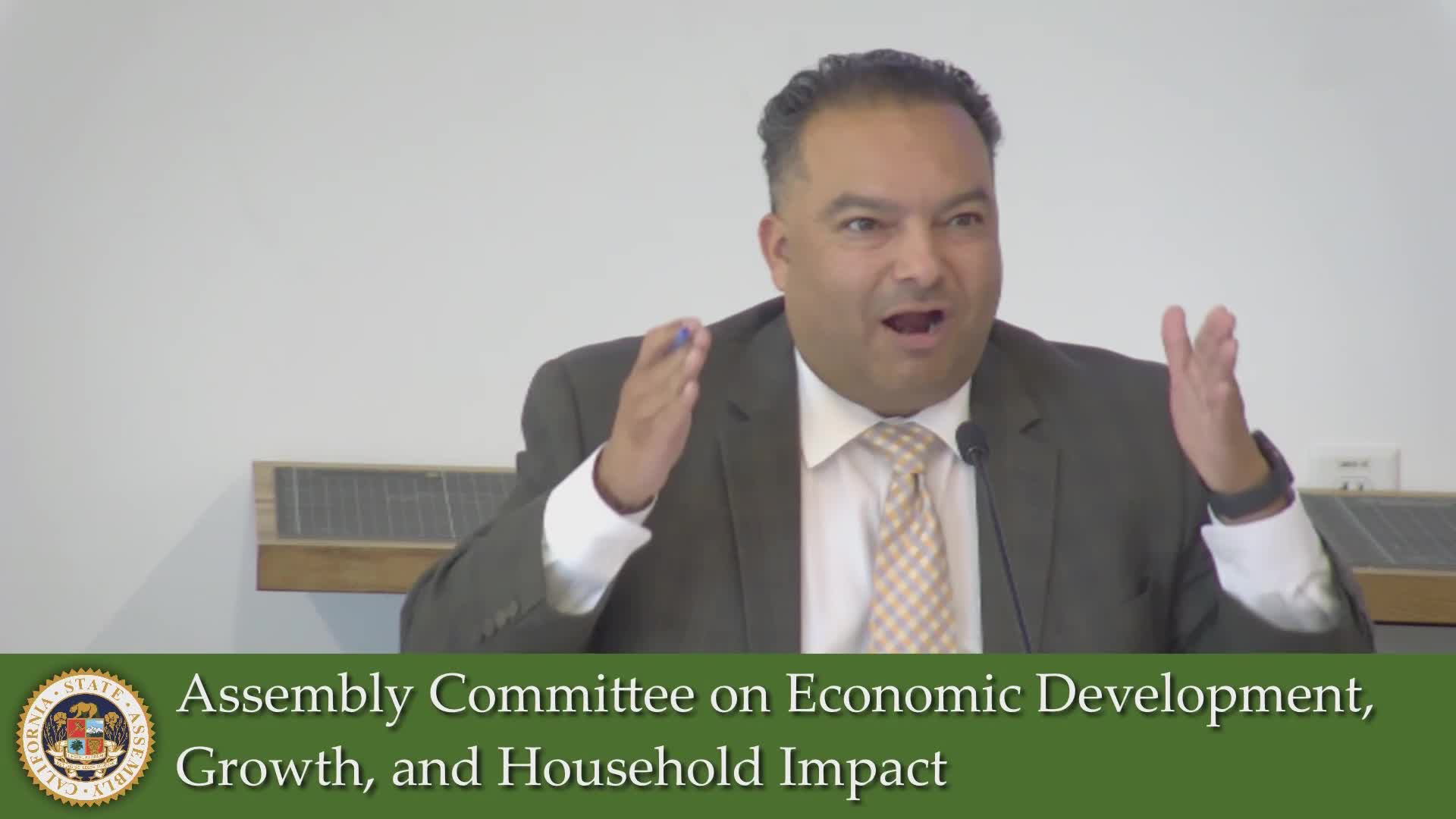
Assembly members and regional leaders convened an informational hearing at California State University San Marcos to examine cost pressures shaping San Diego’s economy and household finances.
Assembly members and regional leaders convened an informational hearing at California State University San Marcos to examine cost pressures shaping San Diego’s economy and household finances. Assembly Chair Solace and Assemblymember Darshana Patel said the session was part of a statewide “pocketbook tour” to surface local policy priorities for Sacramento.
The hearing brought three panels: university leaders from Cal State San Marcos, economic analysts from the San Diego Regional Economic Development Corporation (EDC), and small-business founders and advocates. Speakers agreed that housing affordability, lengthy permitting and declines in federal research funding are immediate obstacles to business expansion and talent retention in the region.
“Even though we have these innovative companies and strong industries, the number one challenge that employers cite to us is talent attraction and retention,” Eduardo Velasquez, senior director of research and development at the San Diego Regional EDC, told the committee, linking workforce shortages to the region’s high housing costs. Multiple speakers asked the state to explore policies that speed project approvals, expand targeted technical assistance and fund local pilot programs such as small-business affordability zones.
Higher-education presenters described expansion plans and partnerships aimed at producing more degree holders for local industries; Cal State San Marcos officials said the campus will add beds and academic capacity to meet regional demand. Small-business leaders and entrepreneurs urged the legislature to direct funding through existing technical-assistance networks such as the Small Business Development Center (SBDC) and to simplify application and procurement processes for culturally and linguistically diverse firms.
Speakers recommended several state actions: targeted technical-assistance funding for microbusinesses, regional cost-of-living adjustments for benefit eligibility, pilot affordability zones that pair rent or tax relief with outreach, and experimental “regulatory sandboxes” to test permitting reforms in coordination with local governments. Assemblymembers said they would take that feedback back to Sacramento for consideration.
The hearing included public comment from local small-business finance providers on the loan guarantee and technical-assistance capacity available in San Diego. No formal votes or bill actions occurred; the session was informational. The committee adjourned after nearly three hours of testimony and audience questions.