Get Full Government Meeting Transcripts, Videos, & Alerts Forever!
Get email alerts on the Opioid Prescribing Reduction topic
No spam. Unsubscribe anytime.
Goldfinch Health pitches "Billion Pill Pledge" to reduce opioid prescriptions after surgery
Summary
Goldfinch Health described a hospital-focused program that implements Enhanced Recovery After Surgery (ERAS) protocols, nurse navigators and toolkits to cut postoperative opioid prescribing and reduce leftover pills in communities.
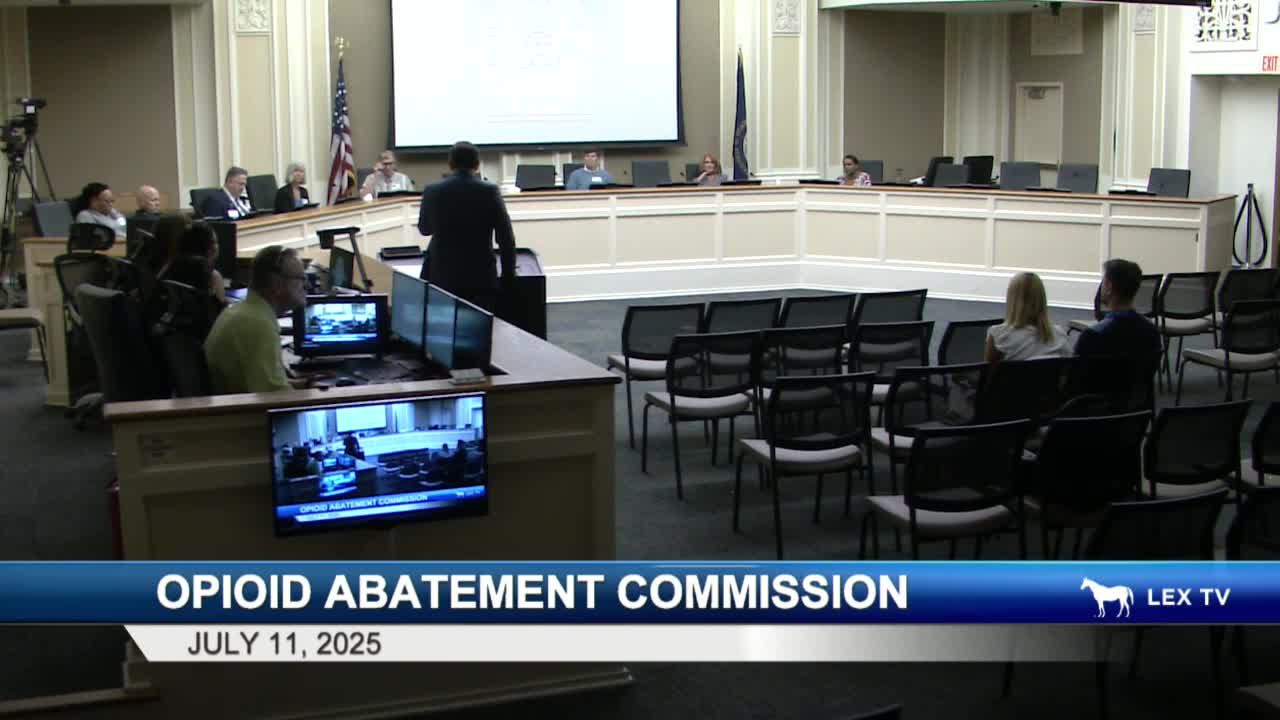
Michael Doty, director of provider success at Goldfinch Health, described the Billion Pill Pledge program to the commission as a hospital-centered primary-prevention effort aimed at reducing leftover opioid pills after surgery.
"My name is Michael Doty. I'm the director of provider success for an organization called Goldfinch Health," he said. Doty said the program partners with hospitals to implement evidence-based practices including Enhanced Recovery After Surgery (ERAS) protocols, multimodal pain management, prehabilitation, nurse navigator follow-up and prepared-for-surgery toolkits that include drug-deactivation pouches.
Doty presented national and local dispensing figures and research citations. He told the commission that Fayette County dispenses "just over 100 prescriptions per 100 people" and cited a 2023 metric that about 1,400 residents were starting opioid prescriptions lasting more than 30 days. He described peer-reviewed results from Goldfinch partnerships showing roughly a 47 percent reduction in opioid prescribing after joint replacements in a multi-hospital study and said the program typically seeks a 50 to 60 percent reduction in pill counts among participating hospitals.
Doty emphasized clinical elements that reduce postoperative opioid need: allowing clear-carbohydrate beverages close to surgery, implementing multimodal analgesia (alternating non-opioid medications such as ibuprofen and acetaminophen) and assigning nurse navigators to support patients during the two-week postoperative window. He said Goldfinch reports a 60 percent reduction in average opioid prescription counts and a 92 percent reduction in refill rate among participating sites, and that fewer than 2 percent of enrolled patients were readmitted to the index hospital.
Commissioners asked about provider buy-in and incentive structures. Doty said the program uses data reports and academic detailing to persuade surgeons, and that in Tennessee the program was free to participating hospitals because it was funded through state opioid-abatement funds. Commissioner Margaret Pizzicano suggested contingency management for patients returning unused pills; Doty said Goldfinch had explored incentives for hospitals and emphasized the logistical challenge of collecting drugs from patients and the value of deactivation pouches.
Doty closed by offering peer-reviewed validation of the approach (a recent publication through a partnership with Rothman Institute) and invited follow-up questions and discussions about hospital adoption and funding mechanisms.