Get Full Government Meeting Transcripts, Videos, & Alerts Forever!
Get email alerts on the Youth Substance Use Prevention topic
No spam. Unsubscribe anytime.
University of Kentucky27s I Champion Health outlines community-centered youth substance-use prevention for Fayette County
Summary
I Champion Health, a University of Kentucky initiative, described a community-engaged youth and family prevention program for Fayette County, highlighted school lessons aligned with state standards, and said current funding will end in December.
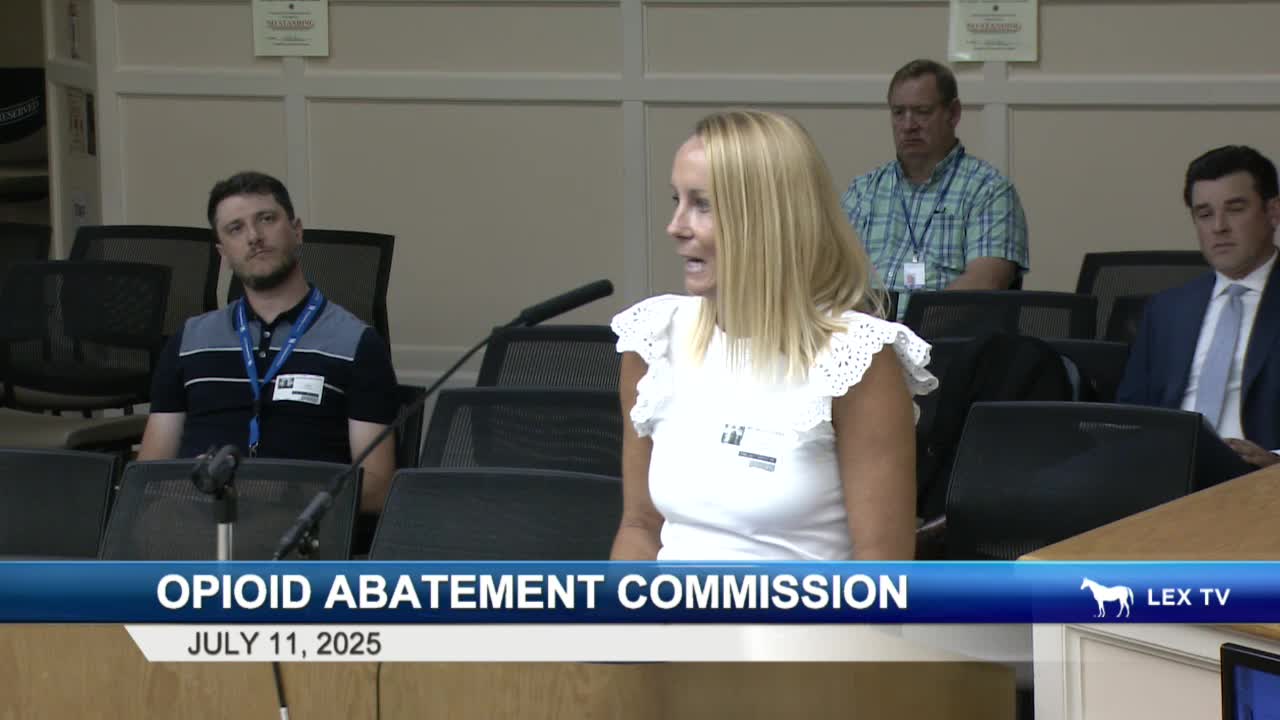
Mindy Ickes, a health-promotion professor and associate dean of research at the University of Kentucky College of Education, told the commission that I Champion Health is a two-year, community-centered initiative focused on youth and family substance-use prevention in Fayette County.
Ickes said the program grew out of state Office of Health Equity funding that originally supported COVID-19 vaccine work and has shifted toward prevention based on community feedback. "I'm Mindy Ickes. I'm a health promotion professor in the College of Education at the University of Kentucky," she said.
The program has three principal elements: community listening and engagement through local "community health champions," youth lessons aligned with national and Kentucky health-education standards, and capacity building for local partners. Ickes said the initiative has gathered more than 900 community responses, reached about 2,200 people at events, recruited over 30 community health champions and delivered lessons to more than 260 youth in its first year.
The lessons I Champion Health described were designed for upper elementary grades (fourth through sixth) as primary-prevention content that teaches decision-making, identifying supportive relationships, recognizing peer and social influences, goal setting and healthy coping strategies. Ickes said the curriculum addresses substance misuse through age-appropriate scenarios (for example, an athlete offered pain pills) and is intended to be developmentally sequenced so students receive multiple touchpoints across elementary, middle and high school.
Ickes said current funding comes from the Kentucky Opioid Abatement Advisory Commission and a small UK Healthcare Healthy Kentucky grant, but "our funding will be ending in December," and the group is seeking sustainable implementation strategies such as a shared resource hub, professional development for school personnel and expanded cohorts of community champions.
Commissioners asked about whether the lessons include direct drug-education material. Ickes said they do: "Our curriculum is infused with real life scenarios where we talk about substance misuse," including exercises that let students practice refusal and decision-making responses. Commissioners and staff generally praised the approach and asked for the slides and materials to be shared; Ickes said slides were included in the meeting packet and offered to share additional information.
Ickes and program coordinator Jacob Hester emphasized the community-vetted nature of the lessons and said teachers reported continued classroom benefits such as students practicing gratitude and reporting the lessons carried on after the team left the classroom.
The presentation closed with Ickes asking for coordination across agencies and schools to avoid duplicative programs and to create infrastructure for universal access.
Looking ahead, I Champion Health sought support to adapt lessons for broader age ranges, build a sustainable dissemination hub, and continue funding community champions to maintain engagement and reach across Fayette County.