Get Full Government Meeting Transcripts, Videos, & Alerts Forever!
Get email alerts on the Deferred Compensation Loan Policy topic
No spam. Unsubscribe anytime.
Retirement board updates SFDCP loan policy, approves changes to ease access to funds
Summary
The San Francisco Retirement Board approved amendments to the San Francisco Deferred Compensation Plan (SFDCP) loan policy to make loans more accessible and reduce reliance on hardship withdrawals; board also heard the monthly SFDCP report showing record participant counts and strong plan balances.
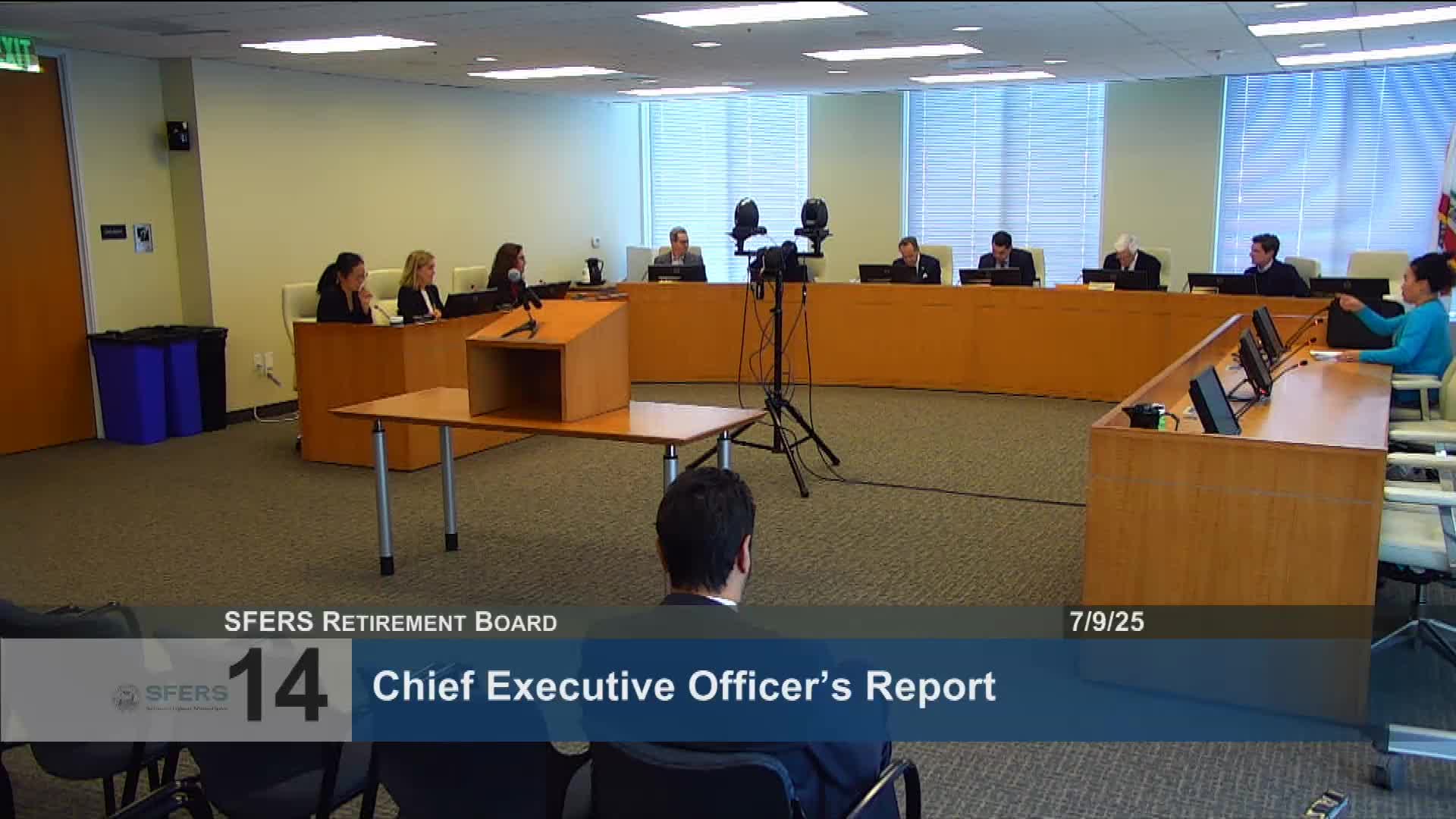
The San Francisco Retirement Board on June 30 approved changes to the San Francisco Deferred Compensation Plan loan policy intended to make loans more accessible for participants and reduce the frequency of unrecoverable hardship withdrawals.
The board voted unanimously to adopt staff recommendations on the loan-policy amendments after a presentation by Diane Chewy Justin, who leads the San Francisco Deferred Compensation Plan. “The loan policy applies to the accounts that are held with the SFDCP. So whether it’s Roth money or non-Roth money, currently only non-Roth money is eligible for a loan,” Chewy Justin said, clarifying eligibility for participants.
The change removes or shortens a previous 12-month waiting period that had prevented participants who recently took loans from obtaining another loan. Board members and staff described the amendment as an operational fix intended to give participants an option to borrow and repay via payroll rather than take an irreversible unforeseen-emergency withdrawal (UE). “With the loan program, the participants actually have an opportunity to pay back easily through direct deposit,” Chewy Justin said.
Nut graf: The shift responds to member demand and recent market conditions: staff reported higher usage of UE withdrawals and said the loan policy change is intended to reduce permanent account depletion by allowing participants to access repayable loans instead. The loan-policy amendments were recommended unanimously by the Deferred Compensation Committee before the board vote.
Board materials presented alongside the loan-policy discussion included the SFDCP monthly report. Diane Chewy Justin told the board the plan’s May balance was just shy of $6,000,000,000 and that plan participation reached about 37,000 participants, “the highest number of participants we’ve been serving over the last 10 years.” She also highlighted participant communication metrics, saying the plan’s newsletter had an open rate of about 68%.
At the meeting Commissioner Driscoll asked whether loans apply to Roth 457 contributions; Chewy Justin answered that, under the updated policy, Roth contributions are not currently eligible for loans and that she would follow up on whether eligibility is set by IRS rules or plan policy.
The board adopted the policy by motion; the recommendation was moved by Commissioner Driscoll and seconded by Commissioner Helfand. Public comment on the item was closed by the secretary before the vote. After the vote, board staff said they would implement the new procedures operationally and notify participants once the changes take effect.
Ending: Board materials indicate additional operational guidance and promissory-note acknowledgements will be provided to loan applicants. Staff said they will follow up at a future meeting with any remaining clarifications about Roth eligibility and the loan-guideline document requested by commissioners.