Get Full Government Meeting Transcripts, Videos, & Alerts Forever!
Get email alerts on the Urban Forest Management topic
No spam. Unsubscribe anytime.
Forest and Beach Commission discusses forest master plan, tougher fines for construction-related tree damage and ad hoc policy workgroups
Summary
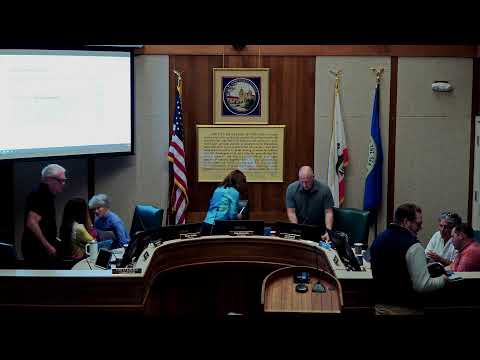
The Forest and Beach Commission of the City of Carmel-by-the-Sea met to set priorities for the new fiscal year and heard a staff presentation on possible changes to penalties for construction-related tree damage, a topic commissioners said they will address with ad hoc subcommittees.
The Forest and Beach Commission of the City of Carmel-by-the-Sea met to set priorities for the new fiscal year and heard a staff presentation on possible changes to penalties for construction-related tree damage, a topic commissioners said they will address with ad hoc subcommittees.
Commissioners and staff discussed completing the forest master plan, integrating wildfire guidance and community wildfire protection plan (CWPP) considerations into forest policy, and responding to rising homeowner insurance actions and modern construction impacts on trees. Justin (Public Works staff) presented possible models for raising fines, including diameter-based schedules, permit deposits or bonds, and fines tied to property value. Commissioners asked staff for a draft recommendation to take to City Council after further committee work.
The matter matters locally because commissioners said growth in construction and newer building methods are increasing damage to mature trees and complicating protections built into the municipal code. Commissioners flagged the need to align Forest and Beach decisions with the Planning Commission and to clarify roles so applicants and residents get consistent outcomes.
Justin described recent building-application trends and current code limits: building and planning applications increased from 77 (2013) to peaks above 400 (2016), and municipal code section 17.48.015 (b) now lists $250 for a first-tree-damage infraction and $500 for a second, amounts staff called “woefully insufficient” given local property values. Justin said his review found local examples where other California jurisdictions use substantially larger fines or diameter-based schedules; he suggested short-term Council changes to replace the $250/$500 figures while a fuller policy is developed.
Commissioners expressed particular concern that insurance companies are re-evaluating wildfire and tree risk, with one commissioner reporting conversations with insurance agents who are cancelling or refusing renewal when trees sit close to homes. Commissioners asked staff to consider how tree permitting, fines and required mitigation (for example replanting, bonds or deposits) could be designed to be defensible and enforceable.
Evan Court, senior planner, described how the Planning Department and Forest and Beach Commission process interact: the municipal code directs that projects involving trees be heard by the Forest and Beach Commission before Planning action, but in practice projects sometimes come to either body first. Court suggested sending plans to the commission only after plans are complete, while acknowledging applicants sometimes present earlier to avoid the cost of fully developed architectural plans. Court said the code calls for protection and planning around “significant” trees and sets different findings for removal depending on tree significance.
Commissioners repeatedly returned to two operational needs: (1) clearer, simpler penalty or deposit approaches that will deter avoidable tree loss during construction and be straightforward for staff to administer, and (2) better public reporting and request-tracking so staff time spent answering questions can be measured and managed. Justin reported operations counts for the recent month: the forestry crew removed five trees, planted one, pruned about 20; staff took in about 30 permit applications and issued 22; the department logged about 208 incoming tickets and reported work to clear many older Freshdesk entries.
Public commenters urged action. Maria Sutherland of Friends of Carmel Forest invited commissioners to a July 19 tree walk and asked the commission to adopt stronger protections for root zones and soil compaction from construction. Multiple residents recommended revisiting the city’s allowable building footprint constraints and stronger site-protection measures, arguing that modern stormwater capture requirements, larger roofs and deeper excavations increasingly reduce space for healthy trees.
Commissioners agreed to form ad hoc subcommittees to develop policy recommendations. Members discussed splitting work between a broader policy/advisory group (forest, wildfire guidance, resident education and coordination with Planning) and a separate subcommittee focused on fines and implementation details so the commission can bring a concise, defensible proposal to City Council. Commissioners said any subcommittee would report back monthly to the full commission and that ad hoc groups, established for a limited purpose, are not subject to the Brown Act if they meet the stated limits.
Votes at a glance — actions taken during the meeting: - Election of commission chair: motion to elect the new chair carried (roll call: Burling — yes; Brzeowski — yes; Mickey — yes; Ross — yes; Rutta — yes; Bridal — yes). Outcome: approved. (See provenance below.) - Election of vice chair: motion to elect Kelly (Commissioner Bridal) as vice chair carried (roll call recorded as unanimous). Outcome: approved. (See provenance below.) - Consent agenda: motion to approve the consent agenda (Public Works director’s report) — passed (unanimous roll call recorded). Outcome: approved. (See provenance below.)
Staff and commissioners set near-term next steps: staff will draft potential ordinance language and an interim increase to the current fine table for Commission review; commissioners will form ad hoc working groups and return recommendations at future meetings; and staff will continue to prepare a near-final draft of the forest master plan for working-group sessions expected in September. Justin said the department has about $1 million allocated across CIP and operating budgets for forestry and beach projects in the new fiscal year and intends to increase planting and stump-removal activity while working to improve public reporting and the TreeKeeper data.
"The level of construction has just gone up by a lot," Justin said, noting rising project counts and high per-square-foot values in the community. Maria Sutherland of Friends of Carmel Forest said compacted soil and construction equipment are causing slow tree decline and urged stronger root-zone protection.
The commission scheduled further discussion, including a follow-up on tree fines and coordination procedures with the Planning Department; commissioners said they want draft recommendations to circulate before a City Council hearing so the council can act promptly on any interim changes to penalty amounts.
The commission also received the forester’s monthly report, which Justin summarized as a relatively slow month (end of fiscal year), with continued stump removal, ongoing fuel-management work near Flanders Mansion, and planned increases in planting and contract oversight starting in September when nesting season ends.
What’s next: commissioners said they expect the working groups to return draft proposals and regular updates so the full commission can endorse consolidated recommendations to City Council on fines, planting goals, and procedural clarifications between Forest and Beach, Planning and Public Works.