Get Full Government Meeting Transcripts, Videos, & Alerts Forever!
Get email alerts on the Land Use topic
No spam. Unsubscribe anytime.
Miramar commission approves release of 1996 combination agreement for Mega Center Miramar, replaces it with land covenant
Summary
The commission voted unanimously to release a restrictive 1996 ‘unity of title’ agreement for the Mega Center Miramar site and adopt a covenant running with the land to preserve the 2016 approved site plan while allowing individual parcels to be sold.
The Miramar City Commission on July 9 approved a staff‑recommended release of a 1996 combination agreement that required five platted lots at the Mega Center Miramar to remain under unified ownership, replacing it with a recorded covenant that runs with the land.
City staff said the change will let the current owner sell individual platted parcels while keeping development tied to the site plan that the commission approved in 2016. The covenant requires future owners to remain “in substantial compliance” with that site plan, planning staff said.
Planning and zoning presenter Damon Rodriguez told the commission the 1996 agreement functioned as a unity of title, effectively treating separate parcels as one building site. Rodriguez and city planning staff described the requested amendment as administrative: it removes the unified‑ownership requirement while preserving the site‑plan commitments through a recorded declaration of covenants, restrictions and easements. "The covenant in lieu will be acting essentially as a unity of title," Rodriguez said during the presentation.
David Sachs, attorney for Mega Center Miramar LLC, said the applicant sought flexibility to sell a portion of the platted parcels while keeping the approved site plan protections in place. "The only thing that we're doing is asking this commission for a release of that restrictive agreement from 1996," Sachs said, adding that staff and the city attorney negotiated the replacement declaration.
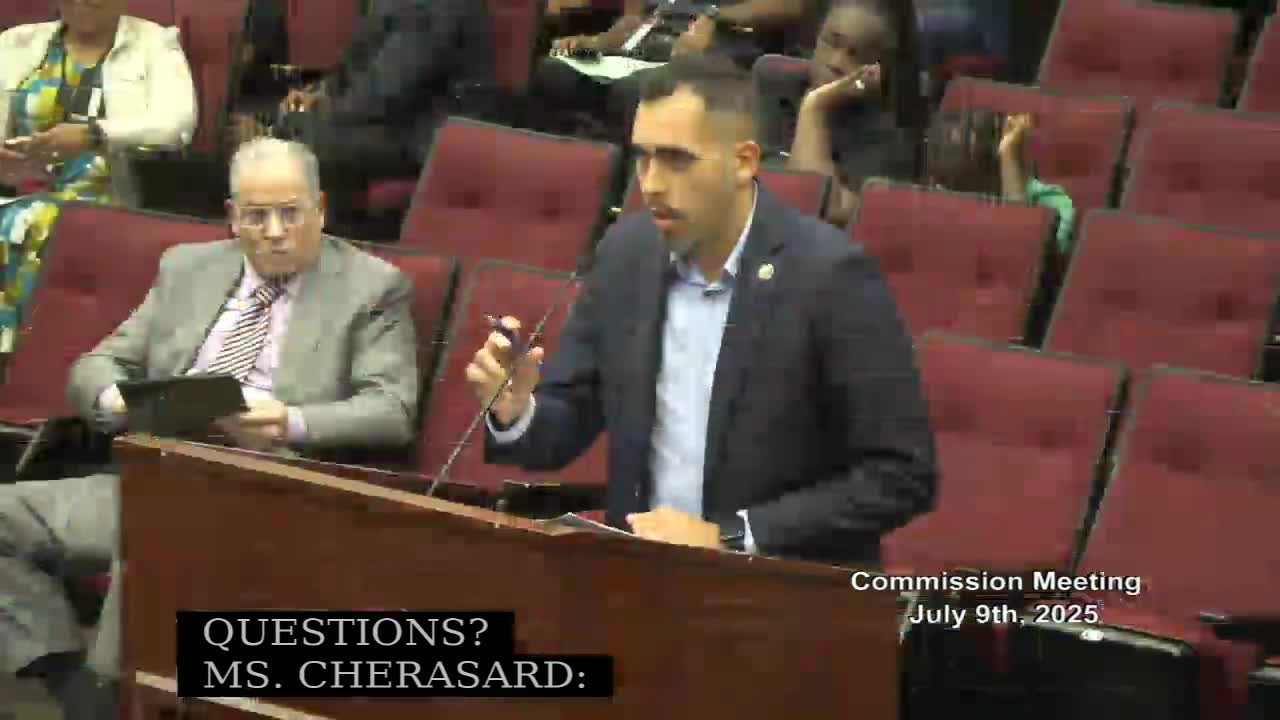
Commissioners asked whether selling one parcel could reduce parking or access that had been accounted for under the unified site plan. Planning staff and city attorney clarified that the recorded covenant ties any future development to the 2016 approvals: changes to uses, parking, or site layout would still be subject to the city's development review process and could require future approvals.
Commissioner Avril Scheherazard and Commissioner Chambers pressed staff to explain the origin and intent of the 1996 restriction and how the covenant will protect the public interest; staff said the covenant preserves parking, drainage and maintenance obligations while allowing multiple owners. Vice Mayor Colburn asked why the restriction was used originally and was told it preserved a unified campus approach for setbacks, lot coverage and shared infrastructure.
The commission approved the release and covenant by a recorded vote: Commissioners Chambers, Scheherazard, Vice Mayor Colburn, Commissioner Edwards and Mayor Wayne Messam voted yes.
The replacement covenant will be recorded with the county and the city manager was authorized to execute documents necessary to implement the change. City staff said the covenant will be enforced through the same development‑review checks that apply when new permits are sought, and the recorded instrument will appear in public records.