Get Full Government Meeting Transcripts, Videos, & Alerts Forever!
Get email alerts on the Outdoor Advertising Redevelopment topic
No spam. Unsubscribe anytime.
Committee extends redevelopment-era outdoor advertising rules through 2029 with SB 783
Summary
The subcommittee voted to refer SB 783, which postpones the sunset of special rules for outdoor advertising displays in former redevelopment areas, to appropriations after proponents said the extension gives stakeholders time to negotiate a permanent fix and opponents cautioned about federal highway funding risks.
Senator Rubio and supporters told the committee SB 783 would extend a sunset date that applies to regulations for outdoor advertising displays in former redevelopment areas, giving stakeholders more time to pursue a permanent solution.
“Existing law regulates outdoor advertising displays located in former redevelopment areas differently because of special economic hardship in those locations,” Senator Rubio said, and without legislation those regulations would expire on Jan. 1, 2026. She said SB 783 extends the sunset to January 2029 and that she would accept committee amendments.
Supporters included Jeff Sievers, testifying for In‑N‑Out Burger, who described a longstanding redevelopment sign adjacent to an elevated freeway that would face removal without an extension; he said the company needs time to work with Caltrans on a longer‑term solution. Paul Gonsalves, representing the City of Hawaiian Gardens, described the importance of a local outdoor display to that very small city.
Opponents included the California State Outdoor Advertising Association and its counsel, who said extending protections for nonconforming redevelopment signs creates an unfair advantage for noncompliant operators and could put the state at risk of losing up to 10% of federal highway funds under the Federal Highway Beautification Act if signs remain out of compliance with federal standards. The association urged a shorter extension and asked the Legislature to require a targeted plan to bring specific displays into compliance.
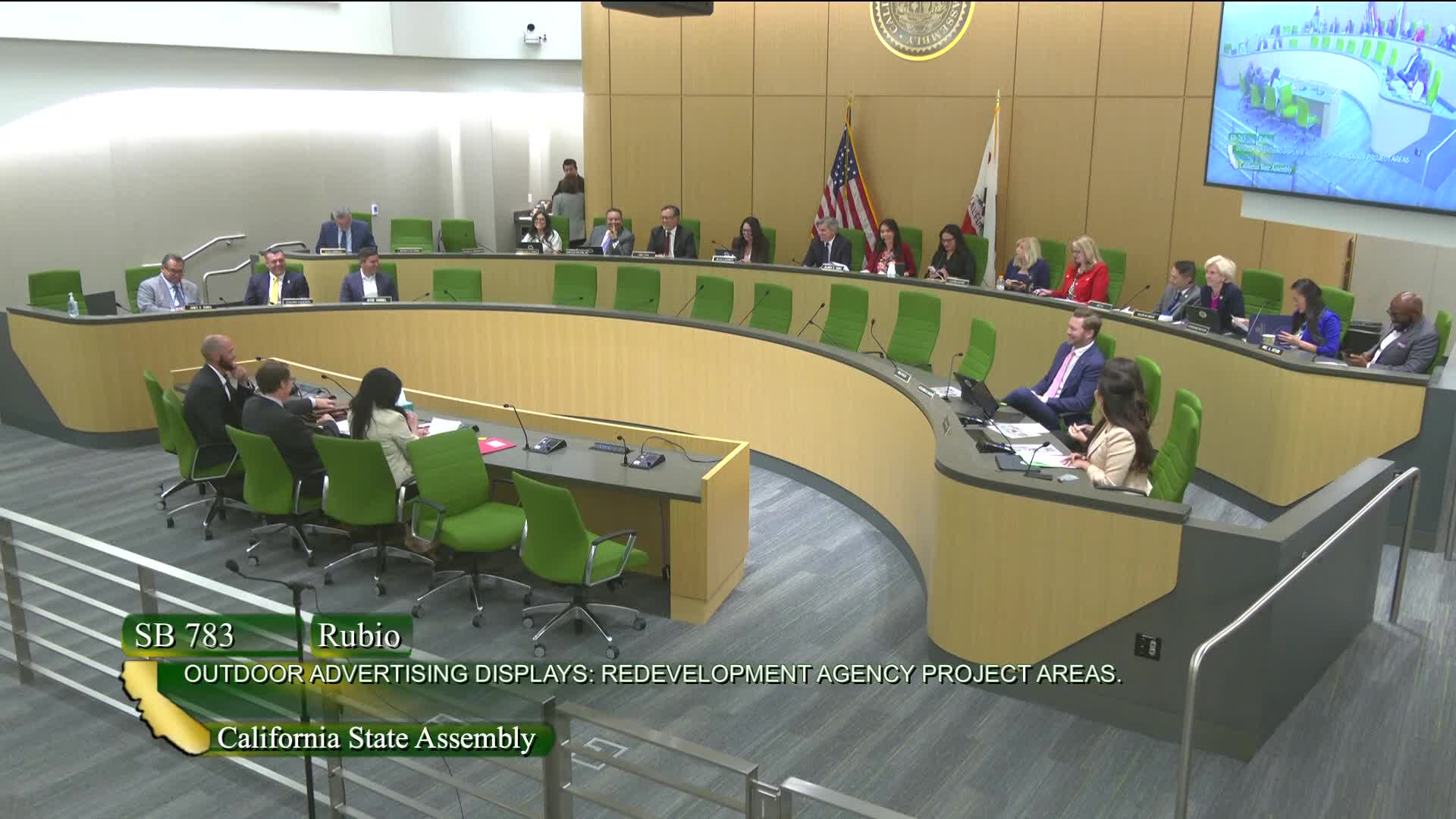
Committee members said they viewed the bill as a compromise and noted the extension had been reduced from four to three years in committee amendments. At the hearing the clerk reported 21 “aye” votes on the motion to pass SB 783 as amended to Appropriations; the chair left the roll open for additional members to add their votes.
Clarifying details recorded at the hearing: the extension moves the sunset on the redevelopment‑area rules to January 2029, proponents argued the extra time is needed for municipal stakeholders and Caltrans to negotiate permanent solutions, and opponents flagged potential federal funding consequences if displays remain noncompliant with federal standards.