Get Full Government Meeting Transcripts, Videos, & Alerts Forever!
Get email alerts on the Library Accessibility topic
No spam. Unsubscribe anytime.
Los Alamos County library manager outlines inclusivity practices, accessibility plans
Summary
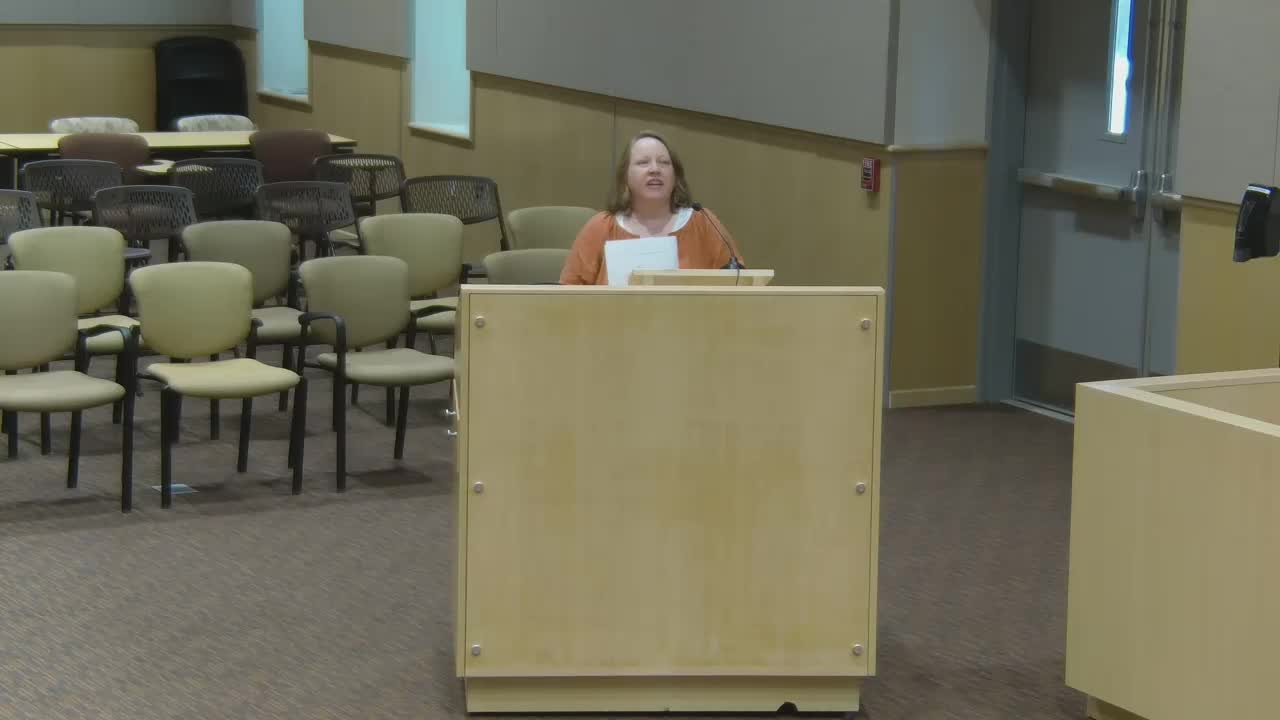
Gwen Colavasa, library manager for Los Alamos County, told the county's Inclusivity Task Force that the Mesa Public Library follows national library standards and is expanding services and policies to make the library more inclusive and accessible.
Gwen Colavasa, library manager for Los Alamos County, told the county's Inclusivity Task Force that the Mesa Public Library follows national library standards and is expanding services and policies to make the library more inclusive and accessible.
Colavasa said the library adheres to the Library Bill of Rights and the American Library Association's Freedom to Read Statement and described collection, program and facility changes intended to increase equity and access. "We enrich our unique community with excellent customer service, knowledgeable staff, dedicated partnerships, welcoming spaces and diverse spaces," she said.
The presentation covered four main areas: collections, spaces, programs and staffing. Colavasa described a collection-development process that intentionally seeks diverse viewpoints, materials created by underrepresented authors, and works in multiple languages. She said all staff participate in selecting materials and the library is revising public displays so they better reflect the community.
On public concerns about "banned books," Colavasa said the library follows its collection-development criteria and a formal reconsideration process. "So in general, the library's stance is that, we should allow patrons to decide for themselves what they want to check out of the library," she said. She explained community members can submit a short form asking that an item be reconsidered; the manager reviews whether selection criteria were followed and, she added, in her 25 years with libraries an item has never been withdrawn following that process.
Colavasa described Library of Things offerings — nontraditional, loanable items such as induction cooktops, thermal cameras, party kits and, soon, meeting-owl cameras — and said staff will exclude some items if they would meaningfully displace local businesses. She said staff are documenting the specific criteria they use for Library of Things decisions. "If that's something that they're doing, we don't want to offer that from the library," she said about local businesses that provide rentals.
The library also is adding accessible features to public computers, offering outside pickup lockers at Mesa (and planning one for White Rock within a year), and conducting a sound study to improve acoustics and privacy. Colavasa said two bookcases of high-value Southwest materials are kept behind a locked case to prevent theft; otherwise, items are not locked away and patrons of any age can access collection materials. She said youth services staff help match children with age-appropriate materials but the library does not bar children from the general collection.
Speakers at the meeting asked about accessibility devices and funding. One attendee cited prices: a Braille embosser at about $10,000 and refreshable Braille displays at $3,000 to $5,000. Colavasa said the county-funded library has more resources than many regional libraries, receives support from the Friends of the Library and from the New Mexico State Library (which relies in part on federal IMLS funding), and that potential IMLS cuts could reduce regional digital resources.
Colavasa said the library wants to expand homebound delivery but has capacity limits; during COVID it partnered with the senior center for deliveries, and the task now is to identify a sustainable delivery model. She also said the library would consider hosting community events it has previously held, noting a drag-queen story hour held two to three years earlier was "fantastically attended" and that the library would be open to holding similar programs again.
She closed by describing planned next steps: a patron needs assessment this year, ongoing documentation of procedures (collection, programming and Library of Things criteria), continued partnership work, and more inclusive marketing and hiring practices (more full-time roles, wider recruitment and onboarding supports).
Colavasa answered questions from task force members and residents during a 30-plus minute Q&A following the presentation; the discussion included specific cost examples for assistive technology and local-business considerations for Library of Things items.
For now, the presentation and follow-up did not create new county policy; Colavasa said established library policies and the county's collection-development guidelines guide decisions and that the library will publish the Library of Things criteria once documented.