Get Full Government Meeting Transcripts, Videos, & Alerts Forever!
Get email alerts on the Transportation topic
No spam. Unsubscribe anytime.
Fairfax City launches coordinated Safe Streets, pedestrian and Old Town circulation studies; councilors weigh plaza pilot
Summary
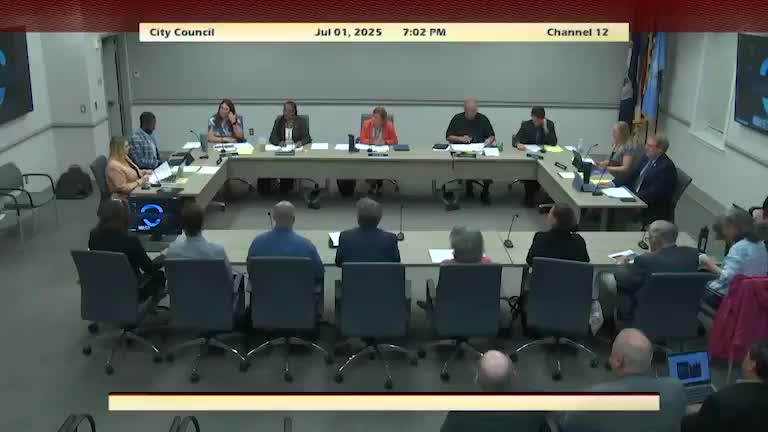
City staff on July 1 told the Fairfax City Council they will develop three linked plans — a citywide safety action plan, a pedestrian master plan and a detailed Old Town circulation study — to prioritize pedestrian safety, walkability and traffic circulation and to position the city for construction funding.
City staff on July 1 told the Fairfax City Council they will develop three linked plans — a citywide safety action plan, a pedestrian master plan and a detailed Old Town circulation study — to prioritize pedestrian safety, walkability and traffic circulation and to position the city for construction funding.
The presentation, led by Chloe Ritter, the city’s transportation planner, explained the work as a single “Move Fairfax City” project that layers analysis, public engagement and funding. “We were awarded a $400,000 grant from the federal Safe Streets for All program, and that’s matched with $150,000 in local funding,” Ritter said as she opened the briefing.
Why it matters: staff said the three studies are meant to turn long-range policy guidance in the comprehensive plan, bicycle master plan and Old Town Small Area Plan into prioritized, implementable projects. The approach is intended to create consistent recommendations across studies, reduce duplication of outreach and create competitive applications for future implementation grants.
What staff will do: Alta and Timmins Group consultants described the safety action plan as using a safe-systems approach to focus on infrastructure, speed management, post-crash care, behavior and safer vehicles. “The real goal here … is trying to eliminate severe injuries and traffic deaths,” Ryan Sharp, a consultant with Alta, told council. The plan will map a high-injury network based on a five-year crash analysis, use connected‑vehicle (telematics) data to spot risk where crashes have not yet occurred, and recommend capital projects for the city’s capital improvement program and grant applications.
The pedestrian master plan will use the safety analysis plus pedestrian-level metrics — sidewalk gaps, pedestrian level of traffic stress and crossing frequency — to recommend mobility and comfort improvements, presenters said. The Old Town circulation study will be the most detailed: staff already collected traffic counts at 13 intersections, field observations and will test feasible alternatives that may require tradeoffs between vehicle throughput, parking and space for pedestrians and cyclists.
Tradeoffs and examples: presenters reminded the council that significant Old Town changes will require tradeoffs. They cited a past analysis of University Drive bike lanes, which found making space through the Old Town center would have removed a travel lane and increased congestion — so the city did not pursue full bike lanes through the center at that time. Staff said the circulation study will explore alternatives such as returning to a one‑way pair, or creating a loop road with an inner pedestrian precinct as the Small Area Plan suggests.
Council reaction and direction: council members broadly welcomed the coordinated approach and recommended community‑focused engagement and modeling. Councilmember Amos said he “loves the idea of focusing and emphasizing the pedestrian precinct,” and proposed studying a pedestrian plaza pilot in Old Town that could be evaluated for traffic, economic impact and feasibility in partnership with the Economic Development Authority and Old Town Fairfax Business Association. Councilmember McQuillan supported evaluating expanded outdoor dining and open-container options tied to temporary closures. Several members urged the use of interactive public engagement tools and partnerships with George Mason University for modeling and visualization. Staff said Phase 1 engagement is planned for the fall and a draft plan could return in spring or summer 2026.
Next steps and timing: staff said Phase 1 outreach would begin in the fall and include online story maps, pop-up events and targeted mailings. The steering committee for the safety action plan will serve as the SS4A-required Vision Zero task force and will guide recommendations. Staff hopes to complete the action plan in time to compete for the SS4A implementation NOFO expected in 2026.
What council asked staff to prioritize: councilors asked staff to (1) study a pedestrian plaza pilot in Old Town, (2) evaluate tradeoffs between parking, vehicle throughput and pedestrian space, (3) pursue visual and interactive public engagement, and (4) coordinate with Fairfax County on projects that cross jurisdictional boundaries such as South Street and adjacent redevelopment. Presenters confirmed they will include speed‑management recommendations, examine data going back at least five years for crash analysis (the standard staff said it will use) and evaluate countermeasures such as “no turn on red” where crash patterns suggest it.
Context: staff framed the combined approach as both a way to be cost‑efficient with grant funding and as a mechanism to produce prioritized projects for the capital improvement program and competitive grant applications for construction. No formal council votes occurred on the plans at the July 1 work session; staff sought feedback and will return with engagement details and draft recommendations.