Get Full Government Meeting Transcripts, Videos, & Alerts Forever!
Get email alerts on the Family Keys topic
No spam. Unsubscribe anytime.
Family Keys pilot kept 53 children with families, saved county money; committee to fold strategy into out-of-home care budget
Summary
Marathon County Social Services reported that Family Keys served 21 families (53 children) in 2023'24, achieving a 62% successful discharge rate, with successful families largely maintaining housing and employment; staff said the strategy will be funded within existing out-of-home care allocations for 2026.
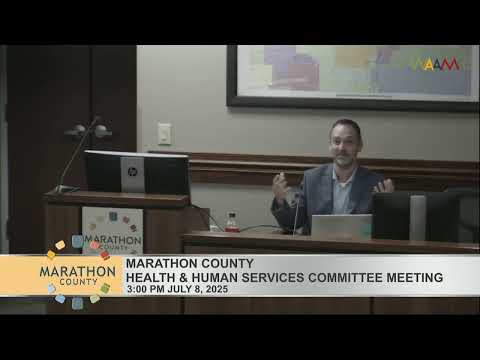
MARATHON COUNTY, Wis. ' Marathon County Social Services on July 8 reviewed outcomes from the Family Keys housing-stability pilot, reporting that the strategy served 21 families (53 children) in 2023'24, returned or preserved living arrangements for many children and produced net cost savings compared with foster care.
Krista Jensen, the program lead, told the Health and Human Services Committee that of 21 families served in 2023'24, 13 (62 percent) discharged successfully under the program's definition (stable housing on completion and children remaining in parental care). Jensen said 77 percent of the successful families were maintaining housing and employment in follow-up outreach; three families could not be reached.
Jensen presented a cost comparison the county used in its evaluation: Family Keys expenditures of about $235,000 across the two years versus a projected $491,239 in foster-care costs for the same children, yielding roughly $256,000 in out-of-home care savings over two years.
Administrator Leonard and committee members said the county will incorporate Family Keys as a strategy within the standard out-of-home placement line for the 2026 budget rather than seeking new levy. Leonard said staff aim to use existing out-of-home care funds and the newly created out-of-home care reserve (up to $400,000) to sustain the approach; the county is also awaiting a United Way grant decision specific to Family Keys.
Jensen described program requirements and outcomes: families follow a handbook, save 30 percent of their income, accept weekly home visits and meet safety standards. Of the families accepted, some did not complete the program; the program recorded a 62 percent success rate by its definition. Jensen said community partners provided housing and in one instance a local nonprofit purchased a home for Family Keys placements. She and other speakers emphasized partnerships with local housing and service providers as critical to the program's success.
Committee members asked about capacity to serve more families. Jensen said staff could serve additional families but emphasized screening to ensure safety and program fit; she reported most families who enter the program are stably housed within 30 days and staff try to avoid placing children in congregate settings when possible.
Leonard emphasized the budget implication: Family Keys reduces placements into foster care and the county plans to fund the strategy from existing out-of-home care dollars rather than requesting new levy.