
Arvada reports 130,000+ shared micro‑mobility trips since 2022; council hears data and expansion options
Get AI-powered insights, summaries, and transcripts
Sign Up Free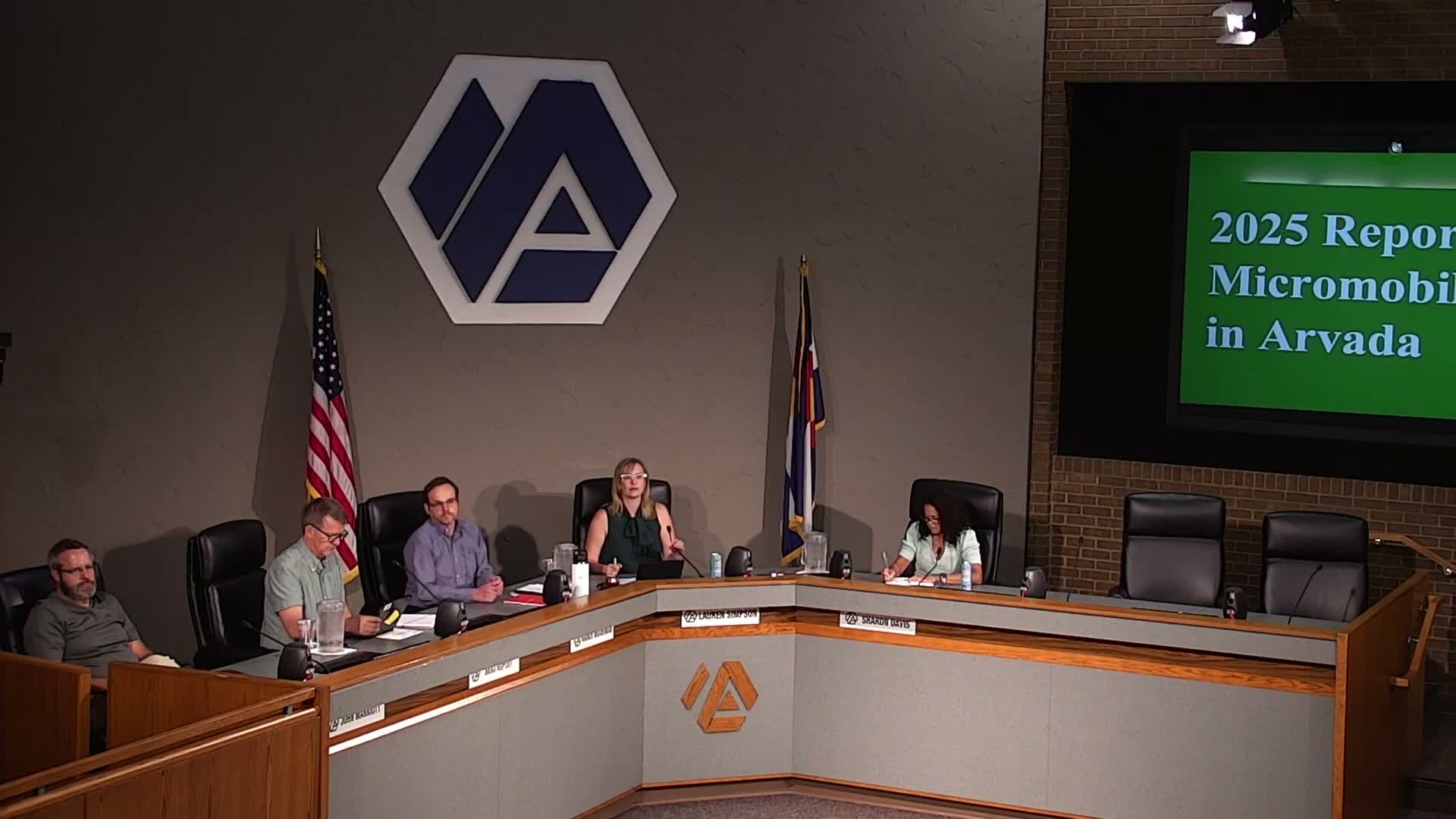
Summary
City staff presented a three‑year progress report on Arvada’s shared micro‑mobility pilot, reporting 130,368 trips between January 2022 and May 2025, a typical deployment of about 125 devices and recommendations to remove “pilot” labeling, expand education and consider dedicated parking corrals in Old Town.
Aslan Droski, the city’s bicycle and pedestrian coordinator, told the Arvada City Council on July 8 that the city’s shared micro‑mobility program has recorded 130,368 trips from January 2022 through May 2025 and continues to grow.
Droski said the program began as a one‑year pilot with vendor BIRD in January 2022, expanded service areas in late 2022, and moved to annual permitted operation under Arvada’s municipal code in 2023 after Bird exited and Lime became the vendor. He told the council the city currently caps device deployment at 200 vehicles and is seeing an average of about 125 devices on the street, with winter months dropping below 80 and summer months approaching the cap.
Why it matters: City staff said micro‑mobility trips are replacing some short car trips, connecting people with retail and transit, and shifting local travel patterns. Council members discussed whether to remove the program’s “pilot” label, expand the service area and add device types such as e‑bikes and seated e‑gliders.
Droski described how the program operates and is regulated. Two documents govern the service: a staff‑editable rules and regulations document (enforced by the infrastructure director) and the municipal code (the ordinance that established the program and that only council may change). He said vendors must enforce parking compliance in part through an AI photo check that asks riders to photograph the parked vehicle; the city also uses a permit fee and a partnership with a regional data service to collect device telemetry.
Data and usage: Droski presented trip and fleet statistics from the vendor and a regional data platform. Key data points he cited include:
- 130,368 total trips from January 2022 through May 2025; a 659% increase in monthly trips between earlier and later 20‑month periods noted in the presentation. - Average trip distance: 0.94 miles; average trip duration: about nine minutes; more than half of trips are under five minutes. - The program’s typical deployment averages about 125 devices (seasonally low in winter, high in summer); vendor deployment cap is 200 devices. - Enforcement and compliance requests received by city staff through Arvada’s Ask Arvada portal run about 0–5 per month; Lime may also receive reports directly via its QR codes and has not always forwarded those counts to the city unless requested.
Public engagement and equity: Staff said city outreach included early council meetings in 2020, an online community survey in 2022 (576 respondents), and a 2024 rider survey sent through the Lime app. Common concerns in public responses were parking (blocking sidewalks and access), safety (scooters interacting with pedestrians on narrow sidewalks and trails), and requests for broader service area coverage. Riders told staff they used the devices for errands, transit access and commuting as well as recreation; staff reported 34% of rider survey respondents said a micro‑mobility trip replaced what otherwise would have been a car trip.
Operations and enforcement: Droski said Lime uses a photo‑verification workflow and now has a dedicated pick‑up worker for the Arvada market. Under the city rules and regulations, the vendor must retrieve improperly parked devices within four hours during weekdays (6 a.m.–6 p.m.) and within 12 hours at other times; staff said they have not experienced vendor noncompliance with those timelines. Staff also use a live map to monitor device availability and can ask the vendor to remove devices that appear abandoned, dumped or otherwise misplaced.
Recommendations and next steps: Staff recommended two baseline actions: extend the program and remove “pilot” from public messaging while keeping the annual permitting structure and the potential for up to two vendors; and expand education efforts jointly with vendors to emphasize rules of the road, trail etiquette and connections to transit. Staff also proposed additional measures if council wants to scale the program: pilot dedicated parking corrals (Old Town identified as a priority location), consider mandatory parking zones in pedestrian malls, and use trip‑data to prioritize incremental service‑area expansions and to pilot different device types (e‑bikes and seated e‑gliders) in discrete areas.
Council feedback: Council members asked about Denver devices appearing in Arvada (staff said they can be tracked and Lime may retrieve them); vandalism (staff said Lime may collect those data but had not reported vandalism statistics to the city); possible safety incident counts (staff said police department crash reports would be the source and that those data had not been correlated with micro‑mobility yet); and funding for parking corrals (staff said Lime has installed corrals at its expense in other jurisdictions and the city has about $15,000 available to reinvest from program fees). Several council members voiced support for removing the pilot label and opening the service area, while also urging use of policy zones to limit riding across unsafe railroad crossings and other hazardous segments.
What was not decided: Council directed no formal ordinance change or vote during the workshop. Several members expressed support for removing “pilot” and for expansion ideas, but no formal council action on program rules, device types or mandatory parking zones was taken at the meeting.
Ending note: Staff said they will continue regional coordination through the Denver Regional Council of Governments mobility working group, follow up with Lime on direct report counts and vendor pickup timeframes, and return with final recommendations for the program’s continuance and any code changes.