Get email alerts on the Parking Fees Etod topic
No spam. Unsubscribe anytime.
CTA board approves parking fee increases, officials highlight redevelopment and transit-oriented development plans
Summary
The board approved a package of parking-rate increases expected to generate about $1.2 million annually and discussed using underutilized lots for transit-oriented development with City of Chicago planning officials.
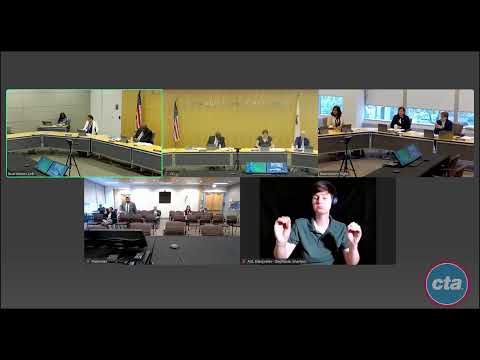
The Chicago Transit Authority board on July 9 approved an ordinance to raise rates at Park-and-Ride and under-'L' parking lots, a move staff said would align CTA parking with market conditions, recover tax increases since 2017, and generate roughly $1.2 million in annual revenue.
Tom (CTA staff presenting the ordinance) told directors that CTA operates 14 Park-and-Ride lots at rail stations and 56 under-'L' lots. He said rates have not been increased since February 2017 and that the proposed changes would bring those facilities in line with market levels and newly introduced taxes. The ordinance authorizes increases in daily park-and-ride rates of $1 to $3 per day and monthly rate increases of $20 to $60; base hourly rates in standard under-'L' lots would rise by $1 per hour with proportionate monthly increases of about $20. The ordinance also creates a premium under-'L' category with a $150 monthly rate and starting hourly rates in the $5–$15 range for high-demand locations. If approved, new rates will take effect Sept. 1.
Board members asked how rates would be set for future, newly constructed park-and-ride lots tied to the Red Line extension and what would guide pricing where there is no historical occupancy data. Tom said CTA would model those new lots using comparable regional lots and occupancy assumptions and that pricing would evolve before 2030.
Taxes and intergovernmental questions: Director Patrick Ortega noted CTA pays state and city taxes on parking lots like other lot owners and asked whether intergovernmental conversations had occurred to address the fact that taxing jurisdictions extract revenue while the agencies that should be supporting transit are also taxing it. Tom acknowledged the point and said CTA could explore potential tweaks or agreements.
Redevelopment and ETOD: Staff said the rate changes were part of a broader effort to maximize system-generated revenue and to identify underutilized lots for activation or redevelopment. Molly (CTA staff leading development discussion) described collaboration with the City of Chicago Department of Planning and Development on assembling parcels to create marketable transit-oriented development sites, citing 60th and Ashland as a pilot area where city and CTA land could be combined for larger projects. She also described short-term activations such as farmer’s markets and longer-term development, and noted potential use of TIF and other city tools to leverage development.
Projected revenues and authority: Staff estimated the increases would produce roughly $1,200,000 per year for CTA. The ordinance extends existing authority that allowed the CTA president to adjust park-and-ride rates by up to $1 per day or $30 per month no more than once every six months; under the new ordinance that authorization is extended to under-'L' facilities as well.
Board reaction and vote: Directors expressed support for the initiative as a way to recover tax-driven revenue loss and to enable reinvestment in amenities and station repairs, while urging careful rate-setting for new lots to avoid discouraging ridership. The board placed the item on the omnibus and approved it in a roll-call vote, 6–0.
AI generated
The text on this page is AI generated. Summaries, highlights, analysis, and video transcripts are all produced from the original source material.
AI can make mistakes, so if you spot one, and we will fix it for everyone.
Note: the source content is unaltered by us. Any content source we link to, be it a video, an audio recording, or a document, is presented exactly as its publisher released it. That publisher is usually a government body, sometimes an individual official or another organisation.