Get Full Government Meeting Transcripts, Videos, & Alerts Forever!
Get email alerts on the Screen Time topic
No spam. Unsubscribe anytime.
KSDE survey finds most Kansas districts already have phone policies; task force report influenced some changes
Summary
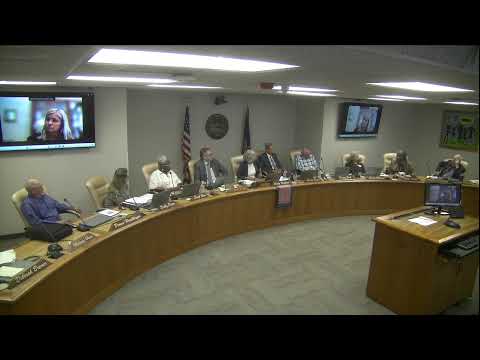
KSDE presented results from a superintendent survey on personal electronic device policies and summarized the Blue Ribbon Screen Time Task Force recommendations the board accepted earlier.
KSDE presented findings from a statewide survey of superintendents about personal electronic device policies and summarized recommendations from a Blue Ribbon Screen Time Task Force the State Board accepted last year.
Scope and response rate: KSDE staff said about 90% of Kansas districts responded to the survey, representing the majority of Kansas students. The task force had recommended three primary actions: a bell‑to‑bell personal electronic device policy for K–12, storing personal devices out of student reach during school hours, and creating safety procedures that do not rely on staff or students using personal devices in emergencies.
Survey highlights: KSDE staff said district policies vary by grade band. At the elementary level the most common approach was a bell‑to‑bell ban (no student device use during the school day); about 42% of districts required devices to be stored away from the student (locker, cubby or backpack). For middle schools the most common policy was bell‑to‑bell; high schools most commonly allow device use during designated times (passing, lunch). The team reported roughly 43% of responding districts said policies are consistently enforced across schools, while 32% said enforcement varies by teacher or classroom.
Perceptions and concerns: Superintendents told KSDE staff that parents and community members generally support district device policies, teachers largely support them and student sentiment is mixed. Common implementation barriers included substitute shortages that limit teacher release for trainings, the need for parent buy‑in, and inconsistent enforcement across buildings. Many districts asked for clearer sample policy language and for KSDE to share comparative data from neighboring districts.
Task force context and next steps: KSDE staff reminded the board the task force focused on personal devices as a narrower scope of the larger screen‑time topic. The board accepted the task force report but did not adopt a statewide mandate; KSDE emphasized local control while encouraging districts to adopt best practices. KSDE said it will share survey results with districts and continue outreach and facilitator supports; staff and board members discussed additional work on district staff policies and digital citizenship guidance.
Ending: Board members thanked KSDE for the data and discussed follow‑up steps, including additional outreach to principals and possible staff‑policy templates; no formal board action was taken.