Get Full Government Meeting Transcripts, Videos, & Alerts Forever!
Get email alerts on the Board Goals topic
No spam. Unsubscribe anytime.
Kansas education chief pitches three priorities built on KISA school-improvement model
Summary
Commissioner Watson asked the State Board of Education to adopt three board priorities — quality school improvement, leadership development and policy/regulation alignment — framed on the Kansas School Improvement (KISA) fundamentals and to return in August with measurable targets.
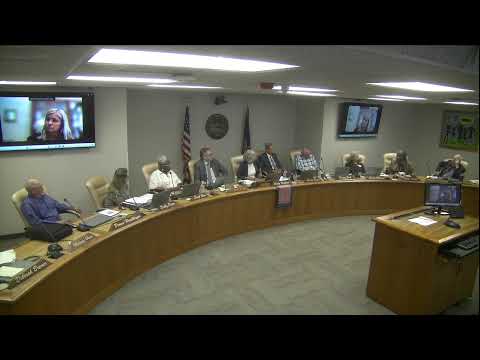
Commissioner Watson presented a proposed set of State Board goals grounded in the Kansas School Improvement (KISA) model and asked members to give feedback before the board considers adoption in August.
Watson said the board should focus on a small number of priorities the next 14–16 months to avoid overwhelming educators and to allow measurable, sustained work. He proposed: (1) quality school improvement (including structured literacy), (2) quality leadership development for teachers, principals and superintendents, and (3) policy and regulation alignment to reduce administrative overload on schools.
Why it matters: Watson argued the board’s priorities should be actionable and research-based so districts can concentrate their resources and produce depth rather than many fragmented initiatives. He referenced KISA as an organizing framework the board has already endorsed and said adopting a short list of priorities would let the board set agenda emphasis and reporting benchmarks while recognizing some topics are determined by statute or federal requirements.
Board members offered immediate reaction. Several members, including Board Member Betty and Board Member Debbie, supported the overall framework but differed on scope: some urged narrowing to two priorities to preserve focus and enable measurable short-term wins; others said leadership development is indispensable and should remain a stand-alone priority. Members repeatedly raised the need for measurable milestones (for example, percent of early-grade teachers completing structured literacy training) before they would endorse goals.
Watson said staff would return in August with timeframes and measurable indicators tied to the priorities, but that some measures (such as academic growth targets) depend on related policy decisions (for example, the board’s upcoming cut-score decisions for statewide assessments). He also emphasized that the proposed goals are State Board — not KSDE — priorities and that board members retain the ability to place other topics on meeting agendas.
Board direction and next steps: The board did not vote on the proposal. Members asked Watson and staff to provide: (a) concrete measurable examples (e.g., teacher training completion rates, principal training targets), (b) a realistic timeline for work to be accomplished within the board’s current term, and (c) clarifications distinguishing matters within board authority (policy/regulation) versus matters the department implements under state or federal law. Watson said he will bring a measurable plan back for the August meeting.
Ending: Members said they appreciated the attempt to synthesize diverse priorities. Discussion continued informally, and the board paused the agenda to move to other items.