Get Full Government Meeting Transcripts, Videos, & Alerts Forever!
Get email alerts on the State Legislation Sb205 topic
No spam. Unsubscribe anytime.
Orange County commissioners adopt resolution opposing Senate Bill 205
Summary
The Board of County Commissioners voted to adopt a written resolution opposing North Carolina Senate Bill 205, which county staff and commissioners said would reduce local land‑use authority and public notice.
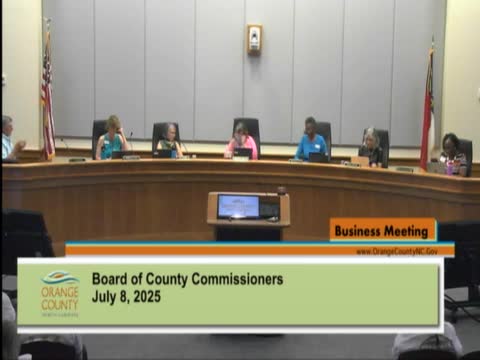
Orange County commissioners on July 8 adopted a resolution formally opposing North Carolina Senate Bill 205, which county staff and several commissioners said would curtail local land-use authority and limit public participation.
The board voted on the resolution after staff and commissioners described the potential effects of the bill. The countys planning director and county attorney had briefed the board on the measure earlier in the meeting; the county said the resolution was drafted following guidance from the North Carolina Association of County Commissioners.
Why it matters: Commissioners said the bill would require the county to change how it receives, processes and notifies the public about land-use applications and could reduce opportunities for local public comment.
What happened at the meeting - Introduction: County staff described Senate Bill 205 as proposing "substantial changes" to state land‑use law and said it would "limit public participation and notification of land use change in the county should it be adopted into law by the state." - Motion and vote: A commissioner moved adoption; Commissioner Hamilton seconded the motion. The board passed the resolution by voice vote; no roll‑call tally was recorded in the meeting minutes. - Next steps: The clerk will share the adopted resolution with the county's legislative delegation and other stakeholders.
Context and comments Commissioner Portia Ascott said the resolution followed a recommendation from the North Carolina Association of County Commissioners and formalized the board's concerns. Commissioner McKay (speaking from experience with legislators) described the drafting process for many state bills as narrow and urged vigilance.
What was not decided The action was a formal expression of the board's position on state legislation; it did not change local law or county policy beyond sending the resolution to the delegation.
Provenance The board introduced the item in the meeting agenda at 6b and concluded with a voice vote adopting the resolution; the clerk will transmit the document to legislators.