Get Full Government Meeting Transcripts, Videos, & Alerts Forever!
Get email alerts on the Wildfire Preparedness topic
No spam. Unsubscribe anytime.
County and city fire and emergency officials brief council on wildfire season preparedness and evacuation tools
Summary
Spokane Valley fire, county emergency management and regional partners briefed the council on wildfire season readiness, alerting systems, evacuation levels, home ignition-zone mitigation and pre-positioning of resources as high-risk conditions approach.
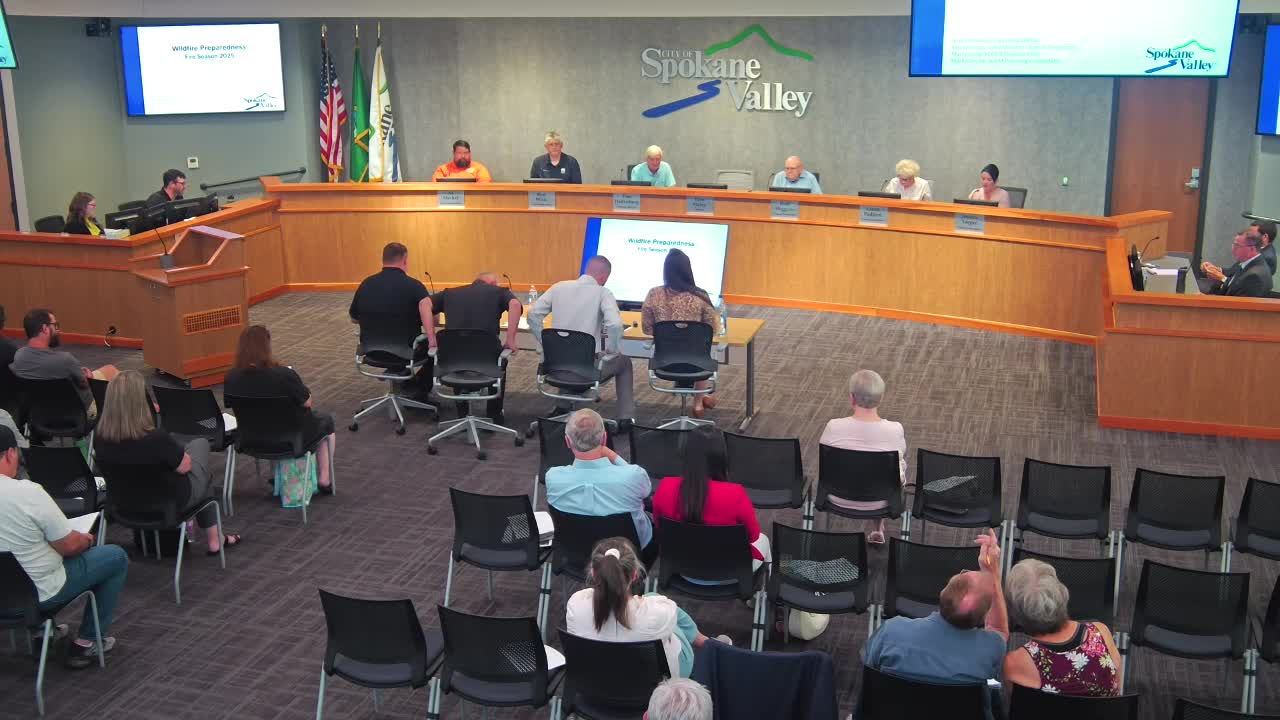
Representatives from Spokane Valley Fire Department, Spokane County Fire District 8 and Spokane County Emergency Management presented a wide-ranging briefing on wildfire-season preparedness to the City Council, emphasizing personal readiness, alerting systems and interagency resource planning.
Presenters included Jenny Nickerson (building official), Marty Long (Spokane County Fire District 8 division chief), Ken Johnson (Spokane Valley Fire Department division chief of prevention) and Mark Conrad (Spokane County Emergency Management). Speakers outlined new and existing tools for residents and officials: the county's Alert Spokane registration system (code-red-style notifications), the Shrek (Spokane Regional Emergency Communications Group) mapping app to identify evacuation zones, and other third-party alert apps such as WatchDuty.
Officials said preparedness levels nationally and statewide are elevated, and that new "particularly dangerous situation" forecasting and daily weather briefings from the National Weather Service are being used to pre-position resources. Chief Long and Chief Johnson explained that embers carried by wind are the primary cause of structure ignitions during wildfire events and urged property-level mitigation focused on the home ignition zone (0 to 5 feet from a structure), including clearing combustible materials from roofs, gutters and near foundations.
Mark Conrad said only about 10% of county residents are registered for Alert Spokane and urged residents to sign up, noting the system can notify users about other addresses (family or friends) and provide wireless emergency alerts. Officials described the difference in evacuation messaging: a Level 1 alert as notice to "be ready/gather go-bags," Level 2 to "be set/prepare to leave soon," and Level 3 as "go now" and stressed that residents who need more time or assistance should leave earlier than official Level 3 orders.
City and county officials discussed coordination on resource mobilization, incident-management teams (type 1'3), strike-team formation and prepositioning of assets when risk and weather forecasts indicate increased potential for severe fire behavior. Councilmembers and members of the public asked about app reliability and accuracy, public outreach on collection points for batteries and evacuation logistics; presenters said they were pursuing outreach and clarified how apps differ in timeliness and source material.
Officials said the city will receive handouts and materials for HOA-level outreach and Firewise community actions, and encouraged HOAs to adopt Firewise practices to access grant funding for neighborhood-level mitigation projects.