Get Full Government Meeting Transcripts, Videos, & Alerts Forever!
Get email alerts on the Tourism topic
No spam. Unsubscribe anytime.
Sawyer County tourism posts $151 million economic impact in 2024; regional study urges coordinated destination management
Summary
Hayward Lakes Visitor & Convention Bureau reported a record $151 million local tourism impact in 2024; a Northwest Regional Planning study funded by the EDA recommends regional 'destination management' and highlights infrastructure, housing and data-driven marketing needs.
Hayward Lakes Visitor & Convention Bureau Director Mindy Simons told the Sawyer County Board that the Wisconsin Department of Tourism’s 2024 economic impact report, released June 10, shows Sawyer County recorded $151,000,000 in total tourism-related economic activity last year, supporting roughly 960 jobs and generating about $10,500,000 in state and local tax revenue.
The report “again saw a record-breaking year in 2024, generating $151,000,000 in total economic impact,” Simons said, adding the county surpassed its previous record of $150 million and that the bureau’s own digital campaigns showed strong engagement in June.
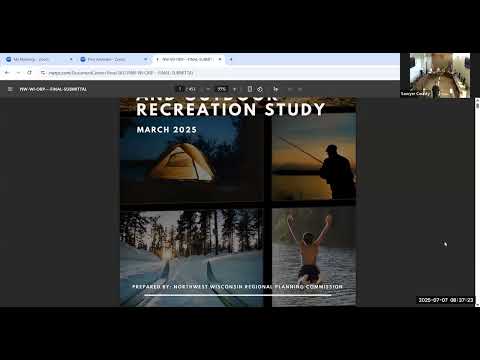
A separate 450-page regional tourism and outdoor recreation study presented to the board by Jim Miller and Jason of the Northwest Regional Planning Commission (NRPC) — funded by the federal Economic Development Administration (EDA) — recommended that local governments and tourism partners consider more coordinated destination-management approaches. Jason said the study found tourism management in the region “is very disconnected” and recommended a more holistic, cross‑jurisdictional approach.
Board discussion and presenters highlighted several operational and planning implications of continued growth: traffic congestion and pedestrian safety on state Highway 63 through Hayward, downtown parking and wayfinding, strain on cell and emergency services during peak weekends, sanitation and septic-system concerns tied to short-term rentals, and long‑term housing supply for younger workers.
Jim Miller, who noted he also chairs the Hayward City Council, described how the study used anonymized cell‑phone movement data to identify feeder markets and event origins: “They tracked people's cell phones … and they can tell where people originate from and where they end,” Miller said, noting strong visitor flows from the Twin Cities, Chicago area and regional centers such as Eau Claire and Duluth. The presenters said some secondary metro suburbs identified in the data could be useful for more narrowly targeted marketing.
Jason told the board the NRPC can extract county‑level breakdowns and, for specific events, can group large metro suburbs to help with microtargeting. He offered to pull a concise one‑page set of county metrics for Sawyer County from the study on request.
Board members and presenters emphasized that managing growth will require local planning and coordination with state agencies (for highway and intersection improvements), townships (sanitation/dumping hours), and regional partners (marketing and trail management). Miller suggested traffic counts and targeted infrastructure projects — including roundabouts at specific intersections — as tools to ease congestion.
The presenters urged officials to balance tourism growth with environmental protections; Miller singled out water quality and septic systems as priorities. Simons and NRPC representatives encouraged local officials and tourism partners to review the full study for detailed data and recommendations and to consider destination management strategies to distribute visitors and reduce localized pressure.
For media or county staff follow-up, the presenters offered to provide the county‑level metrics and a copy of the NRPC study.