Get Full Government Meeting Transcripts, Videos, & Alerts Forever!
Get email alerts on the Public Safety 911 Fee topic
No spam. Unsubscribe anytime.
Madison County 911 fee draws sharp questions from Richmond commissioners and residents
Summary
Richmond commissioners and residents pressed for more detail and alternatives after the county's proposed 911 fee, raising concerns about square-footage billing, nonprofit impacts and timeline for tax roll changes.
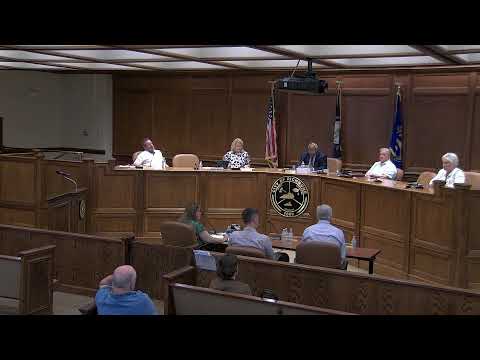
Richmond Board of Commissioners members and several residents spent the longest portion of Tuesday's meeting debating Madison County's newly proposed 911 fee, seeking analysis of alternatives and asking whether the city should temporarily absorb costs for residents.
The discussion matters because the countywide fee would affect residential and commercial property owners across Richmond and Madison County and because deadlines for tax-roll processing mean any local decision would need to move quickly.
The board opened the discussion after a staff summary of how the county proposal was developed and why the county says new revenues are needed. Commissioner Newby, who asked to put the topic on the city agenda, said residents received notice only weeks earlier and asked whether Richmond or the other local governments could absorb the fee for a year to ease the transition.
"I asked for this to be put on the agenda," Commissioner Newby said. "...they get what? They noticed, like, what, two weeks ago." He recommended that each local government consider absorbing the cost for one year while officials study alternatives.
Chief Richardson and other staff described the scope of the 911 budget and the services the fee would support. A staff figure cited in the meeting put the current 911 budget for the upcoming fiscal year at $5,411,000. Chief Richardson and other presenters told the commission that that total includes staffing (about 22 full-time 911 employees), recurring equipment and radio services, and line items for capital projects. The presenters also said some prior funding sources, such as certain landline fees and CCEP-related funds tied to the former chemical stockpile, are no longer available.
Residents told the board the county's square-footage billing model has produced confusing and, in some cases, large bills. "This isn't a fee. It's a tax," said Debbie Dusty of 204 Cranston Drive during public comment, arguing that a flat per-dwelling charge would be simpler and fairer. Mike Boyd and Glenda Dryden also said the square-footage method led to bills that appeared incorrect or inconsistent; Dryden said a 4,000-square-foot listing on a bill was reduced after staff review.
Board members and residents raised several recurring concerns: that large businesses could face high property-tax charges, that nonprofits and churches might be disproportionately affected, and that the appeal and notice process could be unclear for people without internet access. Commissioners noted that some local governments use per-dwelling flat fees or collect by utility bill, but city staff cautioned that collecting through multiple private utilities would add administrative complexity and costs.
The board agreed to request additional information before taking a policy position. The city manager said he would begin calling other local leaders and the county to determine how quickly Richmond could obtain the data needed to estimate the city's share if it chose temporarily to absorb the fee. "I'll start the conversations tomorrow getting how much it would cost each government to absorb this cost in the next year," the city manager said.
Commissioners also discussed process details raised by the task force that drafted recommendations to the three governments. Several commissioners said the task force initially recommended a flat-per-door model but that the county's current proposal uses a square-footage or parcel-based approach; they asked who made that change and why.
No ordinance or formal vote by the Richmond Board of Commissioners occurred on the 911 fee at the meeting. Commissioners directed staff to compile: (1) Richmond's likely share of the county 911 budget; (2) how different billing models (per-dwelling flat fee, square-footage, PVA parcel apportionment) would affect residents, nonprofits and businesses within Richmond city limits; and (3) the calendar and deadlines for any tax-roll or ordinance changes needed before the October tax-roll printing.
The board and staff also noted that the county has processed thousands of appeals: staff reported approximately 4,200 online appeals and more than 1,000 walk-in appeals as of the meeting, and said the county is processing those requests.
Next steps the commission identified were outreach to Berea and Madison County leaders, a check of the fiscal-court 911 budget documents, and a timeline to decide whether Richmond would seek to absorb the fee for a limited period. Commissioners emphasized that any absorption decision would require coordination and a formal action at a future meeting.
Residents who spoke were thanked for detailed research and asked to use the county appeal process where appropriate; staff said they would continue helping residents directly who reported apparent errors on their bills.
The discussion followed other routine agenda business and did not include a final decision; commissioners said they expected further information before returning the topic to a future meeting.