Get Full Government Meeting Transcripts, Videos, & Alerts Forever!
Get email alerts on the Property Tax topic
No spam. Unsubscribe anytime.
Appoquinimink board approves reassessment conversion and tax rates after budget shortfall debate
Summary
After a presentation showing reassessed property values and a revised carryover estimate, the Appoquinimink School District board approved debt-service, match and tuition tax rates and narrowly approved an operating tax rate for 2025-26 amid public concern and a pledge to review accounting controls.
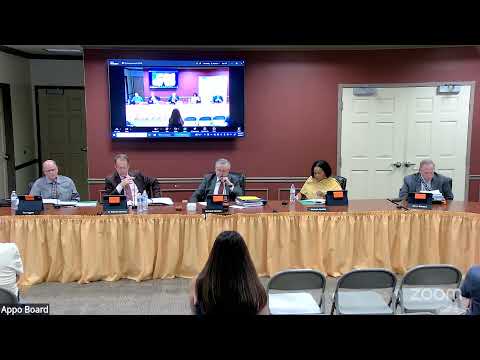
Appoquinimink School District trustees on July 8 approved a set of tax rates needed to fund the 2025-26 school year after a lengthy presentation by interim finance staff and sustained public comment questioning last-minute budget shortfalls.
Scott Kessel, who led the board’s tax-warrant presentation, told trustees the district received an updated New Castle County assessment on July 7 that set the district’s total taxable assessed value at about $15.4 billion, and that the district used standard local assumptions — a 2% delinquency allowance and the county’s reported amount of property currently “at risk” due to appeals — to convert that base into tax-rate recommendations. Kessel presented per‑penny values (roughly $1.48 million per penny) and recommended rates the board later adopted: an operating (current expense) rate of 35.41¢, a debt‑service rate of 7.5¢, a match tax of 3.41¢ and a tuition tax of 17.43¢ per $100 of assessed value.
The board’s action followed Kessel’s presentation and more than an hour of public comment. Several residents said they learned of the district’s revised financial position late and asked for greater transparency and for the board to find internal savings rather than raise taxes. Carolyn Kennedy (who asked to be recorded under her maiden name) told the board she was “distraught not by the news that we’re in a pickle so much, but the utter lack of transparency,” and multiple speakers asked for an independent audit or a detailed public report of the errors that produced the lower carryover figure.
Why it matters: the tax-warrant is the legal package districts send to the county to calculate and bill property taxes. Under Delaware practice the warrant for New Castle County must generally be filed in mid‑July; without a timely warrant and sufficient carryover the district risks state intervention or cash‑flow problems early in the fiscal year.
What presenters told the board
Kessel said this year’s numbers reflected several unusual items tied to the county reassessment (the first comprehensive reassessment in decades), newly issued assessments for properties that had not been billed the prior year, changes in exemptions and the district’s own end‑of‑year accounting adjustments. He said the district’s estimate of prior carryover had been reduced after staff discovered items not included in the May financial projection — chiefly an extra payroll in May and summer‑school charge coding that did not match local versus federal funding rules.
“After accounting for those adjustments … the per‑penny value is $1,480,000,” Kessel said during the presentation, explaining how the district converted the county assessment into a tax rate recommendation.
Superintendent Matt Burrows and board members described actions the district has already taken to cut costs and to bring in interim financial oversight. Burrows outlined $2.5 million in proposed cuts including school budget reductions, department reductions, staff reassignments and program/position reductions. Chuck Longfellow, a former CFO advising the district, and Kessel were available to answer questions.
Special education and other cost pressures
Board members and staff repeatedly pointed to rapidly rising special‑education costs as a major driver of the tuition tax recommendation. Board member Tasheba Graham, participating by Zoom, emphasized the district’s obligation to serve those students and said, “we are not at all blaming the needs of our students … we happily and gladly accept the needs of each of our students.”
Kessel told trustees the tuition tax revenue recommendation — $17.43 — is driven by estimated special‑education placement and service costs the district expects to fund next year; those costs have grown substantially in recent years, staff said.
Public comment and board reaction
More than a dozen people spoke during public comment. Speakers expressed anger at the timing of public notice, concern about potential impacts on seniors and fixed‑income residents, and impatience with the district’s internal financial controls. Multiple speakers asked that the district commission an independent review. Responding, board members said they would seek a full account of how the May projection omitted payroll and how summer‑school funds were coded; several trustees asked for a report to the public and for additional safeguards.
Board votes and next steps
The board approved three uncontested components first — the debt service rate at 7.5¢, the match tax at 3.41¢ and the tuition tax at 17.43¢ — on a motion by Board Member Abrams with a second from Board Member Higgins. Later, the board voted to set the operating tax rate for 2025‑26 at 35.41¢. The operating vote was contentious: trustees debated whether to adopt the full 10% reassessment allowance embedded in that rate or to accept a smaller increase and deeper near‑term cuts. After discussion the motion to adopt the recommended operating rate passed; the meeting record indicates several “no” votes and one abstention were recorded, though the board did not read a full roll call tally into the public mic during the final vote.
Board members said they will present a public report detailing the accounting errors and the steps that will be taken to prevent recurrence; the board also retained outside interim finance support while it recruits a permanent finance director. Trustees said they plan to revisit budget assumptions this fall and continue work on longer‑term plans, including the timing of any referendum should the district seek additional voter‑approved revenue.
Ending
The district’s new tax rates will be transmitted to New Castle County for billing under the county’s timeline. Board members asked staff to publish detailed explanations of the errors that produced the revised carryover number and to return with a public update in coming months. The district will also continue its hiring process for a permanent finance director and consider additional internal controls and an audit to restore community confidence.