Get Full Government Meeting Transcripts, Videos, & Alerts Forever!
Get email alerts on the Agritourism Moratorium topic
No spam. Unsubscribe anytime.
Skagit County extends six-month moratorium on new agritourism permits
Summary
The Skagit County Board of Commissioners voted to extend an interim emergency ordinance halting acceptance of certain permit applications for uses on agricultural natural resource lands for six months while staff finalizes code updates addressing agritourism.
Skagit County commissioners voted July 7 to extend an interim emergency ordinance that halts acceptance of certain permit applications for activities on agricultural natural resource lands for six months.
The extension, approved by voice vote during the regular meeting, keeps in place a moratorium first adopted Jan. 14 and set to expire July 14. The county’s Planning and Development Services staff said the pause is intended to allow more time to draft clearer code language and enforcement tools related to agritourism uses on agricultural lands.
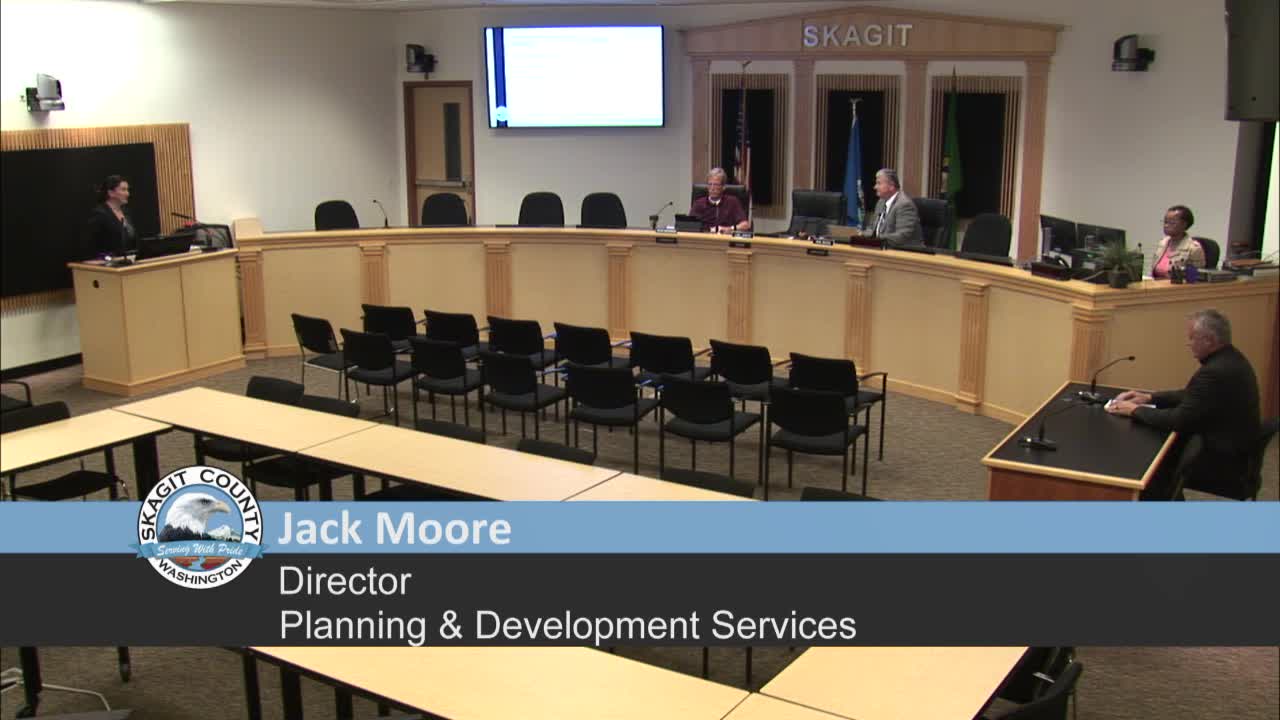
Senior planner Tara Satushak told the board the original moratorium was intended as an emergency measure to give staff time to develop proposed code addressing agritourism and uses on ag NRL lands. “This moratorium is to provide the department and county more time to write and develop proposed code that would address the concerns regarding agritourism and the ag NRL lands,” Satushak said.
Commissioner Browning, who made the motion to extend, said public comments and stakeholder input show there remains ambiguity about what agritourism activities should be allowed and how to regulate them. “I think maintaining the moratorium for a little while longer would be to our advantage to get the clarity that people are asking for,” Browning said, adding that voluntary compliance agreements with existing operations have been largely successful.
Planning staff reported that a notice of availability for the proposed extension was published June 5, and a public hearing held June 23 drew no public testimony; the public comment period ran June 5–25 and produced six comments, most supporting the moratorium and calling for clearer code and enforcement. Satushak said 15 of 18 existing operations had submitted the required land-use forms documenting their current activities and that staff expect one or two more before the deadline.
Commissioners said the extension is intended to preserve flexibility while staff continues to consult with agricultural stakeholders and an agritourism advisory group. The motion to extend passed by voice vote with commissioners signaling “aye.”
The interim ordinance extends the moratorium for six months from its scheduled July 14 expiration; staff said they hope to have voluntary compliance agreements finalized in August and complete code updates by 2026.