Get Full Government Meeting Transcripts, Videos, & Alerts Forever!
Get email alerts on the Budget Finance topic
No spam. Unsubscribe anytime.
Council rejects proposed increases to police and fire impact fees after committee recommendations and state law change
Summary
Council voted down a resolution to adopt revised police and fire impact fees reflecting Impact Fee Committee recommendations and changes in state law that removed administrative fees; the resolution failed after debates about housing affordability and fee pass-through to renters and buyers.
The Kalispell City Council declined on July 7 to adopt proposed changes to police and fire impact fees that the city's impact-fee committee had recommended and that staff updated to comply with recent state law.
City staff told council the draft changes reflected the committee's recommended "calculated allowable" fees and had been updated to remove an administrative surcharge after recent state legislation. "As I start off, you know, we had, basically, a pretty close memo to this at our work session and then, incorporated state law that was passed to remove the administrative fee from the allowable impact fee," the staff presenter said, adding he had discovered a historical table typo for fire fees in an appendix but that recommended calculated allowables remained correct.
Staff also said the city previously used an administrative fee to cover costs such as credit-card charges; with the administrative fee removed by state law (Senate Bill 133) the city will instead impose any applicable credit-card surcharge directly on the payer if they elect to pay by card.
Council debate focused on the distributional effects of impact fees and housing affordability. Councilor Hunter said he supports development paying its share of infrastructure impacts and called the proposed amounts "reasonable." Councilor Dowd and Councilor Graham argued that impact fees ultimately are paid by renters or buyers and can increase housing costs, with Graham noting prior reductions in impact fees to support affordable housing. Councilor Graham said he would oppose increases; Councilor Dowd said he could not justify adding fees that would raise apartment costs in the current housing market.
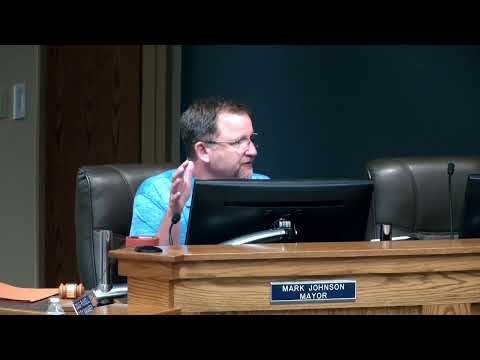
Councilor Hunter moved adoption of Resolution 62-66 to amend police and fire schedules; Councilor Gabriel seconded. The roll-call vote failed (Councilor Hunter voted yes; Councilors Graham, Dowd, Fisher, Nunley, Carlson, Gabriel and Mayor Johnson voted no), and the existing fee schedules remain in place.
Why it matters: Impact fees fund capital needs (police facilities, fire stations/apparatus) attributable to new development. Changes to fee schedules affect development pro forma and, by extension, housing costs. Staff noted the fire fees were calculated based on capital needs for stations and apparatus and police fees on projected personnel and facility needs over a planning horizon; the committee recommended calculated-allowable amounts but staff corrected historical table entries in the report prior to final adoption.
Next steps: With the resolution failed, existing schedules stay in effect. Councilors discussed continued review of fee policy and potential options such as targeted reductions for affordable housing, and staff said grants and levy funds could cover capital needs if fees are not increased.