Keizer committee seeks clear guidelines for proclamations to avoid politicization
July 04, 2025 | Keizer, Marion County, Oregon
This article was created by AI summarizing key points discussed. AI makes mistakes, so for full details and context, please refer to the video of the full meeting. Please report any errors so we can fix them. Report an error »
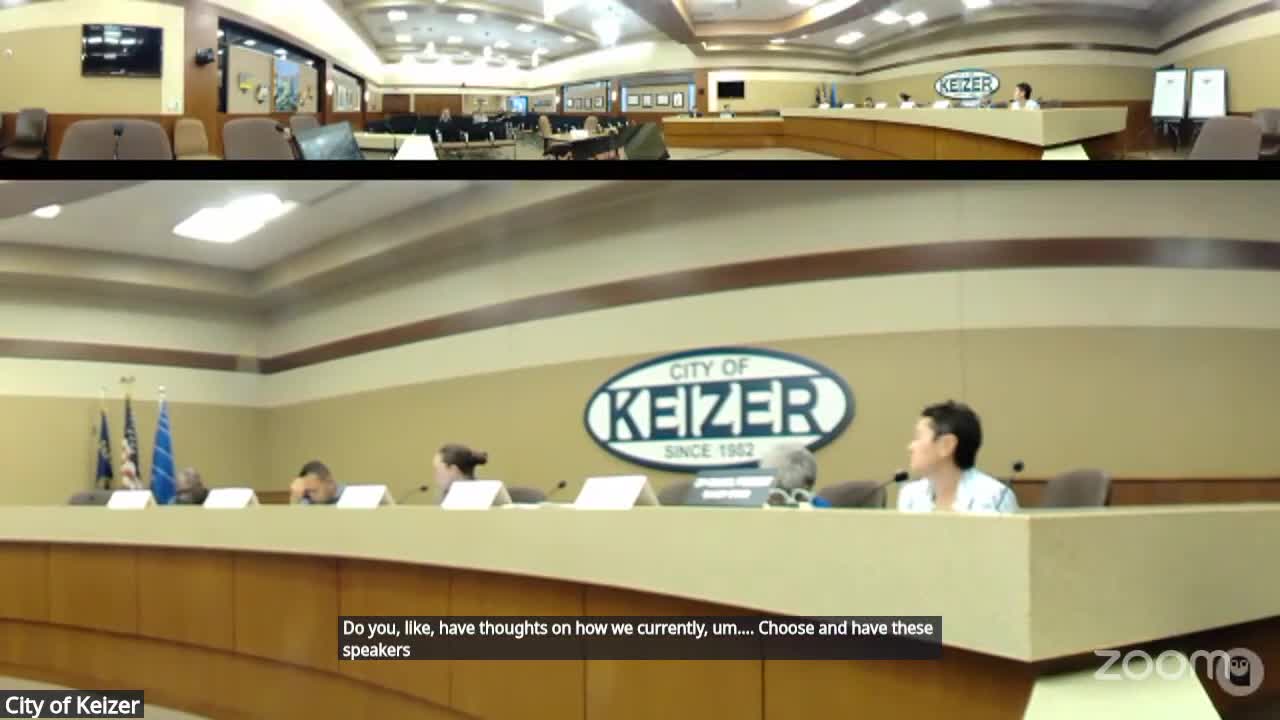
Member Barney said the committee should do “due diligence” before issuing proclamations, suggesting the committee be “privy to what they're going to say and hold them to it” so proclamations don’t become political platforms. Several members agreed that reviewing the identity of a proclamation presenter in advance is practical; they proposed a requirement that presenters provide names and basic bullet points in advance so staff and committee members can identify potential “red flags.”
Counselor Star (city councilor) emphasized distinguishing public comment from proclamations: public comment is the appropriate place for opinion and personal testimony, while proclamations should educate the community about an issue. Star said that listening to community concerns should inform committee outreach, but that proclamations themselves should have an educational focus.
Committee members acknowledged limits to advance review: several said some presenters do not prepare a written script in advance, so the committee discussed asking for bullet points or a brief outline rather than requiring full text a month ahead. The committee agreed short-term work should include drafting a simple one-page guideline for proclamation presenters covering expectations (what the proclamation is intended to do), time limits, and whether presenters should submit suggested topics or bullet points prior to the event.
Ending: The committee tasked staff to research any existing city-level guidance and to draft a one-page document of suggested proclamation practices for the committee to review in three months.
Don't Miss a Word: See the Full Meeting!
Go beyond summaries. Unlock every video, transcript, and key insight with a Founder Membership.
30-day money-back guarantee
Sponsors
Proudly supported by sponsors who keep Oregon articles free in 2025

