Rexburg planning staff and council review draft parking standards, widen off-site parking radius and clarify compact-space rules
Loading...
Summary
Rexburg City planning staff reviewed a draft update to the city's parking standards with the City Council, discussing shared parking rules, space dimensions, off-site parking distances and enforcement details that would affect downtown, the university district and new multifamily developments.
Rexburg City planning staff reviewed a draft update to the city's parking standards with the City Council, discussing shared parking rules, space dimensions, off-site parking distances and enforcement details that would affect downtown, the university district and new multifamily developments.
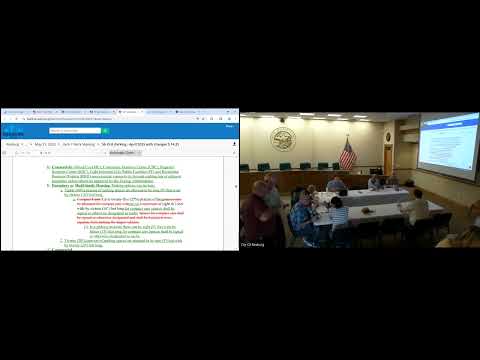
Planning staff member Allan opened the discussion, saying, "So this is where we ended up last time. We're still in the parking," and then walked the council through specific requirements and edits in the draft code.
The draft retains a 10-spaces-per-1,000-square-foot baseline for sit-down restaurants and clarifies how shared parking may be counted. Staff said shared parking must be supported by documentation showing non-overlapping peak usage windows; in those cases a restaurant may count spaces used by neighboring businesses if the applicant proves the spaces are available during the restaurant's busiest hours. For food trucks, staff said on-street vending is treated differently: "They're not required to have any of them because it's illegal wherever it's coming down," Allan said, noting the difference between permitted on-site vending and temporary street vending.
The draft expands the allowed distance for off-site parking from 200 feet to 500 feet measured along a pedestrian path or sidewalk, aligning that metric with the city's form-based code. It also requires cross-connectivity between adjacent parking areas where feasible, so customers do not have to drive back out to main roads and re-enter from another entrance. Staff said developers may request a waiver from the zoning administrator if a physical barrier prevents connectivity.
The code text specifies parking-size standards: conventional commercial stalls at 9 feet by 20 feet, compact stalls at 8 by 16 feet, and up to 25% of spaces in a lot may be compact where allowed. Parking structures would allow smaller compact stalls (8 by 15). The draft sets a 6-foot sidewalk standard adjacent to parking lots where practical so vehicle bumpers do not overhang the walking path.
Other provisions discussed: - Visitor parking must be full-size stalls, cannot be counted toward required parking minimums and must be signed; time-limited visitor zones (for example, "visitor parking until 11 p.m.") are allowed by sign. - Tandem parking and rear-in/stacked arrangements remain limited because tenants often find them impractical. - Front-yard parking in residential zones remains restricted; an owner may add a pad behind setbacks or use side-yard pads in some situations but the draft limits how much front-yard paving counts as required parking.
Council members and staff also discussed enforcement and neighborhood impacts. Allan said the goal is to "alleviate that before it becomes a nuisance and then to take care of nuisance." Staff explicitly invited a downtown stakeholder back into the process when the form-based code work reaches the parking section to address practical policing and signage issues.
No formal action was taken; staff said they will continue refining the draft and return to the council with consolidated language and a planned work session that includes downtown stakeholders.
The discussion covered technical dimensions and discretionary approvals but did not finalize a code change at this meeting.