Get Full Government Meeting Transcripts, Videos, & Alerts Forever!
Get email alerts on the County Budget topic
No spam. Unsubscribe anytime.
County administrator seeks committee input on 2026 budget priorities, fees and service levels
Summary
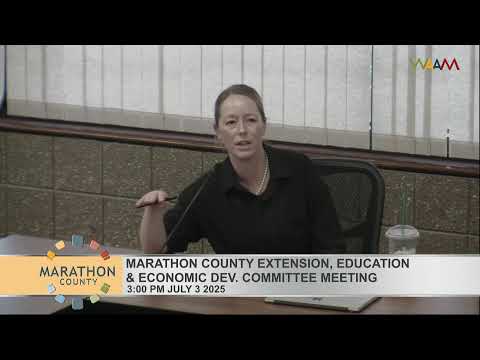
County administration asked the Extension Education and Economic Development Committee to review mandated and discretionary programs, service levels and fees to help shape the 2026 Marathon County budget and to provide early policy direction.
County Administrator Leonard and HR Finance and Property Committee Chair Robinson asked the Extension Education and Economic Development Committee to review programs under its purview and provide early direction to shape the 2026 Marathon County budget.
The request focuses on three policy questions: which programs and services the county should provide, at what service level (quality or timeliness), and what fees—if any—should be charged. Leonard said committees’ early input helps staff prepare the budget and advised members to consider funding sources when evaluating cuts or additions: “Not all dollars are the same,” he said, noting the county’s approximately $200 million budget and a roughly $55 million tax levy portion.
Why it matters: The committee oversees discretionary programs—libraries, UW Extension partnerships, parks and solid waste among them—and its guidance will shape budget tradeoffs, staffing, and fee proposals brought later to the full county board.
Key points from committee discussion Administrator background: Leonard described three budget drivers: (1) what services the board directs staff to provide, (2) at what service level (quality or timeliness), and (3) fee policy. He pointed committee members to packet materials listing mandated versus discretionary programs and an appendix of current rates and fees.
Service‑level tradeoffs: Leonard used highway pavement maintenance as an example of a quality metric that drives prioritization and said timeliness goals (for example, permitting turnaround) would likely require additional staff. He also noted statutory limits on charging fees for certain services and cited the register of deeds as an office with statutorily set fees.
UW Extension and nonprofit partners: Leonard and supervisors discussed UW Extension’s contractual relationship with the county, which is executed through an annual contract and is common across Wisconsin counties. The committee was reminded that the library board has statutory autonomy over how levied funds are used.
Supervisor questions: Supervisor Limer asked how the committee should analyze ripple effects if funding or programs are cut. Leonard said staff can prepare impact analyses if given advance notice and clarified tradeoffs in staffing and service levels.
Next steps: Committees will provide input through early September and staff will return with answers and presentations requested in advance. The committee was asked to identify specific areas for deeper review and provide direction on fee increases, mandated services, and potential new services.