Get Full Government Meeting Transcripts, Videos, & Alerts Forever!
Get email alerts on the Student Mental Health topic
No spam. Unsubscribe anytime.
Student advisory board asks Hopewell Valley schools to pilot monthly mental‑health check‑ins
Summary
A student Youth Advisory Board presented survey findings and a proposed monthly Google Form check‑in to the Hopewell Valley Regional Board of Education, asking for permission and partnership from counseling staff to pilot tools, QR codes and posters to reduce stigma and connect students to services.
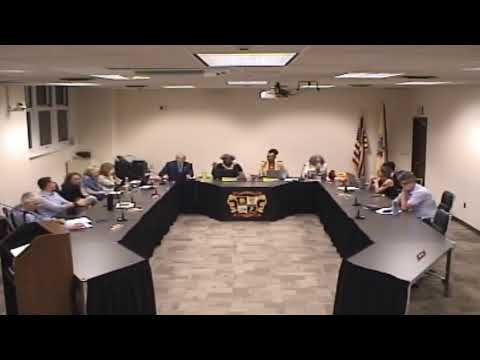
A group of Hopewell Valley students who serve on the district’s Youth Advisory Board told the Board of Education on June 16 that they want the district to pilot a monthly mental‑health check‑in for students and expand outreach around existing resources.
The students presented survey data they said showed roughly 66.3% of respondents reporting “excessive stress” and 58.1% feeling their voices were not being heard. They described a two‑part plan: a monthly Google Form instrument counselors would distribute to gather self‑reported data, and a set of QR‑code posters and hallway materials to help students access immediate help and learn about available supports.
“We are in the process of creating our mental health check‑in system. So really just help in making sure next year, once we actually implement this, that it’s implemented thoroughly within our high school,” said Manasinha (identified in the presentation as a youth advisory board vice chair and a junior), describing items the board could approve to aid access, such as permission to place posters in restrooms where they would attract attention.
Students told the board they plan to work with school counselors to structure the forms and to collect feedback through embedded survey items. They also proposed adding physical posters (with QR codes) in bathrooms and other high‑traffic areas so students seeking immediate help can reach counselors or crisis resources quickly. Youth Advisory members said counselors would be responsible for analyzing responses and directing interventions.
Board members and staff responded with questions about evaluation and oversight. A board member asked whether the students had planned evaluation metrics; the students said counselors would review the data and that the advisory group planned to include feedback items in the Google Form to allow iterative improvement. Dr. Trese and other board members encouraged students to coordinate with the district’s counseling staff and suggested potential collaboration with the district’s newly formed Hope Squad and other wellness programs.
School staff who spoke to the board praised the students’ work and said the district would help with permissions and next‑steps. Principal Miss Riley introduced the group and said the student volunteers have met with township officials and county commissioners and had previously advocated for Mercer County Library improvements that the students said helped accelerate repairs.
Why it matters: the board and students framed the proposal as a low‑cost, data‑driven tool to surface student stress and connect youth to existing supports. Students said the idea grew from their survey and that it would allow behavioral health staff to triage needs and to reduce stigma around seeking help.
Next steps: the board said it would route the advisory board’s proposal to the district counseling team and the education/program committee for follow‑up. Board members also discussed holding office hours and other student‑focused outreach. Student presenters said they would continue piloting the idea and requested board support for permissions to place posters and to distribute the form widely in the coming school year.
Ending: The board invited the students back to present results after an initial pilot and encouraged collaboration with staff and community partners as the project moves toward implementation.