Get Full Government Meeting Transcripts, Videos, & Alerts Forever!
Get email alerts on the School Referendum topic
No spam. Unsubscribe anytime.
Hopewell Valley board narrows November referendum to two questions focused on urgent repairs and space additions
Summary
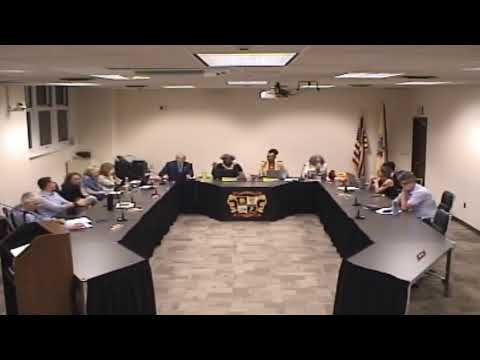
The Hopewell Valley Regional Board of Education reviewed a two-question referendum proposal on facilities and capacity at its June 16 meeting, with members and staff urging outreach to voters before a likely November ballot.
The Hopewell Valley Regional Board of Education reviewed a two-question referendum proposal on facilities and capacity at its June 16 meeting, with members and staff urging outreach to voters before a likely November ballot.
The draft plan would present voters with question 1, a package of critical infrastructure repairs and life-safety work, and question 2, additions to Bear Tavern Elementary and Tollgate Elementary to remove portable classrooms and add patient/bathroom space. Board discussion and staff presentation emphasized that question 1 must pass for question 2 to be acted on, and that the board planned further community engagement before finalizing and submitting the wording to the county clerk.
Why it matters: board and district leaders said question 1 contains projects they consider mission-critical — roofs, HVAC replacements, door and fire-safety improvements, sewer pump station renovation, and other work that administrators said could force school closures if left undone. Question 2 would build added classroom and support space at Bear Tavern (a proposed 19,000-square-foot addition) and a smaller Tollgate addition intended in part to bring pre‑K and kindergarten classrooms out of trailers and to add a recommended emergency vehicle access roadway.
District staff summarized project scope, schedule and cost assumptions. The combined estimated cost for the two-question package presented to the board was approximately $84,000,002.35; staff said about $58,400,000 of work would be in question 1. The district’s finance staff told the board they expect the state to fund up to a 40% share of eligible costs on many projects in question 1, while work in question 2 would be far less eligible for state aid (staff estimated roughly 4% state aid on the additions). The district is awaiting “preliminary eligible cost” letters from the New Jersey Department of Education, which staff said are required before finalizing the ballot wording and cost-share tables.
Bob Calavita, a district finance/facilities staff member who led the project review, said the board’s finance and facilities committee pared an earlier, larger list of projects down to the most urgent items and added emergent repairs that occurred since the last referendum. “The first question will consist of all of those things that are near failure, and critical needs,” Calavita said, listing roofing, HVAC and a sewer pump renovation at Bear Tavern among the items he described as “mission critical.”
Superintendent Dr. Trese framed the two-question approach as a way to separate “hardware” (systems that keep buildings functioning) from “space” (additional classrooms and staff space). “If the hardware breaks, then the software doesn’t run at all,” a board member summarized in debate, urging voters to treat question 1 as the district’s immediate priority.
Projected local tax impact: staff presented illustrative, district‑level tax estimates based on current assessed values and a 20‑year bond. For question 1 alone, staff estimated an average impact of about $2.78 per household (Hopewell Township, Hopewell Borough and Pennington Borough averages varied slightly in the staff presentation). If both questions passed and no pilot funding were available, the estimate rose to roughly $4.62 per household on average; staff said those figures assume the state share for eligible costs. The presentation noted that exact tax impact would vary year to year and by municipality depending on bonding schedule, rates and any pilot or PILOT (payment in lieu of taxes) agreements.
Timing and process: the board set an internal timeline. With board approval of the proposed questions, staff planned to submit final language to the county clerk by July 25. The district intends a public outreach campaign — school-based forums, community events and written FAQs — leading up to a projected November 4 referendum vote. Calavita and other staff said some roofing and mechanical work could be bid and started as soon as next summer if the referendum passes, but the design and permitting timeline for the additions at Bear Tavern and Tollgate will likely put those projects at least two years out.
Board direction and next steps: trustees conducted a nonbinding straw poll to gauge support for the two-question structure; the board chair clarified that the result was only a temperature check and that no binding vote would occur until a future meeting where the board would formally adopt the ballot question. The board also asked staff to continue negotiations with municipal leaders over potential pilot funds and to continue pressing the Department of Education for preliminary eligible cost letters so the district can finalize state-share numbers.
Public comment at the meeting focused heavily on the broader financing context, including municipal pilot agreements and whether township pilot revenues should be shared with the district. Several residents urged the board to press municipal leaders for more funding; others cautioned the board to improve communications explaining the projects and tax impacts to voters.
The board will revisit the final project list, state‑aid letters and ballot language at its next meeting before a formal vote to submit question wording to the county clerk.
Ending: The board emphasized outreach and voter education in the weeks ahead and indicated question 1 — the list of critical repairs and life‑safety work — is its top priority if voters approve only one of the two ballot questions.