Get Full Government Meeting Transcripts, Videos, & Alerts Forever!
Get email alerts on the Zoning Ordinance topic
No spam. Unsubscribe anytime.
Planning board backs draft farm‑brewery/winery ordinance with edits; requests clarification on licenses and sourcing
Summary
Board members recommended a draft zoning ordinance to permit farm breweries, distilleries and wineries with objective standards but asked staff to confirm whether those operations count toward municipal liquor‑license quotas and to clarify sourcing/growing requirements.
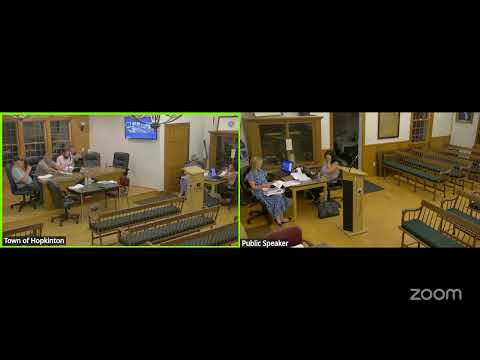
Hopkinton Planning Board on July 2 reviewed and voted to recommend a draft zoning ordinance that would add defined, permitted uses for farm breweries, farm distilleries and farm wineries and set objective standards for on‑site tasting, events and other accessory activities.
Planner Ashley (Miss Sweet) presented a four‑page draft that cites state regulatory definitions and sets local conditions for where farm alcoholic‑product operations may locate and how they may operate. The draft addresses on‑site consumption limits, event thresholds (special use permit for larger events), wastewater and operational requirements, and the need for a town license prior to operation.
Board members asked staff to clarify two points before the final ordinance is sent to the town council: whether a farm‑brewery/farm‑winery would count against Hopkinton’s municipal liquor‑license quota, and how the town should treat sourcing or production requirements (how much of an operation’s product must be grown on the farm to qualify as a “farm” operation). Planner Sweet said state law and RIDEM rules regulate production, and the draft intentionally avoids quantifying a specific acreage or tonnage requirement, but she agreed to confirm licensing questions before the council considers the ordinance. The Economic Development Commission member in the audience noted many breweries, cideries and wineries source fruit or hops from out‑of‑state suppliers and recommended the ordinance not prevent operators from importing raw materials when appropriate.
After discussion the board voted to forward the draft ordinance to the town council with a positive recommendation and asked staff to return any additional clarifications on licensing and sourcing prior to the council’s meeting.