Get Full Government Meeting Transcripts, Videos, & Alerts Forever!
Get email alerts on the Short Term Rental Tax topic
No spam. Unsubscribe anytime.
Committee advances bill to require short‑term rental platforms to disclose listing addresses for tax audits
Summary
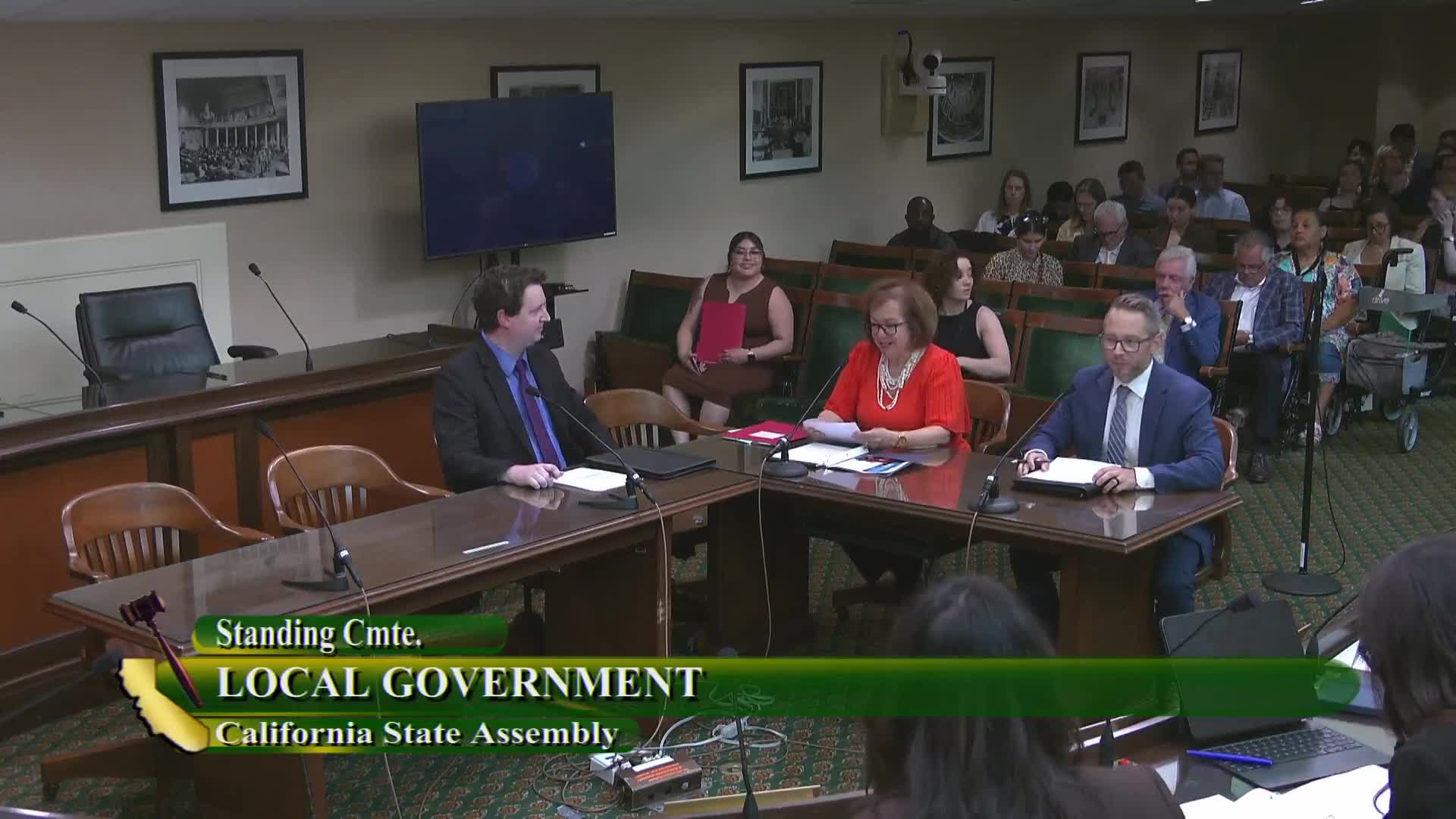
Assembly Local Government Committee advanced SB 346 on July 2, 2025, proposing that short‑term rental platforms disclose the location of each listing to local governments that have adopted ordinances requiring that information.
Assembly Local Government Committee advanced SB 346 on July 2, 2025, proposing that short‑term rental platforms disclose the location of each listing to local governments that have adopted ordinances requiring that information.
The bill, presented by Sen. Durazo, aims to help cities and counties enforce local licensing rules and ensure the correct transient occupancy tax (TOT) is collected and remitted. Supporters told the committee that platforms currently withhold precise addresses, forcing local governments to rely on voluntary collection agreements or to spend limited legal and staff resources pursuing subpoenas and litigation.
Supporters said the lack of address-level data prevents audits and allows unlicensed, year‑round rentals to operate without local oversight. "Short‑term rental platforms do not display the address of properties on their listing, so it's nearly impossible to tell if a unit listed for rent is licensed legally," said a League of California Cities witness. Patrick Sullivan, treasurer‑tax collector for Lake County, said his rural county lacks the staff and resources to trace unlicensed activity without platform cooperation and called voluntary collection agreements and ad‑hoc subpoenas ineffective.
Industry witnesses said they share the goal of ensuring TOT is collected but objected to parts of the bill that they said would bypass established legal safeguards. "With this bill, the legislature is creating a big exception to a well established legal process that cities use on a regular basis," said Pat Joyce for Airbnb, arguing that local city attorneys already can and do compel information through administrative subpoenas and that the bill could shortcut that due‑process path.
Committee members pressed both sides on implementation details. Supporters said the bill includes limits on how often jurisdictions may request data — generally no more than once every three months unless the local ordinance requires more frequent TOT remittance — and that the audit provisions apply only when a platform actually collects and remits TOT. Opponents urged further work on due‑process protections and narrowing of any compelled data production. Several members urged additional technical fixes to balance enforcement with privacy and legal process.
The committee approved SB 346 as amended and forwarded it to the Judiciary Committee. The roll call on the motion was recorded as passed as amended (7–0). The author and opposition indicated they will continue negotiating technical amendments in subsequent committees.
Votes at the committee hearing were recorded on the motion to pass as amended to Judiciary; the committee chair announced the measure passed and the roll call reflected unanimous support of members voting.
SB 346 was discussed at length by local officials, trade groups and platform representatives; committee staff and members said further amendments could be considered in the next committee to address subpoena process, frequency of requests, and data fields required by jurisdictions.