Get Full Government Meeting Transcripts, Videos, & Alerts Forever!
Get email alerts on the Community Facilities Districts topic
No spam. Unsubscribe anytime.
Oxnard council hears proposal to modify Community Facilities District 9, raise bond cap and add state park tax
Summary
Anthony Miller, special districts manager with the City of Oxnard Special Districts Division, presented proposed modifications to Community Facilities District No. 9 (North Shore at Mandalay Bay) at the July 15, 2025 City Council meeting, including increases to special tax rates, a new state park maintenance tax, and a proposed increase in maximum bond authorization to $40 million.
Anthony Miller, special districts manager with the City of Oxnard Special Districts Division, presented proposed modifications to Community Facilities District (CFD) No. 9, North Shore at Mandalay Bay, at the City Council meeting on July 15, 2025.
Miller told the council the landowner, Fifth Harbor Owner LLC, has asked to increase the facility special tax, add a new special tax to fund state park maintenance services, increase the general services special tax, and raise the district—s maximum bond authorization from $22,500,000 to $40,000,000. Miller said the changes would preserve an average effective tax rate of about 1.8% and apply to a development plan for roughly 292 single-family residences on about 90 acres.
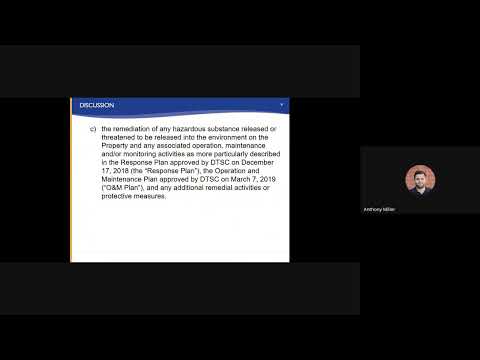
The proposed modifications, described by staff as an amended and restated rate and method of apportionment (amended RMA), would: increase assigned and maximum special taxes for facilities; increase the general services special tax; add a new special tax for state park maintenance services required under condition 92 of the original development conditions; and keep the existing environmental special tax for remediation. Miller said the environmental special tax would continue until the Department of Toxic Substances Control (DTSC) issues a certificate of completion or substantial equivalent for remediation services.
Miller explained the amended RMA would include assigned and backup taxes for developed property and, if needed, undeveloped or contingent property. He described escalation rules: the facility special tax maximum would escalate at 2% per year; the general services tax would escalate at the greater of 2% or CPI but not exceed 5% per year; the environmental special tax and the new state parks special tax would each escalate at 2% per year in their maximum rates in most cases.
Under the staff recommendation, the council acting as the legislative body for CFD 9 would (1) hold a public hearing to receive testimony; (2) adopt a resolution calling a special election to approve the amended RMA, increased rates, the new state parks tax, and higher maximum bonded indebtedness; (3) conduct a special mail-ballot election; (4) adopt a resolution canvassing the election results; and (5) adopt a resolution approving the modifications and an amendment to the funding and acquisition agreement. Miller said the landowner had waived certain election timelines so an election could be held on July 15 if the council proceeded and there was no majority protest.
Miller reviewed financing mechanics: once the modification and election process are completed and development has progressed sufficiently, CFD 9 may issue one or more series of special tax bonds with up to a 30-year maturity and escalating debt service of 2% per year to acquire facilities built by the landowner and to reimburse the landowner for specified costs. Miller said bonds are not expected to be authorized for issuance until the development and facilities are near completion and that bond-related documents would return to the council for approval at that time.
Staff noted that the CFD—s special tax environmental receipts would be collected by the CFD and disbursed to the newly formed nonprofit North Shore Environmental Conservancy (NEC) to pay an annual remediation budget approved by DTSC. The proposed state parks tax would be collected by the CFD and turned over to the state under a separate agreement between CFD 9, the landowner and the state.
Miller also reported prior steps completed: on June 26, 2025, the council approved the form of a deposit and reimbursement agreement with the landowner and the landowner deposited $27,000 toward modification costs; staff said modification costs are the responsibility of the landowner and, if bonds are issued, those costs would be reimbursed from bond proceeds.
No final vote on the resolutions or the amended RMA was recorded in the meeting transcript; Miller closed his presentation and asked for questions.