Get Full Government Meeting Transcripts, Videos, & Alerts Forever!
Get email alerts on the Public Land Access topic
No spam. Unsubscribe anytime.
AB 1139 would let counties open adjacent acquired lands to low‑impact public access under conditions
Summary
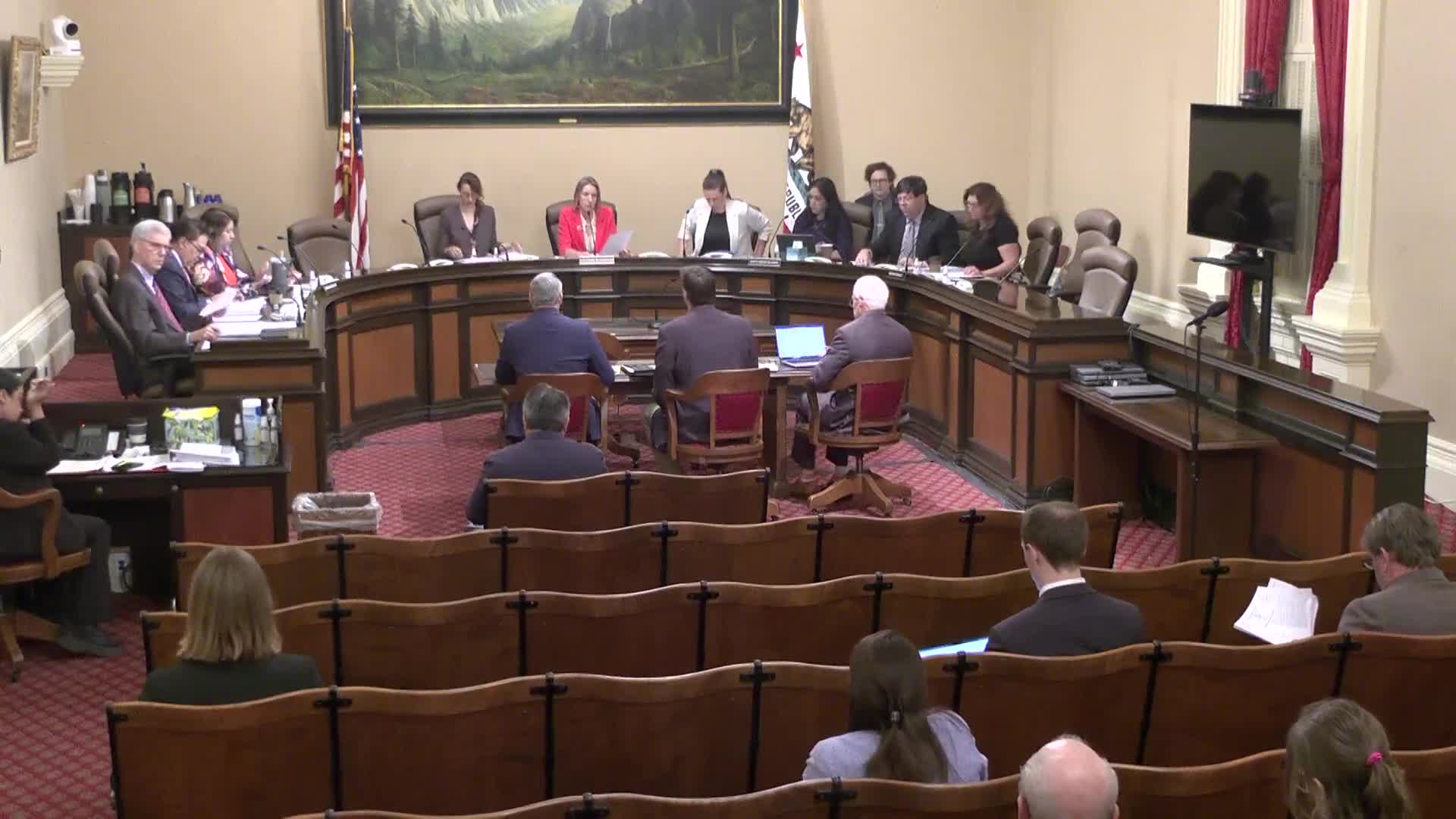
Assemblymember Rogers presented AB 1139 to let counties open newly acquired, adjacent parklands for low‑impact public access under a targeted CEQA exemption when resource management plans and protections are in place.
Assemblymember Rogers presented AB 1139 to allow county park agencies to utilize a narrow CEQA exemption when newly acquired lands abut existing regional parks, have preexisting low‑impact roads or trails and meet resource management planning conditions. The author said the change would accelerate public access to land acquisitions already suited to low‑impact recreation while protecting resource values.
Why it matters: Sonoma County and other regional park officials said counties have assembled large parcels of working lands (ranches, timberlands) that already have trails and roads connecting to adjacent parks; opening them for non‑motorized, low‑impact recreation enhances public access and supports state goals such as 30x30 and Outdoor for All.
Support and negotiation: Bert Whitaker, director of Sonoma County Regional Parks, and Doug Houston of the California Mountain Biking Coalition described the operational need and said the bill requires a natural resources plan and safeguards. Planning and Conservation League withdrew opposition after amendments were agreed that require a resource management plan addressing potential impacts prior to using the exemption.
Committee action: The committee accepted amendments and advanced the bill to Natural Resources and Water. Supporters said the measure provides a balance — it accelerates access while requiring plans to protect natural resources and honor conservation easements and management covenants.
Ending: The author said the exemption would be used narrowly and only when appropriate stewardship plans are in place; the committee passed the bill as amended.